Chapter 1: A long time ago in a land far, far away…

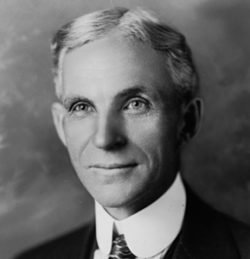
henry-ford…well, about 100 years ago in America…there was a visionary man who led society through a monumental technological disruption – his name was Henry Ford – and he and his organisation changed the world through his desire to ‘democratise the automobile’.

His success in putting the internal combustion engine on wheels devastated the ‘technology’ it replaced – the horse – and its many related industries (stables, horse feed and bedding, saddleries and tack shops, blacksmiths and farriers,….) although, on the plus side, it dissolved the huge problem of ever increasing amounts of horse manure pilling up on city streets!

We talk about modern technological disruptions, like the mobile phone or internet, happening quickly (in years) but we should reflect that profound technological shifts can occur pretty swiftly, whatever the age.

I imagine that once one ape invented the spear, then the rest changed ‘technology’ quicker than you can say “I wonder what those long pointy things are that I can see hurtling through the air towards us?”

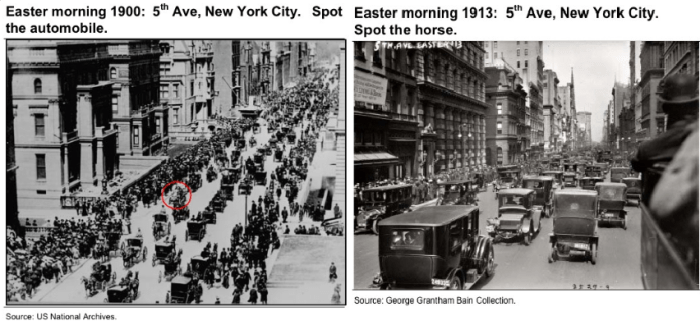
The change from the horse to the car was pretty dramatic too:
horses-and-cars

Okay, so Henry Ford was on the right side of a technological disruption…but, whilst this was necessary, it was much more than luck that made the Ford Motor Co. such a success2.

So what were Henry’s core philosophies, and what ‘gems’ might we learn from him in this modern time of technological disruptions? These were his foundations:

  • ‘Service power’;
  • The ‘Wage motive’; and
  • ‘Money power’.

Service Power:

gandhi-quoteHenry was fanatically clear that a business is only there because of the people that buy its products and services. Without them it wouldn’t exist and, as such, the customer (the public, society) is the point. Full Stop!

“Since the public makes a business, the primary obligation of business is to the public.”

(He nicely clarified that “Those who work for and with the business are part of this public.”)

This is so much more than the trendy “customer centric” mantra, in which we are usually shown a lovely circle with the customer conveniently arranged in the middle BUT, and this is the problem, all the other ‘conventional thinking’ management orthodoxy is retained around the outside3.

And to make it absolutely concrete in your mind as to what Ford really meant, he explained as follows:

“The true course of business is to follow the fortunes and pursue the service of those who had faith in it from the beginning – the public.

  • If there is any saving in manufacturing cost, let it go to the public;
  • If there is any increase in profits, let it be shared with the public in lowered prices;
  • If there is any improvement [in the quality of the service] let it be made without question, for whatever the capital cost, it was first the public that supplied the capital.

That is the true course for good business to steer, and it is good business, for there is no better partnership a business can enter than a partnership of service with the people.

It is far safer, far more durable and more profitable than partnership with a money power.”

Everything Ford did was with the customer at heart i.e could he provide the public with a cheaper car and yet also make it better than the ones he made yesterday? If he could do this, he knew that customer demand would continue to rise and profitability would be the least of his worries. ‘Customer, customer, customer’ provides growth and profitability – THAT WAY AROUND.

To make it cheaper and better for the customer, Henry was obsessed with constantly studying, experimenting and improving the process – through fanatical cleanliness and maintenance, ever deeper removal of waste (transportation, movement, scrap…), re-use of anything and everything, in-sourcing wherever possible, constant technological breakthroughs, decentralisation to where the work should be…and so on4.

And Henry didn’t just think about his automobile customers, he thought about the whole system (society) because he realised that it was all really one and the same thing. This led him into all sorts of interesting ventures that supported, and enabled, the core purpose.

In short: THE foundational ‘thing’ that made the Ford Motor Co. such a huge success was that Henry truly believed that his master was the public.

The Wage Motive:
your-greed-is-hurting-the-economyAnd so we move from customers to employees (the worker).

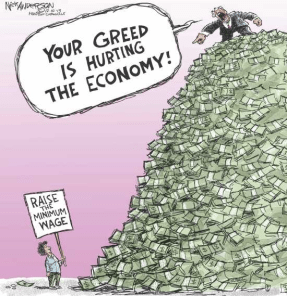
The ‘wage motive’ was Henry’s phrase for his philosophy that “one’s own employees ought to be one’s own best customers.” If the workers truly prosper then they will love, buy and advocate for the products (e.g. cars) they make…which will create an ever-improving product, a superb reputation and expanding customer demand…which enables the workers to prosper – and off we go round the circle.

He goes on to write that “If an employer does not share prosperity with those who make him prosperous, then pretty soon there will be no prosperity to share.”

Now, Henry was no Saint – he was a man of his times – but he wanted to do the right thing. Significantly, he learned from his early worker experiences and saw that the best, and only logical approach, was for his system to work with, and for, the worker, not against them.

He paid them high wages (far higher than they could receive elsewhere), provided regular employment (replacing the uncertainty of casual labour with steady work), reduced the standard working week to 8 hours for 5 days, insisted that Sunday was a day off for all, and provided them with excellent working and living conditions. Any worker that wanted more than manual repetitive work was given the chance to better themselves through training and increased responsibilities.

And finally, given that Turkeys don’t vote for Christmas, he was very clear that improvement was about bettering people and not about getting rid of people:

“Nobody with us ever thinks about improvement lessening the number of jobs, for we all know that exactly the contrary happens. We know that these improvements will lessen costs and therefore widen markets and make more jobs at higher wages.”

In fact, Henry got rid of (incentive driven) piece-work and created a profit sharing arrangement in the form of share ownership (more on this in Chapter 4)

Money Power:

And last, but nodead-moneyt least, to money. Over to Henry:
“There’s nothing to be said against the financier – the man who really understands the management of money and its place in life….but it is very different with the professional financier, who finances for the sake of financing and what he can get out of it in money, without a thought of the welfare of the people…

[Moneys] proper place [is] as one of the cogs in the wheel, not the wheel itself…

This is not to say that money and profits are not necessary in business. Business must be run at a profit, else it will die. But when anyone attempts to run a business solely for profit…then also the business must die, for it no longer has a reason for existence….

A business cannot serve both the public and the money power.

Money put into business as a lien on its assets is Dead money, its main purpose becomes the production of payments for the owners of that money. The service of the public [will] be secondary. If quality of goods jeopardizes these payments, then the quality is cut down. If full service cuts into the payments, then service is cut down. This kind of money does not serve business. It seeks to make business serve it.

Live money goes into the business to work and to share with the business. It is there to be used. It shares whatever losses there may be. It is asset to the last penny and never a liability.

Live money in a business is usually accompanied by the active labour of the man or men who put it there. Dead money is a sucker-plant….

Business that exists to feed profits to people who are not engaged, and never will be engaged in it, stands on a false basis.…Profits of business are due:

  • first, to the business itself as a serviceable instrument of humanity [i.e. to constantly improve the service to its customers], and then
  • to the people whose labour and contributions of energy make the business a going concern [i.e. its employees]…

The true course of business is to follow the fortunes and pursue the service of those who had faith in it from the beginning – the public…

The best defence any people can have against their control by mere money is a business system that is strong and healthy through rendering wholesome service to the community.


…and so I (and Henry) have set the scene as to what this ‘story’ is all about – customers, employees and money…and in particular, how do large floating (i.e. short-term thinking) shareholder owned organisations ‘fit’…and most importantly, (how) can their structure be altered to provide a foundation for a long term win/win/win for all?.

Update: Link backwards to Introduction and forwards to Chapter 2

Footnotes:

1. All of Henry Ford’s quotes above come from his 1926 book ‘Today and Tomorrow’.

2. Ford Success: Just in case you doubt this success (and accepting that money is a poor measure) Forbes estimates that, in today’s money, Henry Ford was worth around US$200 Billion….more than double anyone alive today.

3. Note to self: I’ve still got to write the post that slaughters the ‘Balanced Scorecard’ sacred cow! It’s been on my ‘to do’ list for far too long because other stuff keeps on popping up every day.

4. Toyota: If you’re a follower of Taiichi Ohno and, upon reading the above, think “Hang on, didn’t Toyota invent all that stuff?!”, here’s a rather nice quote to reflect upon:

“I met Taiichi Ohno on a Japanese study mission. When bombarded with questions from our group on what inspired his thinking, he just laughed and said he learned it all from Henry Ford’s book.” (Norman Bodek)
Introduction: “Your Money or your Life!”

What if there was aadam-ant big, hairy, gnarly beast of a thing…how would you go about tackling it?

Well, probably rather carefully!

How about thoughtfully, bit-by-bit….raising ideas, not solutions.

My posts normally focus on a particular point. Sure, they are all linked together in one glorious philosophical mess…but they (hopefully) stand on their own.

This time it’s different. I have (what I believe to be) an important story to tell and a message to create curiosity…but I’m conscious that you probably don’t want to read a book!

So, I aim to take you on a journey by breaking the ‘adventure’ down into interesting ‘Chapters’, and release a chapter per day until we are done.

There are 5 chapters:

  • starting with “A long time ago…”; and
  • ending with “…and we all lived happily ever after”.

Well, I doubt the Disney ending (I should probably add an alternative ‘Armageddon’ finale) but I definitely aim to reach a conclusion, that is of use to society.

“But what’s it going to be about?!”

If you read the end of my last post then I hinted that this story will hurtle towards ‘large corporates’ owned by floating (i.e. short-term thinking) shareholders.

Is this ‘story’ relevant to you? Probably!

  • you may work in such an organisation (or do so in the future);
  • you will likely have investments or pension funds that own shares in them (even if you don’t realise this or don’t think about this much);
  • we are nearly all customers of such organisations; and
  • we are all affected by them!

Now then, are we sitting comfortably? Good, then tomorrow I shall begin.

Update: Link forwards to Chapter 1

Footnotes:

1. “Your Money or Your Life!”: the title of the post refers to the folklore words uttered by a Highwayman as he holds up a stagecoach. He (or, if you are a Blackadder Series 3 fan, ‘She’) is asking you whether you’d prefer to hand over your money or lose your life.

  • If you hand over the money in the short term then you can go on to long term success; however
  • If you attempt to protect the money, then you die. Nice.

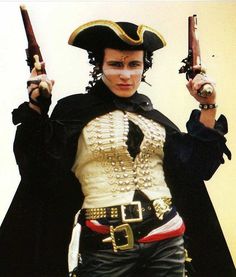
…and I hope those of you from the 1980s enjoy the Adam ‘the highwayman’ Ant pop. culture image.

2. A word of encouragement: If you are thinking “oh no, he’s writing a long one again!” then ooops, sorry. It’s just that this subject matter really needs to cover a few bases.

I am invoking the following quote in my defence:

“Make everything as simple as possible, but no simpler.” (attributed to Einstein)

I promise that I won’t make a habit out of it (it takes far too much out of me!) and normal service will resume just as soon as I’ve got over the effort of this one 🙂

Depths of ‘Transformation’

butterflyI’ve been meaning to write this post for 2 years! It feels good to finally ‘get it out of my head’ and onto the page.

It’s about that lovely ‘Transformation’ word.

Before I go on, I’ll repeat a definition from an earlier post:

Transformation: In an organisational context, a process of profound and radical change that orients an organisation in a new direction and takes it to an entirely different level of effectiveness….transformation implies a basic change of character and little or no resemblance with the past configuration or structure.” (businessdictionary.com)

To repeat the key phrase: An entirely different level of effectiveness! …and, just in case you missed it, the word is effectiveness, not efficiency.

I’m going to outline 3 levels of (supposed) transformation and I’ll do this by borrowing the bones of an idea from Mike Rother’s excellent ‘Toyota Kata’ book and extend it with a large dose of my own ‘poetic license’.

Level 1 Transformation: ‘On the surface’

iceburgSo, picture the scene: It’s the late 1970s. Your organisation desperately wants to improve and, on looking around for someone achieving brilliant results, you spot the awesome Toyota (or such like1).
You go on a Toyota factory visit. You are amazed at what you see and excitedly ask them how they do it.

You easily observe (‘on the surface’) lots of obvious methods and tools…and so you grab evidence of how these are carried out – e.g. some template forms, and the instructions that go with them. You also take lots of pictures of their (visual management) walls to show all this working in situ.

You run back home, hand out the methods and tools and mandate that, from now on, this is what we are doing.

toolboxYou helpfully provide training and (so called) ‘coaching’…and you put in place ‘governance’ to ensure it’s working. You roll it all up together and you give it a funky title…like your Quality Toolbox. Nice.

So what happens?

Well, yep, those tools and methods sure are ‘shiny new’ and easily applied. There’s an initial buzz, probably because of senior management focus…and pressure to prove the comedy ‘Return on Investment’ (ROI) calculation that had to be set out in the short-term thinking ‘will you pay for our factory trip?’ business case.

But the initial effects fall away. Anything achieved was a one-off, or of limited and low level benefit. The changes aren’t sustained – with a slide back to the old state. People start to misuse the tools and methods, and do much damage rather than good. There is a brief and ugly fight with the ‘methods and tools’ compliance police but disillusionment sets in and the early good work becomes discredited and abandoned (just like the last silver bullet…and the one before that…)

Timely reminder: “A fool with a tool is still a fool” (Grady Booch)

Note: This ‘on the surface’ transformation attempt has been likened to organisations going over to Japan in the late 1970s and early 1980s and coming home to fanatically ‘do Total Quality Management’ (TQM)…and then quietly dropping it a few years later. Sure, some organisations sustained it but most didn’t.

Level 2 Transformation: ‘Under the skin’

skinSo it’s now the 1990s. The methods and tools that came out of the initial Toyota factory visit weren’t sustained but the pressure is still on (and mounting) to transform your organisation…and your management can’t help noticing that Toyota are still doing amazing!

“Perhaps we didn’t look hard enough or close enough or long enough…perhaps we should go back and have a look ‘under the skin’.”

…and so you go for another factory visit (once you’ve been given permission following another well written story business case 🙂 ).

This time you take real care – studying ‘at the gemba’ for weeks, asking questions, watching activities, understanding the nature of changes being made to the system before you.

“Eureka! There’s something underneath those methods and tools! We can see that there’s an underlying logic that we missed last time round…oooh, we could codify them into a set of principles!

And here’s basically what you arrive at:

0. Everything should belong to, or support, a value stream (a horizontal flow from customer need, through to its satisfaction)

…and for each value stream we should:

1. Specify value, where this is through the eyes of the customer; then

2. Identify all the actions performed within the value stream, and expose and remove the obvious waste; then

3. Create flow by understanding and removing the barriers; then

4. Establish pull by producing only what is needed, when requested; and finally

5. The ‘golden nugget’: we should continually strive for perfection because this is a never-ending journey

Wow, that was profound – your factory tour team now need to give it a name!

And so, after a fun focus group, a young member of your team called John2 shouts out “It needs less of everything to create a given amount of value, so let’s call it ‘Lean’.”

Whoop, whoop, he’s only gone and cracked it!

You run back home to tell everyone about the wonders of ‘Lean’. You hand out books, provide training courses, coaching and mentoring and you slot all those wonderful tools and methods nicely into their place…neat…this is going to be great!

So what happens?

Well, everyone absolutely LOVES the principles. They make sooo much sense. They particularly liked playing with Lego in the training sessions to demo flow, pull, kanban and ‘stop the line’ thinking.

But after a while (and some short-term gains) you realise that there’s a huge tension building. No one can make those darn principles work because they continually clash with existing management practises.

Your senior management employ a gaggle of so-called Lean coaches to try to change the people at the bottom whilst they carry on at the top as before!

Your ‘Lean Office’ has become an island of coaches doing great work with the people but unable to turn the tide. Coaching conversations end with responses like:

“Yes, I can see that would be the right thing to do for the value stream…but that’s not what my objectives, performance rating and bonus is based on…or what my manager above me would support…so I’ll stick to soul-destroying fighting within my silo. Sorry about that 😦

This culminates in huge frustration; a revolving door of broken coaches; and many a good employee finding a better organisation to work for. If you ran an employee survey at this point, the results would make for ugly reading – you’ve created a complete divide between worker reality and management ‘cloud cuckoo land’.

Oh, and that lean word? Well it became capitalised! LEAN…as if it were a thing. You’ve all forgotten that it was just a label thought up by John in a focus group merely to describe what the factory visit team saw.

Pause for reflection: Taiichi Ohno is considered to be the father of the Toyota Production System (TPS) but he didn’t want it to be written down3 (codified) because he wanted it to remain dynamic.

And as for that name:“Ohno did not call his innovation ‘lean’ – he didn’t want to call it anything. He could, perhaps foresee the folly of a label.” (John Seddon)

Caution: …and if you did this ‘under the skin’ (supposed) transformation within a service organisation, you may find (if you properly stood back to look at it!) that you’d totally f@ck$d it up!

Credit: The ‘Level 2’ principles jotted down above are the core of the 1996 book ‘Lean Thinking’ by Womack and Jones….which they wrote following their research in Japan. They explicitly set out 5 principles, with a foundational one implied (hence why I’ve labelled it as ‘principle nought’).

Level 3 Transformation: ‘In the DNA’

dna…and so to the 2000s. The pressure to change your organisation is relentless – the corporate world is ‘suffering’ from seemingly constant technological disruption…but Toyota continues to be somehow different.
You pluck up the courage and ask for a sabbatical for 6 months – you want to find the meaning of life…well, perhaps not that deep…but you sure as hell want to know what Toyota have got that you don’t…and to work this out, you are going to have to go in deep – to their DNA.

Toyota are happy to see you again. But, rather than repeating what you did on the last two trips, you come straight out with it:

“Okay, you’ve shown me your tools and methods…you’ve let me uncover your principles…and I know that these aren’t the answer! What are you hiding from me?! Come on, I get it, it’s a competitive world out there but PLEASE let me in on your secret.”

The Toyota managers are perplexed. They don’t know what else they can do. They are adamant that they aren’t hiding anything from you.

…and so, rather than go straight back home empty handed, you ask if you can work with Toyota to experience what day-to-day work is actually like. They humbly agree to your request.

And six months later your mind has been totally blown!

You really get it….no, REALLY GET IT!

You couldn’t see the wood for the trees but now it’s as obvious as can be.

It’s all about the environment created by management’s actions, which come from their beliefs and behaviours about human beings: about society, about customers…and, most profoundly, about employees.

This is invisible on a factory visit! But it’s still there. It’s simply ‘in the DNA’.

Sure, you could provide a list of attributes as to what this looks like…but management can’t just do them, they have to believe in them – in fact, ‘be’ them!

Further, there’s nothing to be ‘implemented’ because it can’t be!

Everything flows from management’s beliefs and behaviours: It’s from these that Toyota creates new principles, methods and tools all the time…and throws out old ones that are no longer appropriate. Their systems thinking and human thinking is solid and profound, whilst their method is dynamic and agile.

…and the realisation sinks in: No wonder Toyota are happy to open their door to anyone. The thing that makes them great can’t be copied. It has to be lived and breathed…and nurtured from the shop floor all the way up. Oh sh1t!

…and so to your new headache: you totally ‘get it’ but how on earth do you change your organisational system – now that is THE nut to crack. That would be transformational!

Reflection time:

So ‘On the surface’, ‘Under the skin’ or ‘In the DNA’: What level of transformation are you playing at?

…if you are at level 1 or 2 then it’s not actually transformation.

…if you are truly at level 3, then here’s the final mind blowing bit – it is self-sustaining.


To close: I have been asking myself a HUGE question for a fair while now: Can management’s beliefs and behaviours change within a large floating (i.e. short-term thinking) shareholder owned organisation.  I’m nearly there with writing down my thoughts. Watch this space…

Footnotes:

1. Just Toyota? I use Toyota in this story since everyone knows who they are…and visits to their factories is precisely what happened regularly over the last several decades. But it isn’t just Toyota.

Your own ‘Toyota’ factory visit could be to another great organisation…and it needn’t be a factory making products – it could be a service organisation. Handelsbanken would be a great financial services example.

Though beware, there aren’t that many ‘true Toyotas’ out there. And perhaps none that have sustained it for so long.

2. ‘John’: He’s even called John in the true story – John Krafcik, a young researcher on Womack’s MIT research team…and those were his words back in 1987 (as recalled by Womack) to give birth to the Lean label.

3. Writing it down: Ohno finally relented when he retired in 1978 and wrote a book on TPS.

4. Clarification: I think a great deal of Lean Thinking, but not a lot about ‘LEAN’ – the implementation movement. I respect Womack and Jones, and their writings…but I note that my favourite Womack book is ‘Gemba Walks’ written about a decade after ‘Lean Thinking’ in which he humbly reflects that it was about far more than the tools and the principles. It was really about the management system (or, in my words, the DNA).

People don’t change their minds!

hugh-title-pictureSo a manager stands on a stage and lectures a group of people (or is that ‘thrusts hero opinions upon them’?) about how they should behave at work, and what ‘check box’ traits they should be looking for in others.

Within the bluster is a seemingly bizarre sentence stated as fact: That people don’t actually change their minds.

Is this true? How about some excellent examples of where you might agree:

  • a ‘Boris Johnson-loving’ Brexiteer at loggerheads with a ‘Yes to Europe’ standard bearer;
  • a Trump ‘nut’ arguing with a Hillary ‘supporter’;
  • a French secularist quarrelling with a Burkini wearer;
  • [name any other issue around the world and find people from opposing camps]

…what do you expect will be achieved by holding a ‘debate’ between these two sides?

Well, the best case scenario is that they retain their current views…but the worst case is that their positions will become firmer, their views more militant, and their mindsets become less respectful of (those that have now firmly become) their ‘opponents’1.

(Why) don’t we change our minds?

I recall reading an article that said a similar ‘people don’t change their mind’ thing…so I searched around the inter-web to see what I could find. Now, there are plenty of articles out there with headlines like ‘Why people don’t change their minds – even when faced with the facts’ so, yep, I was getting warm in my search…

…and after digging, reading, and a bit more digging, I find that there are two parts to it:

  1. Why do we form the opinions that we do?; and then
  2. Why do we cling on to them so tenaciously?

Now, many brilliant books have been written on the 1st part, covering all the weird and wonderful irrationality going on inside the human brain so I won’t attempt to summarise them here. If you want to ‘see for yourself’ then pick one of these up2 and have a read – they can be very entertaining!

But let’s go to the 2nd point: why do we cling on to these views once formed?

Here are a couple of explanations given:

Self-affirmation theory: individuals are driven to protect their self-integrity.

Hence, once you’ve decided something (especially if you make this public) then you are into ‘protection’ territory.

Cultural-cognition theory: the tendency of individuals to conform their beliefs about disputed matters of fact…to values that define their cultural identities (i.e. with the view of the groups with which we most strongly identify).

The key to this is the presence of doubt in respect of facts. If there’s no real dispute about something (e.g. that it’s currently raining outside) then there’s no challenge of values.

The doubt point is important, and was called out within research conclusions from this field of study3:

“…doubt turns people into stronger advocates…this effect is stronger if someone’s identity is threatened, if the belief is important to them, and if they think that others will listen. It all fits with a pattern of behaviour where people evangelise to strengthen their own faltering beliefs.”

…and the following is worth reading a couple of times and pondering:

 “The present research also offers a warning to anyone on the receiving end of an advocacy attempt. Although it is natural to assume that a persistent and enthusiastic advocate of a belief is brimming with confidence, the advocacy might in fact signal that the individual is boiling over with doubt.”

So back to that lecture:

What struck me about being told the ‘we don’t change our minds’ statement is that it questioned the whole basis of the lecture being dealt out to the group of people listening. If people don’t change their minds then why lecture them on your opinions? (i.e. attempting power/coercive or rational change)…you’ve just implied that there’s no point!

Now, I’d like to suggest an obvious flaw in the presenter’s logic about change.

Yes, people may be devoted to their (currently held) beliefs but they (including you and I) demonstrably do sometimes change their minds…and perhaps it is worth considering the massively important question: What was it that got them to change their minds?

Enter that lovely idea of normative change – true change arising through experiential learning.

I’ll describe a rather nice example:

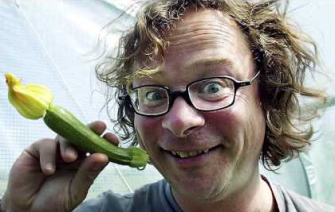
I was watching a TV programme recently presented by Hugh Fearnley-Whittingstall (River Cottage chef).

Hugh is a favourite eco-warrior of mine and his programme was all about the amount of waste within our daily lives…and a call to action to do something about it.

hugh-binsHugh picked an ‘average’ street in a Manchester suburb and joined the bin (garbage) men and their truck, on the weekly rubbish collection. He then ‘went through their bins’ back at the waste processing plant, gathering together what he found – mounds of discarded clothes, wasted food, unwanted electrical goods….and so on.

Now, Hugh looked into lots of different waste angles during his programme…but I want to focus on one of these, which makes the relevant point for this post:

Of particular note was the amount of metal, plastic and glass that had been thrown into the general rubbish bin – i.e. unsorted and therefore due for landfill or incineration – even though everyone in the street had been provided with recycling bins and instructions on what should and shouldn’t be put in them.

Why weren’t people separating their recyclable waste from the rest?

recyclingA great question!

So, where would be a good place to investigate?

Well, with someone who utterly refuses to separate their waste because they “don’t believe in it”. Can you see where this is going…

You may be able to influence those already on the cusp of change but if you want to appreciate the real problem then, however uncomfortable this might be, you need to find and work with a ‘true disbeliever’.

Hugh asked around the street and found the perfect person to ask: A young women, perhaps in her 20s, with (what us old farts might think as) an ‘attitude’ on life and what it owes her (I’m sure she’s a great person 🙂 ).

…and so Hugh sat down for a cup of tea and a chat with her about recycling…BUT, the important bit, here’s how he did it:

He observed her environment and then, from asking some non-judgemental questions about her behaviours, he listened to what she believed….and when she said something of particular note, rather than pointing out the counter-logic he simply checked that he had fully understood her belief – perhaps with a further clarifying question and/or repeating it back to her to confirm.

Importantly, he never sneered or scoffed at her responses (which would have been a direct challenge to her self-integrity) – he politely listened and showed a genuine interest in what she thought.

…and she came out with the classics:

  • “Why should I be wasting my time separating stuff, it’s not my problem – it’s ‘theirs’ to sort out”;
  • “There’s no point in separating the plastic, metal and glass from the rest because they all go straight to the landfill anyway”;
  • “Even if they don’t go straight to landfill [i.e. they go somewhere to be processed], nothing actually of worth is done with the materials that they separate out”; and
  • “It’s just a waste of time.”

I hope you can see that, if this is what someone believes, you can tell them till you are ‘blue in the face’ that this isn’t the case, and even tell them why…but where would this get you?

Even more interesting is that if ‘I’ believe the opposite of her recycling statements, how do I know that I’m right? Perhaps she’s right!

…and so we can see that we have arrived at that point – two people holding opposing views. Arguing about it (even by producing supposed ‘facts’) isn’t going to be productive. This is no different to telling a Trump ‘nut’ why they should be a Hilary ‘supporter’.

So, given the ‘people don’t change their mind’ narrative, is this the end? Should Hugh ‘pack up and go home’? Of course not…

Hugh has nicely set up a potential dose of normative learning. He’s found out what she believes, so he now knows what experiences to provide her with…and given his genuine interest in what she has to say, he has established the necessary level of trust to take things further.

He therefore gets her acceptance to go along (with a whole group from her neighbourhood – spot the cultural identity bit!) to see the recycling plant. Importantly, he goes with them to show that he, just as much as they, needs to experience it – he could be wrong too!4

The visit

hugh-waste-visitSo they start at the beginning: a manual sorting line with workers at a conveyor belt removing all the things that the recycling plant can’t (currently) process. Eeeew – no one said it was going to be pretty!
Learning number 1: Seeing what waste the current process can and can’t cope with.

They move on to see an awesome magnet sucking the iron-containing metal off the moving line. Cool!

Next, the line goes over big crushing teeth – gravity bounces the glass over them and smashes it into little bits which fall through the gaps…but the plastic and aluminium glides over the teeth. Glass separated – Awesome!

After that, another magnet gets to work on the aluminium – but this is different than earlier because it repels it off the line. Groovy!

And the impressive finale: the remaining plastic goes over a conveyor belt ‘cliff’ containing sophisticated cameras. These cameras can ‘see’ the types of plastic, which then rapidly trigger lasers to shoot certain plastics in differing directions.  Amazing!

And so to the end, to see big cubes of metal, glass, aluminium and different plastics stacked to the ceiling.

Learning number 2: Our waste can be, and is, separated into types.

Hugh’s group of observers are really impressed. What a ride!

Except for that young women – our disbeliever. Yes, she thought it was really cool technology and all that…but “I still don’t believe anything gets done with it.”

But Hugh’s not done – he takes them to a display where he has gathered together examples of what each recycled material goes on to become, from clothes through to bike frames. She picks out a really cool branded jacket, puts it on…and it fits. She loves it…she wants it…Hugh tells her that it was made from a bundle of recycled plastic…and, yes, she can have it.

Learning’s number 3 and 4: Something is done with the recycled materials…and I like the result, so it’s not a waste of time!

People don’t change – really?

Well, you’ve guessed it, through the power of television Hugh goes back to see our disbeliever in her daily life some time later and she is happily sorting her rubbish into what can and can’t be recycled.

Let’s go back to the top: if Hugh had ‘given her a lecture’, then she wouldn’t have changed. Worse, her efforts at arguing back would have made her more militant – she would have justified herself!

Clarification:

I accept that there is likely to be a small percentage of people who, even after what might appear to be compelling experiential evidence, might not change their mind…but I believe that there are far fewer people like this than we might imagine.

The experiences required to alter our thinking will likely differ for each of us…and this comes back to the need to understand each of our underlying beliefs and behaviours if we are to effect meaningful change.

Further, some people might need several doses and a longer time period for the normative medicine to take effect on them. We each process our thoughts in some quite bizarre ways. It’s not a ‘one size fits all’ operation….but that’s because we are all different…which is a great thing.

Caveat:

And, of course, “It is difficult to get a man to understand something when his salary depends on not understanding it.” (Upton Sinclair)

So, back to the world of work

lecture“But that normative stuff will take far too long! We’ve only got time for a lecture.”


Hahaha…and look where all those lectures are getting you!

Such a response reminds me of a wonderful quote:

“Managers will try anything easy that doesn’t work before they will try anything hard that does” (Womack)

And to those of us trying to move our organisations from ‘command and control’ to a better place, we can ‘tell them’ about the effects of cascaded objectives, targets, ratings, rewards etc…but don’t expect change from this.

We need them to see reality for themselves.

You may find that you can’t just take managers ‘to the gemba’ (the place where the work is done) BUT:

  • you can talk with, and observe, them to find out what they believe; and
  • you can look for learning opportunities as and when situations arise

i.e. bide your time, look for the instance…and then engineer a chance for experiential learning…and keep doing this until they start to question their own beliefs.

A nice quote that fits with this: “Only describe, don’t explain” (Ludwig Wittgenstein)

i.e. show them what is actually happening, but let them ponder and explain it for themselves….but provide them with help along the way.

To close:

So, do people change their mind? Of course they do…but not because you told them to!

And therefore, given all of the above, have I changed your mind? Of course not! I’ve merely explained something to you. You would need to go out and discover normative change for yourself….but I might have made you curious to do so 🙂

Footnotes:

1. Debates: This is why the media just love the debate format. It does little for humanity, but a lot for ratings.

2. Irrationality: The first such book I read was called ‘Irrationality’, written by the late Stuart Sutherland (Professor of Psychology) – a good read. The last one I read was ‘Thinking, Fast and Slow’ by Daniel Kahneman.

3. Research: David Gal and Derek Rucker, North-western University referred to within this 2010 MINNPOST article

4. Could Hugh have been wrong? I realise that this is ‘Television’ and Hugh will have done his homework first (i.e. been to the recycling plant and seen for himself).

5. Note to councils around the world: If you really want people to recycle, and do so really well, then you need to show them (including me!) what happens….and every time that you make a step-change improvement in the capability of your process, you need to inform us of this and show us.

Are you a lady?

Thatcher“Power is like being a lady….If you have to tell people you are, [then] you aren’t” (Margaret Thatcher)

Now, love her or loath her2, Thatcher’s words make an insightful point.

And this point is the same for the rather overdone ‘leader’ word.

So, to a definition:

Leadership: The action of leading a group of people or an organization, or the ability to do this” (Oxford Dictionary)

Calling yourself a leader

I wish people in hierarchical positions would stop shouting about ‘being a leader’…that they are ‘leading people’…and all the other ‘leadership’ presumptions.

As I wrote some time ago, you are only truly a leader if people choose to follow you, for themselves.

(Anything else is only really compliance, through fear or perhaps indifference)

Personally, whilst I’m totally fine with Executives, Directors, Managers etc. (i.e. people with the titles) taking time to understand about leadership, I’d rather they never ‘told me’ that they were leading me.

Stick with the title that you’ve been given…and then ‘we’ (the people) will decide whether to follow based on your actions (as opposed to words) and abilities (rather than your assertions).

Conversely, ‘we’ (the people) may come together and try to lead an organisation to a place where the titled people aren’t, or haven’t yet been, heading. In which case, it would be worth those with the titles sitting up and taking note (rather than attempting to shut it down) – perhaps there’s something important within!

This post ISN’T written in any way to belittle or put down people who would like to lead ‘us’ to some better place.

It ISN’T to be disrespectful to the people currently with the titles – I ‘get’ that organisations need some form of structure.

In fact, it’s the opposite, it’s to say that many (most?) people crave to be genuinely led somewhere great…and this is only likely to happen if those put into positions of power ‘get over’ the leader word…and act as one of the people.

Here’s a rather humbling quote that turns the ‘I am your leader’ boast on its head:

“Go to the people. Live with them. Learn from them. Start with what they know. Build with what they have. But with the best leaders, when the work is done, the task accomplished, the people will say ‘we have done this ourselves’. ” (Lao-Tsu)

Leading is a potential outcome of what you do (actions) and how you behave (abilities), not a badge you can demand or procure.

Irony

I wrestled with using the quote at the top. It brilliantly suggests that “if you have to say you are leader, then you’re not” but I find myself wishing that it hadn’t been Thatcher who said it. She was given the label ‘The Iron Lady’…which was then used to lampoon her leadership style1.

This got me thinking: Why am I uncomfortable about this irony? Well, using a quote from Margaret Thatcher and Lao-Tsu on the same page rather grates with me.

So, was Thatcher a leader in the sense that I use above? – well, yes, there were lots of people that wanted to follow her.

Was she a leader for the whole country? – absolutely not. Due to the vagaries of the UK’s ‘first past the post’ voting system, she used her power to take the country to a place where the majority of people didn’t want to go3…with millions suffering in the process…and, arguably, generations (still) suffering from the outcome of her economic ideology…but that’s just me being political 🙂 .

What about the power word and its relationship with leadership?

Power: the ability to produce intended effects” (Bertrand Russell)

I reflect that power and leadership do not occupy the exact same space:

  • You may be successful in leading a group of people (because they are following), but you do not have 100% power over them (they can cease to follow if they so choose); and
  • You may have power far wider than the group following you, through what the group is achieving. The likes of Hitler had huge power, propped up by a band of fanatical followers.

…perhaps the secret to meaningful and sustainable leadership is to closely match the sphere of leadership and power. Any major imbalance has the potential for overthrow from within or disruption from outside.

Footnotes:

1.‘Spitting Image’ Iron Lady humour:

Margaret Thatcher is treating her Cabinet (team of Ministers) to a meal at a restaurant:

Waitress: Would you like to order, sir?

Thatcher: Yes. I will have the steak.

Waitress: How would you like it?

Thatcher: Oh, raw, please.

Waitress: And what about the Vegetables?

Thatcher: Oh, they’ll [The Cabinet] have the same as me!

2. Thatcher was the Prime Minister of the UK between 1979 – 1990 (my teenage years).

I’ll ‘nail my colours to the mast’ and say that I wasn’t a fan of Thatcher (I’m being polite)…but I recognise that many people were.

3. Thatcher’s Conservative Party won the 1979, 1983 and 1987 UK General Elections with 44%, 42% and 42% of the 76%, 73% and 75% turnout respectively (source: Wikipedia pages on each of these elections)

Put the other way (and with a little bit of maths): 67%, 69% and 68% of the eligible voting population didn’t vote for her but felt the effects of her power.

Now, you can chide the people that didn’t turn out, but you can’t say that they wanted to follow her.

Wear sunscreen

sunscreenI have an iPod with loads of 80s and 90s songs held within its memory and, through the magic of ‘shuffle’, they randomly make re-appearances in my world (or at least my ears).
There’s one song that I really like popping up when I’m ‘away with the fairies’ running on the hills (this is fertile ‘brain fart’ territory).

The song is ‘Everybody’s Free (To Wear Sunscreen)’, released in 1999 by Baz Luhrmann. If you’ve never heard it before then I’d describe it as a man eloquently talking through a series of life lessons, where his spoken word ‘rap’ is matched to an agreeable background beat. Groovy.

It’s pretty corny stuff…but that’s because there’s some level of truism in every line!

Now, there’s one short verse that I often think about whilst at work. Here it is:

“Live in New York City once, but leave before it makes you hard.

Live in Northern California once, but leave before it makes you soft.

Travel.”

Ok, I had better explain:

Why work?

I see a rather good analogy of:

  • working somewhere really great; and
  • working somewhere really not!
  • …and then, because you now ‘get it’, your work travels will become full of meaning.

If you’ve only ever worked somewhere really great: then you may not realise that it is great and, even if you do, you may not understand what makes it this way.

If you’ve only ever worked somewhere really terrible: then you may think that this is just what work is and, even if you wish for better things, you will likely be stuck as to what makes your work place terrible (I’m talking root causes)…and therefore whether it is changeable…and how to do so.

If you have worked at both ends of the spectrum: then you will likely have had some pretty important ‘aha’ moments and, even if you haven’t had these (yet), you are probably curious to explore the seemingly vast gulf between organisations.

Of course there’s nothing wrong with working for a figurative ‘Northern California’ all your life….but travel is a great thing – not for the destination, but for the journey 🙂

…and, whilst it might be great, I presume that even Northern California isn’t perfect.

How about me?

I realise that everything is relative, but yep, I reckon that I’ve spent years at both ends of the spectrum and I can confirm that I didn’t realise what good looked like whilst I was there! Looking back, I can say that it wasn’t perfect, but man it was GOOD!

Put at its simplest: it was about the people…and it was soooo about the customer…and it really was!

I can also confirm that, whilst I am a natural skeptic (where this is, I believe, a positive word), it was only on leaving my (unacknowledged) Paradise that my journey of discovery truly crystallised…and accelerated.

I might not work in Paradise now but, hey, I’m on an interesting journey.

Direction of travel?

Now, you’ll notice that the song lyric doesn’t give explicit advice on whether the order of habitation matters. Here’s my thinking on this:

  • if you prefer a smooth ride then I hope lady luck books you a ticket from New York to Northern California;
  • if you are a thrill seeker, and like a bumpy ride, then you should hope for the journey in reverse….you’ll probably learn a lot more.

…and for those of you struggling whilst on your travels, remember Charles Swindoll’s view that “…life is 10% what happens to me and 90% how I react to it.”


Oh yeah, and to conclude – here’s my favourite, favourite line from the song:

“The race is long, and in the end, it’s only with yourself.”

That’s it – there’s nothing more to add to that.


Footnotes

Author of the song lyrics: One of the nice things about blogging is that, through checking things out before I publish, I find out a whole lot more in the process. I looked up the ‘Wear Sunscreen’ song and Wikipedia (and its source links) tells me that the lyrics come from an “essay written as a hypothetical commencement speech” by a columnist Mary Schmich in 1997. Baz Lurhmann then used it as the basis for the 1999 song.

Where you currently work: So there’s a small chance that your current boss happens to read this post, points it in your direction and then asks you whether you work in New York or Northern California.

If you honestly answer ‘New York’ and they respond badly to this…then they kinda prove the point. However, if they genuinely want to understand why this is so, then perhaps you’ve just moved a small step towards Northern California.

Where’s the meat in your sandwich?!

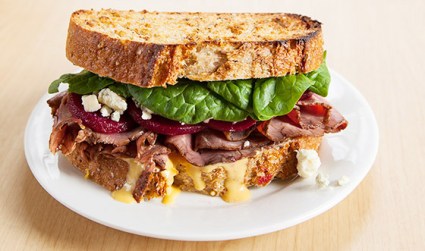
sandwichI came across a LinkedIn ‘research’ report that had been shared on a social media platform the other day. It had a grand title:
The 2016 Workforce Purpose Index: ‘Purpose at work – the largest global study on the Role of Purpose in the Workforce.’

Mmmm, sounds interesting. And, wow, ‘largest global study’ – must be important – I’d better have a read…and so I did…and then I found myself doing a bit of frothing at the mouth. I do that when stuff winds me up…I’m okay, honest 🙂

Now I am absolutely NOT getting at the person who shared the ‘report’, or any persons liking or positively commenting on it. Just to clear up any potential confusion at the start: I totally agree that the premise of ‘purpose at work’ is to be ‘liked’….and in fact passionately argued for. An earlier post uses an Ackoff essay to explain why this so.

But here’s some other stuff that I thought as I read through the ‘report’:

Helpfulness?

The introductory pages deliver the usual ‘listen up people – purpose matters’ message. This is, for me, like the ‘Buy low, sell high’ advice – blindingly obvious…but not particularly useful.

Profit?

And so to the page on “Purpose brings profit”: Yes, I agree with this…but, at the risk of repeating my ‘blindingly obvious’ mantra, this shouldn’t really be surprising i.e. if you passionately understand and serve your customers with what they actually need (this is fundamentally different to ‘selling to them’), then you have a high chance of success. Simples.

What the report fails to tackle, let alone drive home, is that many organisations get their logic ‘in a twist’ i.e. their (subconscious?) thinking is that ‘If we craft, and then regularly, state a cool-sounding purpose, then we can focus on our real purpose of profit.’ This is NOT what ‘purpose brings profit’ means!

A focus on growth and profitability doesn’t unlock purpose – indeed it will likely do the exact opposite. This isn’t to say that you can’t grow and be profitable. Of course you can. It is to correctly state the cause-effect relationship between a fanatical focus on a meaningful purpose (cause) delivering sustainable and healthy growth and profitability (effect).

Again, I’ve written about the ‘what and why’ of this previously in a post titled ‘Oxygen isn’t what life is about’.

People?

To quote from the report:

Key Finding: Given the right role and environment, [people] are ready to tap into their purpose and reach a higher potential at work”.

Now, I absolutely agree with this statement but I get sick of, what I consider to be, the spectacularly obvious being dressed up as a ‘finding’. This is ‘McGregor 101’: How you treat me will determine a massive amount of how I behave.

And so to the next quote:

“this correlation of satisfaction at work and purpose orientation was consistent in virtually every country and industry studied.”

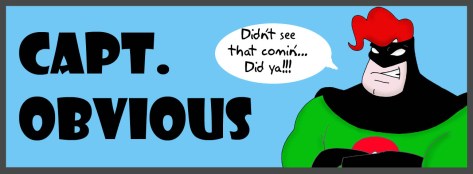
This is where I write “No sh1t Sherlock!” That would be because we are all humans – which is a nice segue to Dilbert, and the Theory of Evolution.

Capt obviousIt’s a bit like all those scientific research projects spending scarce grant money to confirm that ‘water quenches our thirst’ or ‘alcohol gets us drunk’ or [insert one from today’s supposed news].

The trouble, for me, with stating the obvious but missing out the important contextual piece is that organisations then run away shouting “oooh, quick, quick…we’ve got to find our purpose! Let’s gather round and play with some words.”

And they spectacularly miss the point.

Purpose driven?

So let’s get to the nub of my critique: The report implies that there are three different types of people*, these being those who are primarily:

  • Purpose-driven; or
  • Status-driven; or
  • Money-driven.

They then follow this line of reasoning with….have you guessed it?…the recommendation to search for and select purpose-oriented ‘talent’.  It even suggests adding the ‘what is your primary drive?’ dimension to an organisation’s talent selection criteria 😦

The hilarity of this is that they may recruit lots of (currently) purpose-driven people…and then kill it. It’s the same old talent message – don’t endlessly seek talent, recognise and tirelessly work to unleash the talent from within.

So, back to the ‘research report’: sure you can ask someone to respond to survey questions as to which category they currently associate themselves most with (i.e. purpose, status, money)…but where is the consideration as to WHY someone might answer as they did.

* are they ‘types’ of people….or are they outcomes that people have arrived at or been driven to?

Some examples:

  • how many of you started a new job with passion and purpose, but within 6 months – 1 year, had been beaten back to surviving on merely the money and seeking some status to get noticed?
  • how many of you started your ‘careers’ focused on getting on the ladder and earning enough money to gain a roof over your heads and have a family….and how many of you have reached a certain level of wealth and/or experience where your priorities have changed?1

To conclude:

Yep, purpose is important.

Yep, I can’t really disagree with the blindingly obvious littered throughout the ‘report’.

…but if the report were a sandwich, it is bland, limp and empty – where’s the important and insightful stuff that needed to be said?

In short, where’s the meat in the sandwich?!

Does this matter? Well, yes, it does. The problem with such reports is that they allow the top management of traditional (‘command and control’) organisations to gleefully wave them about, shouting “nothing to see here – we know all of this and, even better, we’ve got it totally covered!”

Total codswallop.  As I wrote in an earlier ‘Blackadder’ post, a report is only valuable if it covers what needs to be said, not what they want to hear.

The report spectacularly misses the huge point that:

“People’s behaviour is a product of their system. It is only by changing [the system] that we can expect a change in behaviour.” (John Seddon)

What sort of system environmental things am I talking about? If you read Deming’s 14 points for management you will get a good idea. At a high level, let’s compare two environments and then you tell me which would enable you to focus on your purpose and which would see you struggling to survive through status and money:

Traditional A better way!
Hierarchical (authority…superiority) ‘Social’ (responsibility, equality)
Fear/ blame Trust/ ‘safe to fail’
Rules and consequences Guidance and support
Growth and Profitability Customer, customer, customer
Budgets, financial measures, cost cutting ‘Purpose’ operational measures, variation
Implement ‘best practise’ on the people (plans) Problem solving by the people (experiments)
Cascaded personal (or team) targets Value stream capability measures
Judgement, through rating and ranking Coaching, through non-judgemental feedback
Carrot and stick compliance Intrinsically motivated
Incentives Profit sharing
Competitions, and hero (people) awards Collaboration, and achievement focus

 Whether a person can (will) be purpose-oriented is hugely down to the environment in which they work. Simples.

Footnotes

1. This is rather obvious: take your pick from ‘Herzberg’s Motivators & Hygiene factors’ or ‘Maslow’s hierarchy of needs’.

2. I ‘get’ that LinkedIn are merely trying to drum up business by suggesting we all need to find ‘talent’ but….grrrrrr.

….because I wanted to!

nz mapSo something really important happened to me yesterday evening – I became a Kiwi!

“What’s so good about that?” you might ask…

The Back-story:

I was born and raised in the UK which (for the avoidance of doubt) I still love.

However, I have happily been a permanent resident of New Zealand for 8 awesome years. There was no pressure on me to go further and apply for citizenship. Indeed, to do so would require a bit of effort on my part and some money to pay the Ministry of Internal Affair’s administration costs.

The Citizenship Ceremony:

There were about 180 candidates for citizenship, representing over 30 different countries.

The ceremony kicked off with an excellent performance from a Kapa Haka1 group.

The Mayor of our city, ably assisted by a linguistically impressive2 MC, presided over the ceremony and did a brilliant job of welcoming us, making us feel at ease, running a tight ship for oaths/ affirmations, certificates, photos (and trees!3) and finally congratulating us.

The National Anthem was sung.

But, just before the National Anthem, we watched a short video….

The insight:

…and within that video was a welcome from the Hon. Peter Dunne, Minister of Internal Affairs.

He nicely put into words that, as New Zealand residents, we are already entitled:

  • to stay indefinitely, to work and to study;
  • to healthcare, education and social security, as citizens are; and
  • to vote

and that this is not the case for all countries around the world4.

…and as such, we’re not becoming citizens in exchange for such rights – it isn’t for personal gain (in a ‘do this to get that’ kinda way), it is because we want to!

Indeed, some people will be choosing to surrender citizenship5 from their country of birth.

Now, I hadn’t formalised it as such…but, yes, Mr Dunne had ‘hit the nail on the head’. There was no need to become a citizen, but we feel part of this community and want to belong to it.

Now, for those of you reading the above thinking “that’s very nice and all that…but you usually write about organisations – what’s gone wrong this time?”…here goes:

The analogy:

Yep, you can see where this is going: Many an organisation uses the ‘do this to get that’ logic on its people throughout its management system:

  • meet these targets to get this reward;
  • put yourself forward to win this competition;
  • act in this way to win this quarterly/ annual award
  • search out, and apply for external awards to gain hierarchical kudos
  • ….etc.

In fact, they do so as if this is all rather obvious, and the only way to go about running an organisation.

But all of these things are extrinsic. They aren’t because you want to, they are because you want the prize available for complying with their wishes. This reminds me of a very early post I wrote titled ‘Don’t feed the animals’ which sets out and explains the point.

The reverse logic is to provide the people with what they need to thrive (with no strings attached)…and they will blossom…and they will want to belong. This is all about the environment:

…which will create:

People will come to love such an organisation, will want to belong, and will want to give of their all. How many organisations can honestly claim that?!

For you skeptics out there, such a transformation is:

  • possible, desirable, worthwhile and (as a side effect) profitable; and yet
  • impossible without a fundamental change in thinking.

Where would you choose to work (or live)?

Post script:

I texted a very good friend just after the ceremony: “All Blacks supporter now!”

ABs vs LionsHis response was:“All Blacks over the Lions?”

Damn, I hadn’t thought about next year’s Test series. This might take a little bit of time and emotional baggage to work through!

Footnotes:

1. Kapa haka is the term for Māori performing arts and literally means to form a line (kapa) and dance (haka).

2. 30+ different countries results in amazingly different names to be read out!

3. Every family grouping is presented with a native ‘baby tree’, to plant at home. We’ve got a spot in our garden already sorted.

4. Where this is a particular bone of contention for Kiwis living in Australia.

5. Some countries forbid multiple citizenships, and therefore require you to renounce your citizenship if you want to change to another.

6. You may not think they are random…but if they don’t take proper account of variation, then they are.

Dilbert says…let’s automate everything!

Dilbert portraitI absolutely love ‘Dilbert’ – it seems to me that Scott Adams, the cartoonist, has seen into our very souls when it comes to our working lives.
You may also love the Dilbert cartoons but what you might not know is that Scott wrote a couple of (let’s call them) ‘essays’ as the introduction to his first Dilbert book1…I read them many years ago and they made me cry with laughter.

I’ve not thought about these for a long time, but they popped into my head recently when I was considering where the world is heading in respect of invention, and specifically automation.

I’d like to reproduce the core parts of one of his comedy essays here, for use in this post (I hope Scott doesn’t mind… this is, after all, a plug for his books 🙂 ). Here goes:

“Theory of Evolution (Summary)

First, there were some amoebas. Deviant amoebas adapted better to the environment, thus becoming monkeys. Then came Total Quality Management. I’m leaving some of the details out…

Anyway, it took many years to get to this lofty level of evolution. That leisurely pace of change was okay because there wasn’t much to do except sit around and hope you didn’t get eaten by wild pigs. Then somebody fell on a sharp stick and the spear was invented. That’s when the trouble started…

I wasn’t there, but I’m willing to bet that some people said the spear would never replace fingernails as the fighting tool of choice…’diversity’ was not celebrated back then, and I expect the ‘Say No to Spear’ people got the ‘point’ if you catch my drift.

The good thing about the spear is that almost everybody could understand it. It had basically one feature: the pointy end. Our brains were fully equipped for this level of complexity. And not just the brains of the intelligentsia either – the common man could find his way around a spear too. Life was good…almost nobody complained about how confusing the spears were….

Suddenly (in evolutionary terms) some deviant went and built the printing press. It was a slippery slope after that. Two blinks later and we’re switching batteries in our laptop computers while streaking through the sky in shiny metal objects in which soft drinks and peanuts are served.

I blame sex and paper for most of our current problems. Here’s my logic:

Only one person in a million is smart enough to invent a printing press. So when society consisted of only a few hundred apelike people living in caves, the odds of one of them being a genius were fairly low. But people kept having sex, and with every moron added to the population, the odds of a deviant smarty-pants slipping through the genetic net got higher and higher, When you’ve got several million people running around having sex all willy-nilly the odds are fairly good that some pregnant ape-mom is going to squat in a field someday and pinch out a printing-press-making deviant.

Once we had printing presses, we were pretty much doomed. Because then, every time a new smart deviant came up with a good idea, it would get written down and shared. Every good idea could be built upon. Civilisation exploded. Technology was born. The complexity of life increased geometrically. Everything got bigger and better. Except our brains.

All the technologies that surround us, all the management theories, all the economic models that predict and guide our behaviours, the science that helps us live to eighty – it’s all created by a tiny percentage of deviant smart people. The rest of us are treading water as fast as we can. The world is too complex for us. Evolution didn’t keep up.

Thanks to the printing press, the deviant smart people managed to capture their genius and communicate it without having to pass it on genetically. Evolution was short circuited. We got knowledge and technology before we got intelligence.

We’re a planet of nearly six billion ninnies living in a civilisation that was designed by a few thousand amazingly smart deviants.”

Oh, there’s so much in there to work with! But, first…

What about you and me?

…I believe that I am reasonably intelligent (don’t we all!) but I’m absolutely certain that I’m not one of the “deviant smarty-pants”. I use a fair bit of technology in my daily life but don’t really know how it works. Sure, I can read Wikipedia like the next ape and spout out that it’s all about 0’s and 1’s…but that doesn’t mean that I really ‘get it’.

Now, I don’t mean to be rude, but the vast majority of you reading this aren’t likely to be geniuses either…and if you are, then please consider our predicament and look after us 🙂

…and so, to automation:

With reference to Scott Adam’s evolution theory, I often feel like we have become a bunch of idiots within our world, and each fresh automation added to our environment likely makes this more so.

There appears to be a large push for the likes of robotics and artificial intelligence at the moment, with lots of super positive articles being written by ‘interested parties’.

I reckon that we would be wise to ponder the automation thing and to have a healthy regard to what it implies. This isn’t to be a luddite2 and try to hold back the tide of change. It is suggesting that we fully think through what it means, across a broad context, and not be easily persuaded by some futuristic promise of bliss (which we should constantly reflect is mainly coming from those selling it).

(By way of context: this post was triggered by a recent article in respect of a fatal accident involving Tesla’s semi-autonomous car. and a discussion with work colleagues)

The calculator as one of the simplest of examples:

Many years ago I trained to be a Maths teacher, along with a good mate called Dave.

We used to have a laugh whenever we asked one of our students how they had arrived at a particular answer and they would simply reply that “I worked it out with my calculator Sir”.

We did the usual “back in my day” lament about kids not knowing how to do simple arithmetic on a piece of paper and becoming reliant on a calculator instead.

Now, you might respond with “yeah, but why do they need to learn all that stuff if they’ve got a calculator!”…and, mainly, I’d see your point.

The problem comes when they accidentally miss-key into their wonder machine, get a result and blindly rely on it.

If you don’t understand the basics of what’s going on, then you can’t be expected to spot an error (often in our inputs or usage). How could you?

To the world of work:

To take the calculator example, and turn it into a generalisation: You can’t truly cope with a defect (or failure demand), let alone improve the system that created it, if you don’t understand what’s actually going on.

If we are going to automate things, then I’d suggest a few automation design principles should be used…such as:

  • it must be very obvious to the people utilising the automation as to what is actually happening (i.e. this is not hidden or over-complicated);
  • it must be possible, and easy, to take back control and experience the task for ourselves; and
  • taking back control (i.e. ‘switching to manual’) is encouraged…and even required on a regular basis.

This may add initially to any automation endeavour, but should pay itself back handsomely when in operation, by our understanding of (and retention of control over) what is actually taking place.

(I note Toyota’s thinking in respect of automation: i.e. automation may prove useful, but it isn’t the objective and could be a hindrance.)

Humanity, and customers:

Going back to that ape thing: Given that we are basically a bunch of “ninnies”, we should design accordingly.

My criticism of many (most?) automation efforts is that they are aimed at efficiency.

Our true purpose should be effectiveness, and that requires us to fully appreciate our customers, and their* (wildly varying) ape-like humanity.

(* again, I don’t exclude myself from this)

Every attempt at efficiency, say through pushing the likes of contact centre IVRs, self-service portals and ‘chat-bots’3 onto customers, is hugely wasteful and counter-productive if they aren’t effective (which means valuable for the customer, for their needs)

We should be pulling innovative ideas on the basis of clear value for our customers.

So, I suggest that the first automation design principle should be that the customer (a human being) would want it!

 …and, as a bonus for reading this far:

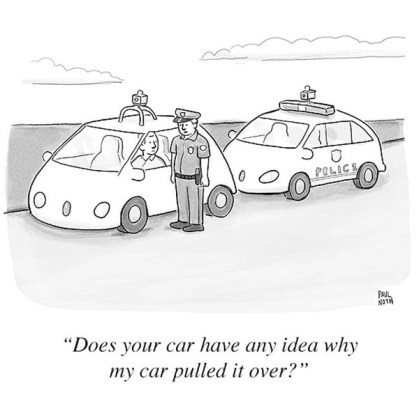
I share the following thought-provoking cartoon4 :

auto cars

Footnotes

1. Scott Adam’s book is called ‘The Dilbert Principle’ and was first published in 1996.

2. Being a Luddite: A clarification for all you early adopter ‘technologists’ out there. This post isn’t an attempt at denial. It is (hopefully) to provide some healthy self-reflection when putting forward the next hugely optimistic article on what’s coming to take over our worlds :);

3. Chat bots: I found this recent BBC article somewhat illuminating, particularly IKEA and ‘Anna’. “In the beginning, we tried to impersonate a person, and we found that there was no reason to do that”. This speaks volumes to me. By causing a confusion to the human as to ‘what’ they are interacting with, we create an unnecessary and yet fundamental problem.

4. Credit: This cartoon was found by a colleague. Thanks 🙂


There’s no such thing as…

internal customerThis post is a bit ‘tongue in cheek’ (so if you don’t agree 100% then please don’t take it too much to heart 🙂 ) but it expresses what I’ve thought for years now.

A business fashion started back in, oooh, probably the 1980s – talking about ‘internal customers’ within organisations. The idea being that you are the customer for the person upstream from you – they are producing for you – and, in turn, the person downstream from you is your customer…and on and on…in a long chain from the start to the finish of a value stream. Lots of lovely internal customers.

But here’s the thing: They aren’t your customer – they are a part of (i.e. colleagues within) your system!

Yes, yes, I know that you are reliant on them and then the next lot are in turn reliant on you…but that’s just because of the design of the (current) method.

And, yes, yes, I know that it would be jolly nice if you all worked together in really efficient and effective ways – but that doesn’t make for a customer relationship. Further, it can be harmful to think in this way.

What is a customer?

I’ll draw on a set of related quotes to assist me here:

“The purpose of a business is to create a customer.”1 (Peter Drucker)

“It is not the employer who pays the wages. Employers only handle the money. It is the customer who pays the wages.” (Henry Ford)

“There is only one boss. The customer. And he can fire everybody in the company from the chairman down simply by spending his money somewhere else.” (Sam Walton)

The point being that a customer is, by definition, external to the system. Everyone and everything within the system is (or should be) there for them.

Without the (true) customer, there is nothing.

Why does this ‘internal customer’ label bother me so?

Such ‘internal customer’ logic causes us to think that we must do what they ask, and not question them too much, along the lines of the ‘customer is always right’ and ‘give the customer what they want’ mantras.

It presents a suboptimal ‘them’ and ‘us’ situation rather than a collaborative horizontal (across the system) ‘we’.

Once you think in terms of internal customers, it’s only a short and painful step towards the dreaded ‘Service Level Agreement’ (SLA) game show. Grrrr.

A massive risk within the ‘internal customer’ logic is the creation of a static system, one in which the method (and targets) becomes defined in quick drying cement.

  • If I think of you as my customer, then there’s unlikely to be much challenge from me as to whether your role should change, or even exist…and you sure as hell aren’t going to appreciate any such line of reasoning from me – who the hell am I to suggest this – you are my customer, I am merely your supplier!
  • Further, as my customer, you may consider that you know best, that your wish should be my command and that I should be grateful to be of service to you. Indeed, you may even score me on how well I treat you. Ouch!

How many of you reading this post have been asked to do something by your ‘internal customer’ and thought that what they were asking for was nuts…and how many of you didn’t get the chance to meaningfully discuss this with them, and had to carry it out anyway?

Even worse, how many of you have switched off from even thinking about whether your internal customer’s request makes sense and have merely become ‘order takers’.

What a load of nonsense. Let’s just throw the ‘internal customer‘ language in the bin.

“But what about treating all our colleagues with respect?!”

I can almost hear some HR departments chiding my thinking as being disrespectful to my fellow employees. No, it’s not!

In fact, it’s the opposite. I think it’s disingenuous for me to pretend that my work colleagues are my customer. They are far far more than that – we are reliant on each other, to keep our jobs, to grow ourselves, to stimulate each other, to want to come to work…to spend our working lives delivering something meaningful to this world. This is soooo much more than being merely thought of as ‘internal customers’.

As colleagues, we need a robust relationship, not one of diffidence and servitude. We need to respectfully challenge each other, work hard to listen to and understand each other’s worldviews…and become better, closer and wiser for this.

We are not ‘internal customers’, we are colleagues.

Addendum:

I always pick a trusted colleague (from an ever widening group of ‘pioneers’) to have a read of my posts before I press publish. I was particularly nervous about this one as I felt that it could just be me ranting about an ‘issue I have with the world’ (again 🙂 ).

…but I got a great response back, with the following gem (thanks A):

“Are the All Blacks ‘customers’ to one another, or are they a team with a shared purpose? By using the term ‘customer’ where it doesn’t belong… it distracts us from understanding who our real customers are.”

This made me giggle. Turning to the wonderful game of rugby, I had visions of the ‘backs’ telling the ‘forwards’ that they are their customers…I don’t think that this would go down too well.

rugby positionsHow about the following, even dafter rugby situations:

  • the jumper in the line-out considering themselves as the customer of the hooker throwing the ball in;
  • the winger considering themselves as the customer of the no. 10, who is kicking the ball through for them to get on the end of; or, at its simplest
  • the potential receiver considering themselves as the customer of the possible passer of the ball.

What a load of guff! They’re a team that have to work together, as equals; that have to understand, and swiftly react, to what’s around them; that have to make the selfless pass or tackle; and that have to pick each other up and genuinely offer words of support when perhaps it doesn’t go quite as desired.

They are not ‘internal customers’, they are team mates.

And so, to complete the title of this post: There’s no such thing as ‘internal customers’

Footnote:

1. I’m not a massive fan of this particular Peter Drucker quote, but it fits for this post.

Why so? Unfortunately, businesses have become far too adept at creating customers and, as a result, we have rampant consumerism.

I reflect on Professor Tim Jackson (author of ‘Prosperity without Growth’) clearly calling out THE problem for humanity, and what we* might do about it (* requiring brilliant political leadership).

His take-away quote “The story about us – people being persuaded to spend money we don’t have on things we don’t need to create impressions that won’t last on people we don’t care about.” Prof. Tim Jackson TED talk.