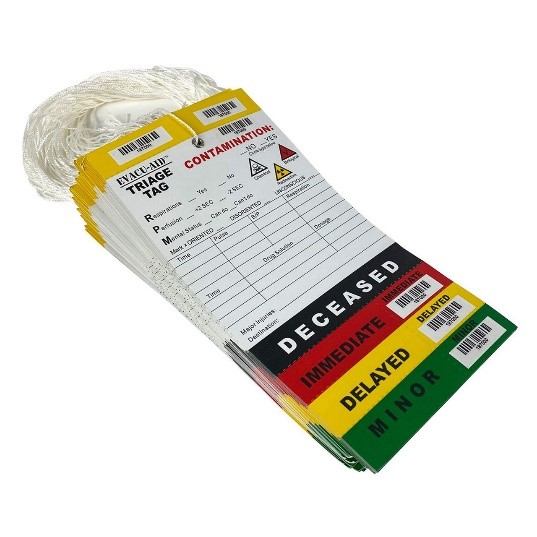
 ‘Triage’ is a word that I’ve heard used a lot within large human-designed social systems.
But where does this word come from, and is its (newer) ‘service system’ usage reasonable…or does it hide/confuse/obfuscate?
Starting with the dictionary:
“Triage: the process of quickly examining sick or injured people, for example after an accident or a battle, so that those who are in the most serious condition can be treated first.” (Collins Dictionary)
A few things to note:
- The 18th century root of the word is the French ‘trier’, which means to ‘sort/ separate out’1;
- Its original English language usage (some sources note 1918) was with reference to dealing with mass casualties on the battlefield, with the aim of maximising the number of survivors;
- It has the same meaning in respect of mass victims of a major disaster (e.g. an earthquake, a major weather event, …);
- Whilst a battle and a major disaster are ‘events’, this definition of triage also applies in the ‘day to day’ running of hospital emergency departments.
As can be seen from these norms, it’s about maximising the saving of people’s lives (and, hopefully, their subsequent wellbeing) with the resources available on hand…which means that quick decisions are required using the available evidence2.
An important – and perhaps nuanced – distinction: The purpose isn’t about sorting cases into different teams3, it’s about sorting out priorities.
A nice quote that I saw on an emergency room poster:
“The key is not to prioritise what is on your schedule…but to schedule your priorities.”
Moving on to modern management:
So, I’ve set out (what we might call) the true meaning of triage.
However, I’ve noticed that the word is now used a lot – and I mean ‘a lot’ – in far wider contexts.
I’ve observed service processes designed with (what they are referring to as) triage after triage after triage. Even triage ON triage!
But what they are really doing is categorising according to the service design, and then ‘moving you’ around – i.e. deciding which queue to put you in, often according to capacity constraints.
This isn’t an ‘outside-in’ perspective – about what the person needs. It’s an ‘inside-out’ perspective of handling work items.
Note that, in true triage, a casualty gets ‘tagged’ with their actual situation regardless as to how many resources are available to treat them. If you can’t currently breathe, then you can’t breathe! RED TAG!
I’d like all service systems to reflect on what triage is (ought to be) about…and to observe if/how their system uses (and maybe abuses) the word…and what this achieves.
Does it ‘save lives and protect/increase wellbeing’?
Or is it really just about ‘managing internal queues’?
Review notes: As ever, I ask a colleague or two to review each of my draft posts – mainly to see if I’ve ‘gone off on one again’ – and I always get quality responses that expand and mature the content (or confirm that I’ve ‘lost the plot’ 🙂 ).
Here’s some additional thoughts that came through (thanks G & S):
- “I was recently in a session with people from all sorts of different organisations – with a mix of medical and social systems represented. Everyone was using the same ‘triage’ word, thinking that they were talking about the same thing…and they absolutely were not. The medical people were getting quite puzzled. No wonder when you understand what the word means to them.”
- The medical triage word is about ‘them’ (the patient) and their life (purpose), with the cause of the situation (e.g. a disaster) being external to the helping system. As such, things may be in sharp focus – those helping are doing what they can, with what they’ve got, probably improvising accordingly (doing what it takes).
- What has become the more general service use of the triage word is about ‘us’ and our procedures. The cause of the situation may very well be internal i.e. caused by our service design (including things like tiered service models4). As such, things may be complicated, with categorisation required, rules to follow and queues to manage.
- The hospital emergency department (ED) example is an interesting one because the triage going on may be a mix of externally and internally caused.
The external is the fact that ED is the coming together of lots of micro external events (a car crash, a sporting accident, a violent attack, …) into one helping zone.
The internal is the fact that much of what causes the minor injuries to present at ED is because of the design of the wider health system (such as problematic primary care hours, inability to pay for basic help, inaccessibility….)
- In many social service system examples, the person presenting is already known to them, with existing work underway – with all the complexities associated with this.
‘Triage’ may be being used retrospectively merely to cause ‘multiple agencies to come together’ (#ambulance at the bottom of the cliff) …when appropriate proactive help could perhaps have prevented an ‘emergency’ requiring ‘triage’ from occurring.
Footnotes:
1. To clarify: the root is not ‘tri’, or to split into three.
2. Searching around a bit I find that the colours in conventional use are:
Red: Immediate assistance (Life in imminent danger)
Yellow: Urgent assistance (Life not in immediate danger, but requires urgent medical attention)
Green: Delayed assistance (Minor injuries that will eventually require treatment)
Sadly, there is also a Black: Deceased/ Expectant (Injuries are too extensive to be treated with available resources. Provide palliative care).
And finally, a White is sometimes used to keep a record of people that were involved but have been assessed as having no apparent injuries. This record may become important later.
3. Doing this may or may not assist…but it isn’t the purpose.
4. Re. tiered service models: I’ve got a post with ‘the ink still drying’ on this subject. Watch this space if this interests you.
 Squire to the Giants
[…] on Squire to Giants, Steve Schefer, writes about the semantic drift of the word triage in business […]
LikeLike