 If a hugely important message is so different to how people currently believe and behave, how do we best help people ‘get it’ and, even better, passionately ‘jump ship’?
I’d like to use an excellent ‘germ theory’ analogy, written about by Myron Tribus (see credit at bottom of this post).
Imagine it is the year 1869…
Louis Pasteur has recently demonstrated that fermentation is caused by organisms which are carried in the air. Joseph Lister has applied Pasteur’s work and experimented with the first antiseptic and found that it worked to prevent infection after surgery.
Between them (and others), they have opened up a whole new theory – the germ theory of disease.
However, their contemporaries, the doctors administering to their patients have no understanding of this knowledge. Worse, current practises contaminate patients with virtually every action taken. Surgeons routinely operate with unwashed instruments and unwashed hands and then ‘sew death into the wound’ with unsterilised needles and unsterilised thread. Some people recover, some stay the same, but many die. In each case, some rationale (from what is currently believed) can be used to explain the outcome.
Today we cringe at the actions of these doctors…but at that time the medical world believed in a totally different (Miasma) theory and, as such, the practising doctors were constrained by this thinking. These professionals knew no better – they were prisoners to the state of knowledge of their profession, to the current way of thinking and were under pressure to conform, to follow ‘best practise’. They could not apply what they did not know or believe.
So, going back to the year 1869…the American civil war has recently ended. Imagine you are a young researcher in an American medical school and you have learned about these incredibly important new European developments in germ theory. The spread of such knowledge is rather slower than it is today (there’s no internet, no email).
You want to spread the new germ theory knowledge and the importance of sterilisation! You’ve been invited to speak in front of a group of distinguished doctors. They have achieved their fame from heroic work as surgeons in the field during the war (they are very good at sawing limbs off!)…but your underlying message to them is that they have been killing their patients.
So your task is to persuade them to forget what they have been taught, to abandon the wisdom they thought they had gained through many years of experience and to rebuild their understanding around a new theory…but think about this:
- they have a very nice life based on what they have been doing (respect and prestige in their community, a nice house, some fine horses and a few servants);
- you are effectively telling them that they are (currently) a menace…that they are dangerous!
- …what about their reputation if this ‘gets out’?
How do you go about winning them over? Do you think they will be glad to hear you?
Let’s apply this analogy to management
Here’s the preface to W. Edwards Deming’s important book ‘The New Economics’:
“This book is for people who are living under the tyranny of the prevailing [command and control] style of management…Most people imagine that the present style of management has always existed, and is a fixture. Actually it is a modern invention – a prison created by the way people interact.”
Deming’s book (and his famous lectures) goes on to explain that what is considered as ‘best practise’ in management is in fact not…and that, instead, it is doing much harm and there is a better way….which sounds rather familiar to trying to educate doctors about germs in the late 1800s.
Now there are successful companies (think Japan for starters, and many forward thinking companies) and hugely respected educators (Ackoff, Scholtes, Womack & Jones, Seddon,….) around the world that have taken on and advanced Deming’s work. Deming is for management what Pasteur and Lister were for medicine.
But Deming’s message is some mouthful for the successful ‘command and control’ Executive to take!
In the same way that the doctors wouldn’t have liked to hear the “you are killing your patients” message, neither would an executive who has ‘got to the top’ using their knowledge and understanding of the traditional ‘command and control’ management system.
So what reactions should we expect from the 1869 doctors and today’s ‘command and control’ executives to a new way of thinking? Well, that depends on how the message is delivered!
One way will result in denial, the other curiosity (by some) to learn more.
Rational vs. Normative change
So what actually happened? Well, the doctors fought tooth and nail against the idea of having a sterile environment. “What, stop to wash my hands…don’t be silly. I have important things to do!”
But, consider this. Those doctors who were curious leapt ahead…those who wouldn’t change eventually became ridiculed, sidelined and even ruined. It took time…but the new theory eventually won out.
So back to delivering that message…here’s a comparison of two intervention methods:
- Intervention Method 1: Rational change – This is the idea that you can use logical arguments to rationalise the proposed change (you explain, they listen)…but, if you do this, they will always map what you are saying onto their current world view (which is the very thing you are trying to change!) and then they will defend their current thinking since they know no better – this results in denial. You won’t get any traction here!
- Intervention Method 2: Normative change – This is where you get them curious to look for themselves, to study their system (stand back, observe, collect information, consider) and thereby open their eyes to that which they could not see. Then, and only then, will they be ready to change. This change in thinking (unlearning and relearning) is achieved through experiential learning – people don’t deny what they see.
So, the task is to get ‘command and control’ leaders to become curious and then help them study their system, to open their eyes to what is actually happening….and then work with them to experiment towards a new way of management.
There are a couple of obvious ways to begin this study:
- Demand: Take them to where the demand comes in (a branch, a contact centre, the mail) and get them to listen to/ observe demand. Get them to classify this as value or failure demand… get them thinking about what they ‘see’;
- Flow: Get them to follow some units of value demand all the way through the current system, from when the demand first arose (from the customer’s point of view) all the way to when the customer achieved a satisfactory closure (to them) to their actual needs. Get them to identify the value work, seeing everything else as waste…get them thinking about what they ‘see’.
…now they should be curious to think about the why, why, why.
“Okay Steve, we get the ‘germ theory’ example….but what’s your supposedly missing management theory?”
Well, actually, it’s not just one missing theory – there are four!! I’ve put an introductory table at the bottom of this post if you are curious 🙂
Deming aptly referred to the understanding of these four theories, and their inter-relationships, as ‘profound knowledge’. Obviously, my simple (rational) writing about these can’t change anything much…but it might help you when studying your system.
So who’s this post actually written for?
If you are reading this, are part of the system and already ‘see’ some or all of the new way, then it is to explain to you that rational change is unlikely to work…so try to go down the normative change track with your leaders.
If you are a leader who is responsible for the system, then this post is merely to make you curious. I cannot rationally convince you that there is a far better way than your existing ‘command and control’ management system but I can help you study and learn for yourself.
…and finally, on a positive note…
Not everything that the doctors, or ‘command and control’ managers did was wrong. They did what they could with what they knew and they were sincere in their efforts to do the right things.
Four missing theories from command-and-control management:
|
The theory of: |
Meaning…: | Which will show the madness of: |
| A system | When we break up the system into competitive components, we destroy value of unknown magnitude.
What matters most is how the components fit, not how they act taken separately. |
An unclear purpose, vertical hierarchical silo’d thinking, continual reorganisations, cascaded personal objectives, and the rating & ranking of peoples’ performance;
Failure demand and waste |
| Variation | There is natural variation in everything: we need to understand the difference between a signal and noise.
Targets are ‘outside’ the system and cause dysfunctional behaviour. |
Binary comparisons, targets, traffic lights and tampering. |
| Human Psychology | Understanding people and why they behave as they do (particularly in respect of motivation, relationships and trust). | The use of extrinsic motivators, such as competitive awards and incentives (and a misunderstanding of money);
Management by fear and compliance; Treating people as the same, an obsession with ’empowerment’ and the missed opportunity of developing people |
| Knowledge | True learning and development occurs through experimentation (e.g. PDSA) – from a theory that is properly tested and then reflected upon…leading to true and sustainable improvement. |
Benchmarking and implementing solutions rather than experimentation; saying something is ‘an experiment’ when it’s not; a focus on results rather than their causes; Speeches and workshops rather than Gemba walking. |
After thought: ‘Germ theory’ is but one example of a scientific theory that could have been used as the analogy in this post. In generic terms, ‘old knowledge’ hangs around for a while in spite of our efforts…but it does eventually die out, allowing us to move forward.
Credits:
- The analogy comes from Myron Tribus: ‘The Germ theory of management’ (1992), SPC Press
- The intervention thinking comes from an enlightening email exchange with John Seddon
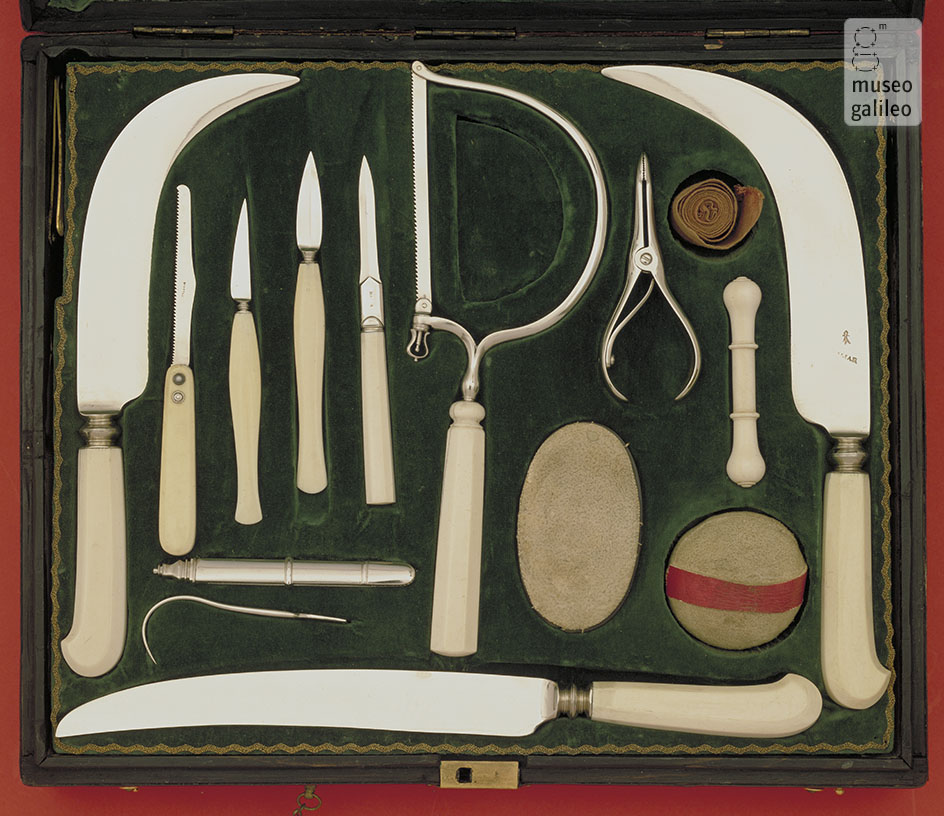
Image: I had some fun looking for an appropriate image to go with this post. I came across some gruesome pictures of 19th century (unsterilised) amputations but, given that some of you might not appreciate seeing this, I limited myself to just showing you a 19th century surgeon’s instrument kit…and those of you that want to can let your imagination run riot 🙂


 Squire to the Giants