Oh no, not that old theory!

9365403Most of us who have been on some form of management course will likely have heard of ‘Theory X and Theory Y Management’. You may groan and say “oh no, not that old theory…I’ve never used it for anything” or “you’re a bit behind the times…we’ve all moved on since then!”

The more I look back at the early work on management, the more I believe that they contain profound foundations for what has come since. Let me explain.

A short history lesson (taken from Scholtes ‘The Leaders Handbook’ and Handy’s ‘Understanding Organisations’):

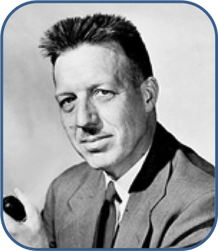
  • Douglas McGregor’s father and grandfather were ministers;
  • His grandfather founded a homeless shelter in Detroit during the 1930s depression;
  • A young Douglas worked in the shelter alongside his father and grandfather.

Douglas and his father held very different views on the people they assisted, something that they would argue about.

  • His father held negative views towards the unemployed and homeless, considering them shifty and lazy etc;
  • Conversely, Douglas considered the poor to be no different from others, just that they were simply down on their luck and victims of a terrible economic situation.

As Douglas grew older, his thinking evolved into his famous 1960s articulation of Theory X and Theory Y assumptions about workers.

Theory X:

  1. The average human being has a natural dislike of work, and will work as little as possible;
  2. He/she lacks ambition, wishes to avoid responsibility and prefers to be led;
  3. He/she is by nature resistant to change but is gullible and not very bright;

Because of these characteristics, most people must be coerced, controlled, directed or threatened so as to modify their behaviours to fit the needs of the organisation.

The above might be said to require a ‘command and control’ style of management.

Theory Y:

  1. The expenditure of physical and mental effort in work is as natural as play or rest;
  2. People will exercise self-direction and self-control in the service of objectives to which they are committed;
  3. The motivation, potential for development, capacity to assume responsibility, and readiness to direct behaviour towards organisational goals, are all present in people;
  4. The capacity to exercise a relatively high degree of imagination, ingenuity and creativity towards organisational problems is widely, not narrowly, distributed in the population.

It is the responsibility of management to arrange the conditions and methods of operation so that people can achieve their own goals best by directing their own efforts in alignment with the purpose of the organisation.

The above matches the teachings of W Edwards Deming and what has been labelled a ‘Systems Thinking’ management system.

The point: McGregor was NOT writing about two different types of people. His theory was about two sets of assumptions made about people.

We can see that this will be a self-fulfilling prophecy. If management apply Theory X assumptions to their people (commanding and controlling them), then they can expect to see Theory X behaviours in return. This is cause and effect.

People are not, by nature, passive or resistant to working towards the organisation’s purpose. They have become so as a result of the management system that they experience.

Conversely, if management provides an environment that allows systems thinking, collaboration, interesting work content and choice through self direction, then we can expect Theory Y assumptions to become a reality.

A clarification: Theory Y still requires a clear sense of organisational direction (purpose) and systemic structure (though not necessarily hierarchical).

As an aside:

  • I always see a flaw in Theory X assumptions. It requires manager and worker to be two different sub-species of human beings. Otherwise the theory is disproved by contradiction – if, for example, people don’t like responsibility but managers do, then they can’t be the same human variety!;
  • Conversely, I see that Theory Y fits with one human genus. It works no matter where you are positioned within an organisation’s system.

Actions speak louder than words: Now, you will likely say “…but leaders always talk about their ‘Theory Y’ assumptions”….and, yes, I realise that this is so…this is what they (rightly) think the people want to hear.

But are their actions the opposite? What about the management instruments of cascaded personal objectives, arbitrary numeric targets , contingent rewards , and the rating and ranking of people’s ‘performance’.

A subtle, yet massive implication: If leaders use carrots and/or sticks then they are subscribing to Theory X assumptions about their people….otherwise carrots and sticks would make no sense.

A thought-provoking quote from Scholtes:

“Behind incentive programs lies management’s patronising and cynical set of assumptions about workers….Managers imply that their workers are withholding a certain amount of effort, waiting for it to be bribed out of them.”

Does your organisation trust you?

fear-441402_640Wow, that’s a big hairy question! Let me use an old case study by Peter Scholtes to explain:

In the mid 1980s the management of an American company (The Falk Corporation) were working to understand the philosophy of W. Edwards Deming. They began to explore his 8th (out of 14) Management Point:Drive out fear, so that everyone may work effectively for the company.”

The company had a long history of adversarial relationships between management and employees. Whilst trying to grapple with this fear point they decided to consider its inverse, which they concluded was trust.

They then began to explore the issue of trust.

  • Do we trust our employees?
  • Are our employees trustworthy?
  • How can we develop and maintain an organisational environment that values mutual trust and respect?

They developed two lists of characteristics to describe a trustworthy employee and its converse. These lists looked remarkably similar to Douglas McGregor’s famous 1960s descriptions of Theory X and Theory Y assumptions about people.

They then came up with an estimate of how many of their employees resembled the trustworthy list and how many the untrustworthy. They concluded that at least 95% of their people were trustworthy.

They stood back and realised that their policies, practises and procedures were written for the 5% and were not compatible with Deming’s Point 8 of driving out fear.

They undertook to rewrite their policies with trust in mind.

Here is a wonderful example of one of their ‘before’ and ‘after’ policies’

Bereavement Leave (the old policy)

All employees shall receive time off with pay up to a maximum of three (3) days for working time lost if there is a death in the immediate family.

These days must be within a seven-calendar-day period, the first day of which would be the initial bereavement day paid. However, one of the days must be the day of the funeral. If the funeral falls on a non-scheduled workday (Saturday, Sunday, holiday, during a plant shutdown, or during a period of disability), no loss of pay is involved, therefore bereavement pay will not be made for such days.

Pay will be for eight (8) hours at the employee’s day rate plus average premium for the three (3) months prior to the month in which the time off occurred.

A part-time employee’s pay will be based on average hours worked in the previous month and will be at the employee’s day rate plus average premium.

An employee’s immediate family will be considered…spouse, child, stepchild, mother, father, sister, brother, stepparents, grandparents, and grandchildren of the employee; son-in-law and daughter-in-law; mother, father, sister, brother, and grandparents of the spouse.

Payment will be made by the company upon request by the employee to the personnel department.

The personnel department may require verification of death and relationship of the employee.

Bereavement Leave (the new policy)

If you require time off due to the death of a friend or family member, make arrangements with your supervisor.

The usage result? Bereavement leave usage under the new policy was only 47% of the days used under the old policy.

To be clear, the usage result wasn’t the purpose of the change, but it was a healthy side effect for the organisation – a win/win.

Conversely, if they had focused on a numeric KPI target to reduce bereavement leave usage, they would likely never have achieved such a major change, any improvement would have been unlikely to have lasted…and, in the long run, it may very well have become worse! This is because they wouldn’t have understood the cause. This links back to my earlier post on the folly of managing by results.

What about the link between trust and transparency?

Borrowing from a Hakan Forss post entitled: There is a reason why thieves and crooks prefer to operate at night

“There are organisations that have thrown away their control systems for controlling things like travel expenses. They at the same time made everyone’s travel expenses public. You may suspect that this led to higher travel expenses as everyone would travel in first class and stay at the most expensive hotels. But no, the results are the opposite.

Travel expenses often go down or stay the same. When everyone can see what everyone else is spending there is less room for the thief and crook behavior, because everyone can see it.”

He then goes on to deal with the issue of the potentially untrustworthy 5%:

“… but what if people are not making the right decisions. What if everyone travels first class and are spending like drunken sailors…then you as the leader have to lead by example. Show the organisation’s values, show the wanted direction. Don’t blame the people. Don’t create a control system. Show the direction and lead by example.”

We won’t change the reality that there is likely to always be one ‘black spot on a white page’ but, rather than designing a straight jacket for everyone, a better approach is for management to properly handle the 5%. Indeed, if we combined transparency with a clear organisational purpose and the sharing of the organisation’s success (I don’t mean incentives!) then policies will likely be self-policed by the group.

I like the concluding quote:

“Transparency is the new control system” (Jeremy Hope)

Now, to relate this back to a typical modern day organisation: I consider myself trustworthy, that I know to do the right thing but I also know that an untrusting (bureaucratic and controlling) environment seriously annoys me and may cause me to react accordingly.

Take expenses as an easy example:

  • If I am staying away from home and am trusted, I might have a nice meal out one night. I will then have a lesser meal the next night to compensate and keep my costs in balance. I accept that I need receipts and that someone could ask me about this, but I am comfortable that I have a reasoned response for my actions;
  • If management impose a controlling policy on me which prevents me making reasonable choices for myself (as in the above) and, instead, dictates a complicated and exacting policy along the lines of a daily limit of, say, $60 for breakfast, diner and drinks….then I might very well be tempted to ‘use all of my allowance every day’ as a reaction to the lack of trust being shown in me…even though I never used to get close to spending this much!

Whilst expenses are an easy example to demonstrate the trust and transparency point, I am sure many of you will have your own personal stories to tell about organisations you have worked in, their business policies and the effects.