The Principle of Mission

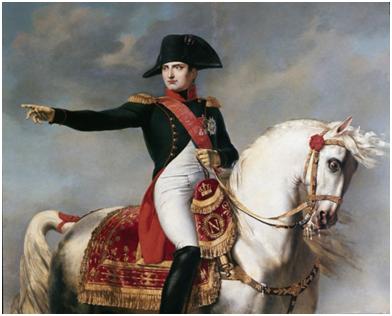
NapoleanSo I’ve written a few posts to date about ‘purpose’.

This post explains a related term, ‘Principle of Mission’, by taking us back through military history (sadly the source of much of our breakthrough learnings).

The phrase ‘Command and Control’ as applied to the common form of organisational management is associated with the military and how they traditionally functioned.

I expect most of you have seen some classic war films/documentaries of a bygone age and you can paint the picture of the following scene in your mind’s eye:

  • A large area of land, perhaps outside a castle/ fortified town or out on the plains;
  • Various units of men drawn up in formations on either side
    • perhaps divided into infantry, cavalry, archers and artillery (where the technology available would depend on the age – from catapults through to cannons);
  • …and a small huddle of officers up on a hill (and a safe distance from ‘the action’), surrounding their General seated on a white stallion.

The General has an objective and a detailed plan of how he is going to achieve it!

“Roll cameras, action”, and we see the General giving orders (Command), watching the melee (perhaps via the help of a telescope), receiving reports ‘from the front’ (Control) and adding to and/or revising these orders.

battle scene

And so to 14th October 1806 and the twin Battle of Jena-Auerstadt , at which Napoleon’s far smaller French force faced the might of the Prussian Army. However, Napoleon won a decisive victory and he did so because he did far less of the commanding-and-controlling thingy and, instead, used a different way of thinking.

In the aftermath, the Prussian military performed what we might call a retrospective to work out how they were so convincingly beaten and what they should learn from this.

Their post-mortem noted that Napoleon’s system provided his officers with the authority to make decisions as the situation on the ground changed and, crucially, without needing to wait for approval through a classical ‘chain of command’. Thus, they could adapt rapidly to changing circumstances.

If a French regiment got stuck in the proverbial mud, there was no wallowing around waiting to see what Napoleon thought they should do about it! Conversely, the Prussians in that same quagmire would be cannon fodder.

In the decades subsequent to the Battle, General Scharnhorst and then Helmut von Moltke built a new Prussian military culture, aimed at leading under conditions of uncertainty. Von Moltke wrote1.:

  • “in war, circumstances change very rapidly, and it is rare indeed for directions which cover a long period of time in a lot of detail to be fully carried out”;
  • “[I recommend] not commanding more than is strictly necessary, not planning beyond the circumstances you can foresee”;
  • “[instead] the higher the level of command, the shorter and more general the orders should be. The next level down should add whatever further specification it feels to be necessary…this ensures that everyone retains freedom of movement and decision within the bounds of their authority.”

And perhaps to the key point: Military orders must always clearly explain their intent i.e. the purpose of the order. This means that anyone carrying them out is focused on the intent and not blinded by any prescribed method.This new military way of thinking has been adopted widely though, perhaps surprisingly, the old command-and-control logic has lingered.

Hence why we get the best selling book ‘Turn the Ship Around!’(2012)2. in which Captain L. David Marquet eloquently writes about how he turned the fortunes of a U.S. Navy Nuclear submarine around by turning followers (his officers and staff) into leaders. A major theme in his story is about enabling his staff to think in terms of intent instead of merely waiting for, and following orders.

“What happens in a top-down culture when the leader is wrong? Everyone goes over the cliff.” [Marquet]

Bringing this together, The Principle of Mission is for leaders to describe the intent of the organisation’s mission, clearly communicate why it is being undertaken and then let the people get on with working out how to achieve it …and this is instead of, not as well as, making highly detailed plans and then controlling their execution.

And so to organisations:

We aren’t ‘in the army now’ but we all work with organisations that can learn from the above. We should be clear on each of our value-streams and their (customer-driven) purpose.

Such purposes set out clear intent to the system and its people tasked with delivering it.

…and a reminder that profit is not the purpose (or at least it shouldn’t be).

The role of the leader:

John Seddon wrote a fascinating book in respect of the UK public sector called ‘The Whitehall effect’3. In his chapter ‘Getting a focus on purpose’ he writes that:

Politicians* should get out of management. But they should have a lot to say about purpose….

[this] means a shift away from the central dictation of operating specifications such as targets, standards and activity. Instead, service leaders must be free to make responsible choices about the measures that will best enable them to achieve the purpose…Freed from the obligation to deploy the paraphernalia of [dictated methods], it will be up to the service leaders to choose how they improve their services against purpose, placing value on ‘better practise’ which is dynamic (anything can be improved) rather than ‘best practise’ [Ref. Benchmarking] which is static (as well as misleading). They will be guided by the rudder of efficacy, not the rudder of compliance – and they will be judged by the same token.”

* The Politicians in this quote are the leaders of what has been termed ‘UK Plc’. I am asking leaders of organisations to substitute themselves for the politicians in this quote.

Thus, the leader-service manager feedback question changes drastically:

  • From: “Have you done what I told you to do?”
  • To: “How do you know how well you are doing in achieving the (customer driven) purpose of the service?”

This is a radical shift and opens the way for true adult – adult coaching conversations.

An aside: Steering committees

I have seen a fair few high level steering committees over the years. Most fall into the command-and-control trap. Picture the scene:

  • A Project Manager reports back to the steering committee;
  • The committee discuss what is before them and, using their opinions, dictate how the Project should proceed;
  • The Project Manager is uncomfortable with this outcome but chooses to carefully manage his stakeholders (i.e. doff his cap to them)…so he takes the committees ‘decisions’ back to the team;
  • …and the team quickly and clearly explain why following such a path would be quite mad;
  • …and so the Project Manager has to commence an impossible juggling act.

In short: Committees should not dictate the ‘how’, but they should be absolutely clear on the ‘what’* and ‘why’ (the principle of mission).

* this is referring to a target condition, not a target date.

A HUGE clarification:

It doesn’t matter how clearly Napoleon, or any other leader, articulated intent if their people don’t want to follow.

Setting out a clear and meaningful purpose is but one (key) part of the overall system. The rest comes down to management’s beliefs and behaviours, and the environment that this creates.

…and finally, if you like the military discussion above, here’s a link to a short and highly related post called Why don’t you just written by ‘The Lean Thinker’.

Notes

  1. Source of quotes: von Moltke’s ‘Guidance for Large Unit Commanders’ as quoted by Stephen Bungay in his book ‘The Art of Action’.
  2. Marquet’s book is an excellent, easy read.
  3. For those of you who don’t know too much about the UK, Whitehall is a road in central London on which most of the government departments and ministries reside. When someone talks about ‘Whitehall’ they are usually referring to the centre of the British government and its civil servants.

The catalyst for writing this post was reading about the term ‘Principle of Mission’ within the book ‘Lean Enterprise’ by Humble, Molesky and O’Reilly.

Unknown…and unknowable

so much more than a bagSo it’s the beginning of an ‘Improvement through Systems Thinking’ course that I facilitate and I am asked a question from one of the attendees:

“What is the value, as in ‘return on investment’ (ROI), in me attending this training?”

Now, that’s a (sadly) all too common a question when someone working within a command-and-control environment has to guarantee a short term payback BEFORE they are authorised to spend time towards studying and improving their system.

Here’s my response:

1) It isn’t a training course. It is education, aimed at making you curious. No more and no less; and

2) The ‘value’ is unknown….and unknowable!!!

Sure, I can (and will) do my best in designing and delivering this course against its purpose but:

  • I cannot know (let alone dictate) which of you will speak to who during and afterwards, and about which bits. I cannot know when such conversation(s) will occur (tomorrow, next week, next month…or even after someone leaves for another organisation!) and I cannot know how the system will enable (or constrain) as and when these conversations eventuate; 
  • and perhaps the nub of it is that the ‘value’ is in YOUR hands to decide, not mine! YOU decide whether you will explore or ignore. YOU decide whether you are too comfortable in your current state or whether you desire growth. Not I.

…BUT that doesn’t make this a problem. It’s just ‘how it is’, whether you like it or not.

There is massive ‘organisation-changing’ value to be had…but it is for you to decide whether you pursue it.

The ‘ROI as permission to act’ view of the world is such a poor way to seek, and achieve, improvement.

I am reminded of a fabulous scene in the classic ‘Love Actually’ film between Rowan Atkinson and the late Alan Rickman: How much is that necklace there? (It’s only 3 mins. long and well worth watching 🙂 )

A course can be ‘so much more than a bag’…but that depends on you.

Oversimplification

!cid_image001_png@01D18034So it seems that many an organisation repeats a mantra that we must “simplify, simplify, simplify”…they accompany this thrice repeated word with rhetoric that implies that this is so blindingly obvious that only a fool would query this!

As such, anyone questioning this logic is likely to hold their tongue…but I’ll be that fool and question it, and here’s why:

It’s too simple!

Here’s where I mention the ‘Law of requisite variety’ which was formulated by the cyberneticist1 W. Ross Ashby in the context of studying biological systems. Stafford Beer extended Ashby’s thinking by applying it to organisations.

Now, rather than stating Ashby’s technical definition, I’ll put forward an informal definition that I think is of use:

“In order to deal properly with the diversity of problems the world throws at you, you need to have a repertoire of responses which is (at least) as nuanced as the problems you face.” (What is requisite variety?)

!cid_image002_png@01D18034

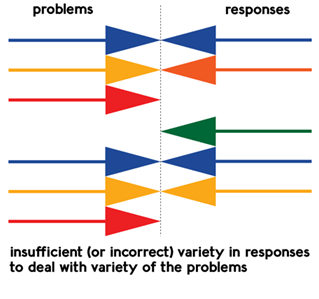
Using the diagram above, let’s say that the problem types on the left (shown by different coloured arrows) represent the different types of value demands from our customers.

Let’s say that the responses on the right are what our system* is designed to cope with (* where system means the whole thing – people, process, technology – it doesn’t refer merely to ‘the computer’).

We can see that our system above is not designed to cope with the red arrows and incorrectly copes with some of the yellow arrows (with an orange response)….the customers with these value demands will be somewhat disappointed! Further, we would waste a great deal of time, effort and money trying to cope with this situation.

What on earth are you on about?!

“Management always hopes to devise systems that are simple…but often ends up spending vast sums of money to inject requisite variety – which should have been designed into the system in the first place.” (Stafford Beer)

Many large organisations engage in ill thought out and/or overly zealous ‘complexity reduction’ initiatives (incidentally, system replacement projects* are corkers for this!) that strip out more than they should and the outcome is unusable and/or hugely harmful towards satisfying customer value demands…which ends up creating un-necessary complexity as the necessary variety is ‘put back in’ via workarounds and ugly add-ons and patch-ups.

(* Large public sector departments have been excellent at this….often scrapping multi-million $ projects before a single live transaction gets into a database.)

Note: for readers aware of the ‘Lean Start-up’ thinking, you might cry out that this appears to go against the Minimum Viable Product (MVP)/ experimentation point…but it doesn’t…in fact it supports thinking in terms of target conditions rather than merely stating ‘make it simple’ objectives and setting related arbitrary targets.

Standardisation?

You might think that, because service demand is infinitely variable 2, then I am suggesting that we need to build infinitely complex systems that can cope with every eventuality with standardised responses. Well, no, that would be mad…and impossible.

In service, we can’t hope to know every ‘coloured arrow’ that might come at us! Instead, we need to ensure that our service system can absorb variety! This means providing a flexible environment (e.g. guidelines, not ‘straight jacket’ rules), and empowering front line staff to ‘do the right thing’ for the specific variety of the customer’s demand before them, and pulling appropriate expertise when required.

Standardisation in service is not the answer.

Cause and Effect

Don’t confuse cause and effect. Simplification should not be the goal…but it can be a very agreeable side effect.

“To remove waste [e.g. complexity], you need to understand its causes….if the system conditions that caused the waste are not removed, any improvements will be marginal and unsustainable.” (John Seddon)

If you think “We’ve got too many products and IT applications…we need to run projects to get rid of the majority of them!” then ask yourself this: “Did anyone set out specifically to have loads of products and IT applications?” I very much doubt it…

You can say that you want fewer products, less technology applications, less complex processes…less xyz. But first, you need to be absolutely clear on what caused you to be (and remain) this way. Then you would be in a position to improve, which will likely result in the effect of appropriate simplification (towards customer purpose).

If you don’t understand the ‘why’ then:

  • how can you be sure that removing all those products and systems and processes will be a success? and
  • what’s to stop  them from multiplying again?

The goal should be what you want, not what you don’t want

“If you get rid of something that you don’t want, you don’t necessarily get something that you do want…improvement should be directed at what you want, not at what you don’t want.” (Russell Ackoff)

The starting point should be:

  • studying your (value stream) systems and getting knowledge; and then
  • experimenting towards purpose (from the customers point of view) , whilst monitoring your capability measures

The starting point is NOT simplification.

A classic example of the simplification mantra usurping the customer purpose is where organisations force their customers down a ‘digital’ path rather than providing them with the choice.

  • To force them will create dissatisfaction, failure demand and the complexity of dealing with it;
  • To provide them with choice will create the simplicity of delivering what they want, how they want it…with the side effect of educating them as to what is possible and likely moving them into forging new habits (accepting that this takes time).

In conclusion

So I’d like to end on the quote that I have worn out most over my working life to date:

“Make everything as simple as possible, but no simpler.” (attributed to Einstein)

The great thing about this quote is that it contrasts ‘relative’ with ‘absolute’. “As simple as possible” is relative 3 – it necessitates a comparison against purpose. “Simple” is absolute and, as such, our pursuit of simplification for its own sake will destroy value.

Thus, the quote requires us to start with, and constantly test against, customer purpose…and the appropriate simplicity will find itself.

Notes:

  1. Cybernetics: the science of control and communication in animals, men and machines. Cyberneticians try to understand how systems describe themselves, control themselves, and organize themselves.
  2. Infinite variability: We are all unique and, whilst we will likely identify a range of common cause variation within service demand (i.e. predictable), we need to see each customer as an individual and aim to satisfy their specific need.
  3. There’s probably an Einstein ‘relativity’ joke in there somewhere. 

Pick me, pick me!

Thierry HenryI have an image in my head: I’m a small school boy on the playing fields at lunchtime. We are going to have a kick-around and, with the two most popular boys self-installed as Captains, me and my mates are all lined up trying to look good, with our eyes desperately pleading ‘pick me, pick me’no one wants to be left till the end, unwanted and discarded.

So, on to the mighty world of organisational strategy. There are two very different end points on the strategy spectrum. These have been labelled as:

  • Strategy as Fit; and
  • Strategy as Stretch.

Here’s a quick explanation:

Strategy as Fit:

  • The idea that an organisation analyses its external environment (including the forces* of Customers, Suppliers, Competitors and Substitutes) and then tailors its strategy to fit into this.
  • This then requires the necessary resources to be identified, obtained (if not already in place) and allocated
  • This (rather traditional) approach to strategy involves:
    • Market segmentation and positioning as against the competition and substitutes;
    • Logical hierarchical control structures, breaking the organisation into component parts of the so-called ‘value chain’;
    • Formal ‘Position Descriptions’ (PDs) in which roles are explicitly specified and then people fitted to them;

and when things change (as they frequently do)

  • Top-down ‘re-fits’, where defunct roles are disestablished and shiny new roles created…with people as pawns in this game (“Quick, everybody line up against the wall to re-apply for one of our shiny new PDs, you lucky things! I’ll be Captain making the picks)

* ‘Strategy as Fit’ harks back to the original strategy work of the highly respected Professor Michael Porter. His ‘Porters 5-forces’ model is ‘page 1 of Strategy 101’.

Strategy as Stretch:

  • The alternative idea that an organisation has a current set of resources and, rather than be dictated to by assumptions about, and posturing within, the external environment, the organisation creates an internal environment in which their people thrive and grow – they voluntarily stretch themselves;
  • The idea here is to leverage existing resources such that they achieve their potential: developing themselves, innovating, experimenting, collaborating…moving the organisation in new and unpredictable ways;
  • It’s not about roles (and PDs), it’s about human beings – who they are and what they can become;
  • The question changes:
    • From: what resources do we need to achieve what we’ve decided
    • To: where can we go with the resources we’ve got…where this will unfold and surprise as time passes

* ‘Strategy as Stretch’ comes from the work of Professors Gary Hamel and C.K. Prahalad. They wrote a 1994 book called ‘Competing for the Future’ in which they talk of stretch and resource leverage.

You can see that ‘fit’ will be preoccupied with doing things efficiently whereas ‘stretch’ will be constantly focused on being effective. Constraining vs. liberating.

So what about Dave?

Okay, so let’s see if I can make this a little bit more meaningful/ relevant with a hypothetical example. If you have a worker, let’s call him ‘Dave’, with:

  • Capability: He has a high level of skill in his chosen profession and clearly wants to learn more – both deeper and wider;
  • Experience: he has worked for the organisation for many years, knows who’s who, knows how the place works, knows what’s been done in the past, knows what worked, what didn’t and gained some valuable insights in the process;
  • Desire: he clearly wants to deliver value to the customers of the organisation, and is passionate about doing so
  • People-skills: he has natural social skills and can relate to and empathise with people, collaborate and contribute.
  • Professionalism: he is highly respectful of his customer and peers.

...then you’d be delighted!!! Dave is clearly a ‘good guy to have around’ – I’ll have a dozen please 🙂 . You’d be absolutely nuts to actively ‘get rid of him’!

So, let’s see how our two strategic logics deal with ‘Dave’ when the work that he has been doing to date appears to be no longer required.

Fit:        

  • “Sorry Dave, the PD that you were allocated to no longer exists…so we are going to have to ‘disestablish’ that PD…
  • ..but there’s some collateral damage from this ‘allocation issue’ – erm, you’ve no longer got a job. Sorry about that…but good luck though.
  • Now, yep, would love to stop and chat but I’ve got to rush off to interview people to allocate into our brand spanking new PDs – exciting stuff eh!”

Stretch:

  • “Okay Dave, we think your work is just great, but as you know things have moved on…we need to work out how to leverage ‘you’ (who you are and who you can be) and what your next challenge is going to be!
  • …you’ve got some ideas as to how you want to develop? You’ve been thinking about them for a while? Excellent – let’s hear them and work out how we best support you.
  • …great idea. That should be very beneficial for our customers (and therefore our organisation). What do you need to get going?!”

In short: If you’ve got a Dave, you’d be mad to drop him from your team!

Pick Dave every time: always make a position for him so that he can fully and freely express himself for the undoubted and ongoing benefit of the team!

…and look after Dave: Dave is a person, not a ‘PD filler’. Beware Top-down ‘refits’ and their massive long term effects on morale.

In summary:

If management think in terms of ‘fit’, then Daves are regularly shown the door as collateral damage from the resource allocation merry-go-round… not that management would know this: “Dave? Dave who?”

Of course, if management change to thinking ‘stretch’ then they will be astounded as to how many Daves they actually have (but didn’t appreciate because they were lying dormant)…and can leverage them to the delight of every Dave, and for the long term good of the organisation and its customers.

“…the only sustainable competitive advantage available to a firm in a fast-changing world (especially in a service business) lies with its people – especially their creativity, insights, and judgement – a model in vivid contrast to the numbers driven [inhumane ‘fit’] alternative so prevalent elsewhere.” (Source: ‘Beyond Budgeting’ referring to Dr. Jan Wallander of Handelsbanken)

Note: I write this post for all the Daves throughout my career that have been shown/ pushed through the revolving door at ‘re-organisation time’ (wisdom out, ‘fresh meat’ in, yet the system remains the same 😦 ).

Also, I don’t mean to be sexist – I just like the name ‘Dave’. I had a cat called ‘Dave’ for this same reason. I should add that I have seen many a female ‘Dave’ walk out the door too…I shall (from now on) refer to them as ‘Bob’…but then you’d have to be a Blackadder fan to get that 🙂

p.s. The picture is of Thierry Henry – you’d have been mad not to have picked him for your team.

“So, tell me about yourself”

InterviewA good friend of mine got talking to me about interview questions the other day.

She was having a laugh at the ‘creative’ questions that many interviewers can dream up such as “tell me what makes you special!”

I replied that I think the worst interview question is the “what are your greatest weaknesses”…and then I got thinking about why this is so.

Now, an interviewer can dream up all sorts of weird and wonderful questions that will allow you the space to sell yourself (if you are willing and able to) but this ‘weakness question’ is different. I suspect that it makes us all squirm because it causes a huge moral dilemma:

  • you want to be yourself, to be genuine, to be open and honest….

BUT

  • you also want the job!

So you’ve been put in a rather tight spot!

I’ve read all sorts of ‘clever’ (cheesy) responses. There’s plenty of advice on the web to answer this tricky conundrum, but they all try to do the same thing: get around the question rather than being brutally honest.

So, why am I bringing up this dastardly interview ‘weakness’ question?

Well, because I realised that this is an excellent parallel to the (ir)regular performance management meeting.

How so?

If you are part of a ‘set personal objectives – rate performance against – provide contingent reward’ Performance Management system then you too are in a rather tight spot.

Let’s imagine that you are in your annual performance review meeting:

  • on the one hand, you have a manager before you who has the job of developing you and, to do this, needs to truly know about how things are for you. They need genuine, open and honest ‘warts and all’ feedback;
  • on the other hand, this same manager has to judge you, which requires an interrogation of the available evidence and the scoring of it, as compared to your peers. You need to sell yourself.

What’s wrong with this?

These two ‘management’ roles are diametrically opposed. A manager cannot be judge and counsellor/coach at the same time.

If you were to lie down in a psychiatrist’s chair, you can expect that he/she will go to great lengths to put you at your ease, make clear that everything spoken is private and that no judgement of you will take place….and even then I suspect that it would take multiple visits before you truly opened yourself up….and in so doing, you provide the knowledge and insights required for you to develop.

Now, I know you won’t lie on a reclining chair in a performance review meeting (at least I don’t) but a similar environment of trust is required for a manager to truly help you (and, by extension, the organisation).

“When the person to whom you report decides how much money you will make (or what other goodies will be awarded to you) you have a temptation to conceal any problems you might be having. Rather than asking for help, which is a pre-requisite for optimal performance, you will be apt to spend your energies trying to flatter that person and convince him [or her] that you have everything under control. Moreover…you will be less likely to challenge poor decisions and engage in the kind of conflict that is beneficial for the organisation if you are concerned about losing out on a reward. Very few things are as dangerous as a bunch of incentive-driven individuals trying to play it safe.” (Alfie Kohn)

If you know that you are being judged (with a carrot or stick at the end of this) then you are going to be extremely careful (and selective) about what you do and say. You will likely:

  • seek, sift through and provide only positive evidence (choosing feedback wisely and carefully omitting what doesn’t fit your wishes);
  • talk up what has occurred, and you role within (it was all ‘because of me’!);
  • defend your position when it is challenged (presenting a strong case as to why something or someone else was to blame);
  • keep quiet about areas you have struggled with;
  • …[and so on – no doubt you can expand]

None of this is to call you a ‘bad person’…you would be merely playing your part in the game of survival that has been put before you.

You might get your carrot, but your organisation will miss out on what it really needed to know…and the game will continue on to its next round.

A better way

Wouldn’t it be just fantastic if you were willing to ‘share it all’ with your manager, and to do so without any salesperson’s spin. How about: where you got it wrong; where you didn’t understand; where you don’t agree, where you feel weak and exposed, where you’d really like some help… where it was actually a joint team effort (not just ‘me’)…basically what is really going on!

Even better, how about being willing to have these conversations as and when the need arises (and not, say, 6 months later in some staged meeting).

This is possible….but only with a different way of thinking.

Here’s where I repeat Alfie Kohn’s 3-step approach that I have already shared in an earlier post (The Chasm):

  1. abolish incentives: remove extrinsic motivators (incentives, competitive awards….);

“pay people well and fairly…then put money out of their minds.” (Kohn)

  1. then re-evaluate ‘evaluations’: move from formal time-batched judgement events to continual 2-way conversations divorced from the issue of compensation;
  1. then create the conditions for authentic motivation:
    • Collaboration: across the horizontal value stream
    • Work content: make it interesting
    • Choice: allow people to experiment and learn

There’s a reason for the order of these steps: True organisational success is unleashed by point 3…but, most importantly, is held back (even quashed) without first attending to point’s 1 and 2.

Irony

There are some people who are willing and able to say exactly what they think in a performance management review*, which they do because they have a desire to make their organisation a better place to work (for them, and everyone else)….and then risk the consequences of low(er) ratings and a poor ‘reputation’ with their manager (as in “s/he’s a trouble maker that one!”)…which may even then go on to be ‘shared’ with others in the hierarchy.

This is ironic madness. I favour any management system that encourages and supports open-ness and honesty that is devoid of personal agendas.

* I’m not suggesting that there is anything particularly great about such people. Such willingness and ability may come down to personality and economic circumstance allowing…which is not so for most.


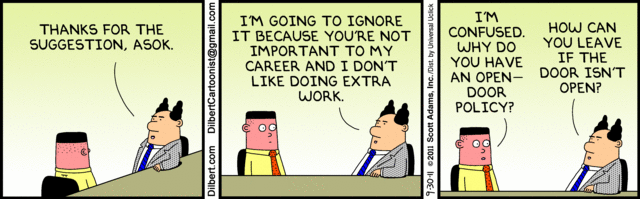
“We have an ‘open door’ policy here!”

Translation:

  • You are quite welcome to come up to me, and try to get my attention….otherwise you will be completely ignored;
  • If you do ‘risk it’ and open your mouth, just make sure that you say something I want to hear;
    • Every problem you have is your fault by default…so already know what you are going to do about it – you should merely be asking for my permission (as in begging);
    • …which I won’t give (at least not clearly or straight away or in any timescale that is of use to you)…but I will still hold you accountable.
  • Conversely, if I want you, I will summon you through my ‘open door’ and into my domain as and when I wish (I won’t pick up the phone or come to you).

Open door policy.gif

Meanwhile, in another Universe: Managers Leaders ‘go to the Gemba’.

Crossing the Divide

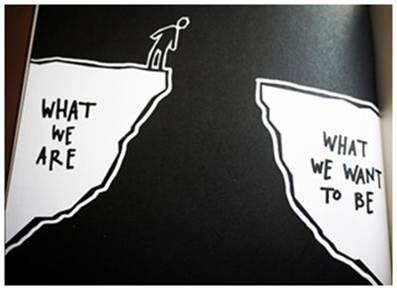
Picture1Are you interested in crossing that divide?

Okay, listen up 🙂 …this post is my attempt at one of those important bringing-it-all-together ones that provide a big message (see – look at the picture!)…which means that it’s a bit longer than normal because it needs to be.

I thought about breaking it into pieces and publishing bit-by-bit but this would make it longer (each bit needing a top and a tail) and hard to mentally put back together.

So I’ve decided to keep it together and let you, the reader, decide how you consume it. You might like to read it in one; or dip in and out of it during your day; or even set yourself an alert to finish it the next day…so (as Cilla Black used to say) “the choice is yours”. Here goes…

Mike Rother wrote what I believe to be, a very important book (Toyota Kata) about how organisations can improve, and what thinking is stopping them.

In particular, Chapter 9 of the book deals with ‘Developing Improvement Kata [pattern] behaviour in your organisation’. I thought it worthwhile posting a summary of his excellent advice derived from his research….

…and I’ll start with a highly relevant quote:

“Do not create a ‘Lean’ department or group and relegate responsibility for developing improvement behaviours to it.

Such a parallel staff group will be powerless to effect change, and this approach has been proven ineffective in abundance.

Use of this tactic often indicates delegation of responsibility and lack of commitment at the senior level.” (Mike Rother)

Many an organisation has gone down the ‘Lean department’ (or some such label) route…so, given this fact, here’s what Rother goes on to say, combined with my own supporting narrative and thought:


1. Be clear on what we are trying to achieve

If you really want to cross that divide then the challenge that we should be setting ourselves is learning a new way of thinking and acting such that we:

  • get the ‘improvement behaviour’ habit into the organisation; and then
  • spread it across the organisation so that it is used by everyone, at every process, every day.

And to make it even more ‘black and white’: the challenge is NOT about implementing techniques, practices or principles on top of our existing way of managing.

It means changing how we manage. This involves a significant effort and far reaching change (particularly in respect of leadership).


2. What do we know about this challenge?

  • Toyota (from the foundational work of Taiichi Ohno) is considered the world leader in working towards this challenge…they’ve been working towards it for 60+ years;
    • We can study and learn, but should not merely copy, from them;
  • The start, and ever-continuing path, is to strive to understand the reality of your own situation, and experimenting. This is where we actually learn;
  • No one can provide you with an ‘off-the-shelf’ solution to the challenge:
    • There isn’t likely to be an approach that perfectly fits for all;
    • It is in the studying and experimenting that we gain wisdom;
    • ‘Copying’ will leave us flailing around, unknowingly blind;
    • Our path should continually be uncertain up until each ‘next step’ reveals itself to us.

Wow, so that’s quite a challenge then! Here are some words of encouragement from Rother on this:

“There is now a growing community of organisations that are working on this, whose senior leaders recognise that Toyota’s approach is more about working to change people’s behaviour patterns than about implementing techniques, practises, or principles.”


3. What won’t work?

If we wish to spread a new (improvement) behaviour pattern across an organisation then the following tactics will not be effective:

Tactic a) Classroom training:

Classroom training (even if it incorporates exercises and simulations) will not change people’s behaviours. If a person ‘goes back’ into their role after attending training and their environment remains the same, then expect minimal change from them.

“Intellectual knowledge alone generally does not lead to change in behaviour, habits or culture. Ask any smoker.”

Rother makes the useful contrast of the use of the ‘training’ word within sport:

“The concept of training in sports is quite different from what ‘training’ has come to mean in our companies. In sport it means repeatedly practicing an actual activity under the guidance of a coach. That kind of training, if applied as part of an overall strategy to develop new behaviour patterns is effective for changing behaviours.”

Classroom training (and, even better, education) has a role but this is probably limited to ‘awareness’….and even that tends to fade quickly if it is not soon followed by hands-on practising with an appropriate coach.

Tactic b) Having consultants do it ‘to people’ via projects and workshops:

Projects and workshops do not equal continuous improvement. This is merely ‘point’ improvement that will likely cease and even slip backwards once the consultant (or ‘Black Belt’) has moved on to the next area of focus.

Real continuous improvement means improving all processes every day.

Traditional thinking sees improvement as an add-on (via the likes of Lean Six Sigma projects) to daily management. Toyota/ (actual) Lean/ Systems thinking (pick your label!) is where normal daily management equals process improvement i.e. they are one and the same thing.

To achieve this isn’t about bringing experts in to manage you through projects; it is to understand how to change your management system so that people are constantly improving their processes themselves. Sure, competent coaches can help leaders through this, but they cannot ‘do it for them.’

And to be clear: it is the senior leaders that first need coaching, this can’t be delegated downwards.

“If the top does not change behaviour and lead, then the organisation will not change either.”

Tactic c) Setting objectives, metrics and incentives to bring about the desired change:

There is no combination of these things that will generate improvement behaviour and alter an organisation’s culture. In fact, much of this is the problem.

If you don’t get this HUGE constraint then here are a few posts already published that scratch the surface* as to why: D.U.M.B., The Spice of Life, and The Chasm

(* you are unlikely to fully ‘get’ the significance from simple rational explanations, but these might make you curious to explore further)

Tactic d) Reorganising:

Shuffling the organisational structure with the aim (hope) of stimulating improvement will not work. Nothing has fundamentally changed.

“As tempting as it sometimes seems, you cannot reorganise your way to continuous improvement and adaptiveness. What is decisive is not the form of your organisation, but how people act and react.”


4. How do we change?

So, if all those things don’t work then, before we jump on some other ideas, perhaps we need to remind ourselves about us (human beings) and how we function.

The science of psychology is clear that we learn habits (i.e. behaviours that occur unconsciously and become almost involuntary to us) by repeated practice and gaining periodic fulfilment from this. This builds new and ever strengthening mental circuits (neural pathways).

Put simply: we learn by doing.

We need to start by realising that what we do now is mostly habitual and therefore the only way to alter this is by personally and repeatedly practising the desired (improvement pattern) behaviours in our actual daily work.

“We are what we repeatedly do. Excellence, then, is not an act, but a habit.” (Aristotle)

“To know and not to do is not yet to know.” (Zen saying)

Further, a coach can only properly understand a person’s true thinking and learning by observing them in their daily work.

In summary, we need to:

  • practise using actual situations in actual work processes;
  • combine training with doing, such that the coach can see in real time where the learner is at and can introduce appropriate adjustments; and
  • use the capability of the actual process as the measure of effectiveness of the coaching/ learning.

5. Where to start?

So, bearing in mind what is said above (i.e. about needing to learn for yourselves), what follows is merely about helping you do this…and not any ‘holy grail’. If there is one then it is still up to you to find it!

An experienced coach:

“Coaches should be in a position to evaluate what their students are doing and give good advice…in other words, coaches should be experienced….

…If a coach or leader does not know from personal experience how to grasp the current condition at a process, establish an appropriate challenge [towards customer purpose] and then work step by step [experiment] towards it, then she is simply not in a position to lead and teach others. All she will be able to say in response to a student’s proposals is ‘Okay’ or ‘Good job’ which is not coaching or teaching.

The catch-22 is that at the outset there are not enough people in the organisation who have enough experience with the improvement kata [pattern] to function as coaches…

…it will be imperative to develop at least a few coaches as early as possible.” (See establishing an Advance Group below)

A word of warning: Many people assume a coaching role, often without realising that they are doing so. Such a presumption seems to be something that anyone hierarchically ‘senior’ to you considers to be their right. As in “Now listen up minion, I am now going to coach you – you lucky thing!*”

(* I had a rant about this in my earlier post on ‘people and relationships’ …but I’m okay now 🙂 )

So: Before any of us assert any supposed coaching privileges, I think we should humbly reflect that:

“The beginner is entitled to a master for a teacher. A hack can do incredible damage.” (Deming)

Who practises first?

The improvement pattern is for everyone in the organisation……but it needs to start somewhere first.

“Managers and leaders at the middle and lower levels of the organisation are the people who will ultimately coach the change to the improvement kata [pattern], yet they will generally and understandably not set out in such a new direction on their own. They will wait and see, based on the actions (not the words) of senior management, what truly is the priority and what really is going to happen.”

The point being that, if the organisation wants to effect a change in culture (which is what is actually needed to make improvement part of daily management) then it requires the senior managers to go first.

This statement needs some important clarifications:

  • It isn’t saying that senior leadership need to stand up at annual road-shows or hand out some new guru-book and merely state that they are now adopting some shiny new thing. This will change nothing. Far better would be NOT to shout about it and just ‘do it’ (the changed behaviours)…the people will notice and follow for themselves;
  • It isn’t saying that all senior leaders need to master all there is to know before anyone else can become involved. But what is needed is a meaningful desire for key (influential) members of the senior team to want to learn and change such that their people believe this;
  • It isn’t saying that there aren’t and won’t be a rump of middle and lower managers who are forward thinking active participants. They exist now and are already struggling against the current – they will surge ahead when leaders turn the tide;
  • It isn’t saying that the rest of the people won’t want the change: the underlying improvement behaviours provide people with what they want (a safe, secure and stimulating environment). It is just that they have understandably adopted a ‘wait-and-see’ habit given their current position on a hierarchical ladder and the controls imposed upon them.

Establishing an Advance Group

The first thing to notice from this sub-title is that it is NOT suggesting that:

  • we should attempt to change the whole organisation at once; or that
  • we should set up some central specialist group (as in the first quote in this post)

Instead, it is suggesting that we:

  • find a suitable1 senior executive to lead (not merely sponsor!2);
  • select/ appoint an experienced coach;
  • select a specific value-adding business system3 to start with;
  • form a suitable1 group of managers (currently working in the system, not outside it);
  • provide initial ‘awareness’ education;
  • ‘go to the Gemba’ and study4 to:
    • gain knowledge about purpose, demand, capability, and flow; and then
    • derive wisdom about the system conditions and management thinking that make all this so;
  • perform a series of improvement cycles (experimenting and learning);
  • reflect on learnings about our processes, our people and our organisation…
    • …deriving feelings of success and leading to a new mindset: building a capability to habitually follow the improvement routine in their daily management;
    • …and thereby crafting a group of newly experienced managers within the organisation who can go on to coach others as and when other business systems wish to pull their help.

(for explanatory notes for superscripts 1 – 4, see bottom of post)

Caution: Don’t put a timescale on the above – it can’t be put into an ‘on time/budget/scope’ project straight jacket. The combination of business system, team and organisational environment is infinitely varied…it will take what it takes for them to perform and learn. The learning will emerge.

A number of things should be achieved from this:

  • meaningful understanding and improvement of the selected business system’s capability;
  • highly engaged people who feel valued, involved and newly fulfilled;
  • a desire to continue with, and mature the improvement cycles (i.e. a recognition that it is a never-ending journey);
  • interest from elsewhere in the organisation as they become aware of, develop curiosity and go see for themselves; and
  • A desire to ‘roll in’5 the change to their own business system.

A caveat – The big barrier:

Every system sits within (and therefore is a component of) a larger system! This will affect what can be done.

If you select a specific value-adding business system, it sits within the larger organisational system;

If you move up the ‘food chain’ to the organisational system, it potentially sits within a larger ‘parent organisation’ system

….and so on.

This is a fact of life. When studying a system it is as important (and often more so) to study the bigger system that it sits within as studying its own component parts.

It is this fact “that so often brings an expression similar to that of the Sheriff Brody in the film ‘Jaws’ when he turns from the shark and says ‘we need a bigger boat’. Indeed we do!” (Gordon Housworth, ICG blog)

If the bigger system commands down to yours (such as that you must use cascaded personal objectives, targets, contingent rewards and competitive awards) and your learning (through study and experimentation) concludes that this negatively affects your chosen business system then you need to move upstairs and work on that bigger system.

You might respond “But how can we move upstairs? They don’t want to change!”. Well, through your studying and experimentation, you now have real knowledge rather than opinions – you have a far better starting point!


…and there you have it: A summary of Mike Rother’s excellent chapter mixed with John Seddon’s thinking (along with my additional narrative) on how we might move towards a true ‘culture of improvement’.

There is no silver bullet, just good people studying their system and facilitating valuable interventions.

Notes: All quotes used above are from Mike Rother unless otherwise stated.

  1. Suitable: A person with: an open mind, a willingness to question assumptions/ conventional wisdom, and humility; a desire and aptitude for self-development, development of others and for continual improvement (derived from Liker’s book – The Toyota Way to Lean Leadership)
  2. On leading: “Being a…Sponsor is like being the Queen: you turn up to launch a ship, smash the champagne, wave goodbye and welcome it back to port six months later. This attitude is totally inappropriate for leading…in our business environment. We need ownership that is one of passion and continual involvement…” (Eddie Obeng)
  1. The business system selected needs to be a horizontal value stream (for the customer) rather than a vertical silo (organisational function) and needs to be within the remit of the senior executive.
  1. Study: Where my post is referring to Seddon’s ‘Check’ model
  1. Roll in: The opposite of roll out – pulling, instead of pushing. Please see Rolling, rolling, rolling… for an explanation of the difference.
“My Lord, I bring news!”

Queen of Spains beardA TV program of old that is a huge favourite of mine is the 1980s British comedy ‘Blackadder’.
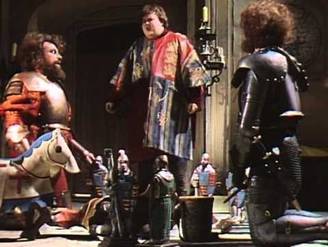
I was having a conversation with a colleague the other day and a particular scene from ‘The Queen of Spain’s Beard’* leapt into my mind (* Series 1, episode 4 for afficionados out there 🙂 )

The year is 1492 and Europe is in disarray as nations go to war and kingdoms rise and fall. In England, Richard IV’s court throbs with activity as he and his noblemen plan for war.

Picture the scene: The King of England is in his castle playing with model soldiers and horses on the floor of the war room.

Messengers keep on coming in with fresh news from the myriad of battle fronts…and so to a particular message that needs to be delivered:

Messenger: “My Lord, news. Lord Wessex is dead.”
The King: “Ah – This news is not good”
Messenger: “Pardon, My Lord”
The King: “I like it not. Bring me other news.”
Messenger: “Pardon?, My Lord”
King: “I like not this news! Bring me some other news.”
Messenger: “Yes, My Lord.”

The messenger leaves the room, turns around in the corridor and returns immediately…

Messenger: “My Lord, news – Lord Wessex is NOT dead.”
The King: “Ah! Good news! Let there be joy and celebration!”

– End of scene –

Ha-ha, but so what?

I am sometimes asked to change my message so that the receiver will accept it.

Now, I’m not writing about whether Lord Wessex was dead :). I’m referring to the more generic task of delivering a tough message (which might be phrased as an ‘inconvenient truth’) and getting the receiver to accept and act upon it.

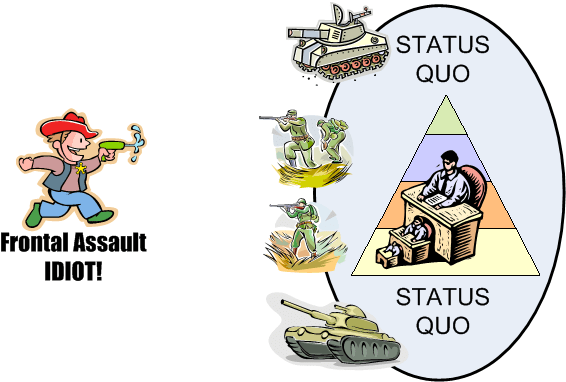
Here’s a favourite cartoon of mine (borrowed from Bulldozer00’s blog):

Frontal assault idiot

I am acutely aware that I am so often caught up as the ‘Frontal Assault Idiot’ (as was the King’s messenger)…and the reaction of the system’s response is highly predictable – just look at the ‘status quo’ tanks surrounding the hierarchical system in protection mode.

Stafford Beer was a master at explaining this point:

“…the new idea [unexpected message] is not only beyond the comprehension of the existing system, but the existing system finds it threatening to its own status quo…the existing system does not know what will happen if the new idea is embraced.”

He goes on to suggest why the messenger is (in part) at fault:

“the innovator [messenger of the ‘adventurous idea’] fails to work through the systematic consequences of the new idea. The establishment cannot…and has no motivation to do so…it was not its own idea…the onus is on the innovator…[but] the establishment controls the resource that the adventurous idea needs…”

So, how to get a tough message across?

Now, to explain this bit I’ll use an email exchange I had with John Seddon a couple of years ago.

I was desperate to help the business I was working with to change. I had read a great deal of John’s ground breaking work and thought I would be bold and ask this ‘giant’ of mine a few questions to help me.

I laid out an email to John, asking some very rational questions about getting across my message…and here’s (part of) what I got back:

“You have fallen into an intervention trap. It goes like this: You explain to managers, managers map what you said onto their current world view, but it is their world view you want to change.

The way to do that [i.e. see the truth within the radical message] is to have them study the system. If they do that they will see how their current ‘controls’ send them out of control. Only then are they ready to change the system.

This change is a normative change (changing thinking), achieved through experiential learning (they never deny what they see), not a rational change (you speak, they listen).

If you engage in rational approaches you get the kind of thing you are getting…they will always defend; they know no better.”

This ‘hit me between the eyes’ (so to speak): John is an Organisational Psychologist and he was basically saying ‘you can explain all you like but they will be in denial. The only way you will get them to truly understand, and therefore want to do something about it, is to see it for themselves.’

Interestingly, my continually explaining via a rational tack could very well have the exact opposite effect to the one I desired. I am referring to the psychological human heuristic labelled the ‘Boomerang effect’: “the unintended consequences of an attempt to persuade resulting in the adoption of an opposing position instead”.

Namely, the more I (or you) push something that is the exact opposite of what a person has been taught and has potentially relied on/ believed in their whole lives, the more they will deny the rational explanations and defend ‘their way’ as being ‘right’.

Where to from here?

John Seddon went on to write:

“The thing you need to do is anything that will make your managers curious, so, like you did, read, watch videos etc. The important point is the curious will take their own steps in finding out more.

“[clients hear what others have achieved through Systems Thinking and] demand our [consulting] services…they ask for things like the ‘training’. We tell them there is no training, the first step is we help them study their system…they may start out reluctant but they soon ‘get it’ (and become very energised), then we help them redesign the system.”

So, if we ‘bring news’, the challenge is to get our metaphorical ‘King’* curious, and pull it for himself. (* I use ‘King’ merely to fit into the Blackadder sketch. It can just as equally be a Queen.)

The pulling will be achieved by the King (and his noblemen) studying his system and seeing the truth for himself. Even if the King is shouting at you to “just give me the @#$! answer will you!” – don’t. It would be the wrong thing to do. They will not ‘get it’ unless they work it out for themselves (albeit with your help).

Conversely, if the King says “I get it” but doesn’t go on to ‘do it’ then consider that…

“To know and not to do is not yet to know.” (Zen saying)

Not all ‘Kings’ and ‘noblemen’ will be curious. Rather than being sucked into continually pushing rational explanations onto such people (and risking going ‘barking mad’ in the process), move on to those that are curious. It is only these people that are likely to self-develop and grow.

…and finally

Many a person who finds that they can’t get a message across, decides that the best thing to do is to change the message so as to make it palatable.

Reflect on this quote, that “People should have strong opinions, which are weakly held” (Paul Saffo, Palo Alto Institute for the Future)

If you believe in your message (because you have the facts that back it up) and yet you remain totally open to new evidence and different perspectives (to constantly test and revise your thinking) then DON’T water down your (currently held) message….but DO consider how to better get it across.

Perhaps the King needs to see Lord Wessex for himself and then he will decide whether he is dead or alive.