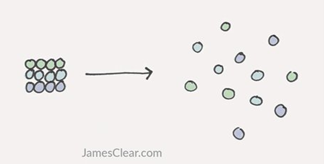
 I often enjoy reading the regular emails that emanate from ‘The Daily Stoic’.
Here’s an extract from one that struck me:
“You clean and then it gets dirty. You do the dishes and then five minutes later, the sink is full again. You made it through your inbox in the morning and by the time late afternoon strikes, you’re already digging yourself out again. Literally before you’ve even finished putting the dog’s toys away, they’re splayed out across the floor. Just as you put the finishing touches on that big project, another is dropped on your plate. You finally organize your kids’ clothes and now they’ve grown out of them.
This can drive you nuts. Or you can learn to love it.
In Tibet, Buddhist monks make beautiful mandalas out of sand. They spend hours, even days, crafting these complex, geometric designs…only to wipe them clean and start over as soon as they’re finished.
Isn’t that a way we might see all the work we do? Might that be a way to go through life? It’s not about cleaning the house or finishing this or that task. It’s about the mandala—an unending, ephemeral process that we begin again and again and again. In fact, that’s what Marcus [Aurelius] said again and again and again. The universe is nothing but change. Everything is constantly in flux. Nothing lasts. “Some things are rushing into existence, others out of it,” he reminded himself. “Some of what now exists is already gone. Change and flux constantly remake the world, just as the incessant progression of time remakes eternity.”
The dishes, the desk, the dog’s toys, your inbox, the weight you lose and gain and lose — these things are never done or clean or organized or set. No, entropy1 is always at work. You are at work. Your growth is at work.
So we should not feel exasperated or frustrated by it. We should love the flow of it. It’s not work we’re doing, it’s art. Finish? To be finished would mean the end of this—the end of our lives. No, we like that it’s a little bit like Groundhog’s Day. Because it means a chance to wake up and live another day.
To do it beautifully. To do it well.”
Some context as to me writing this post
The above quote is centred on our everyday lives (dishes, desks, dogs). But I believe that it has some applicability to many elements of our working lives, and the challenges that we set ourselves.
An example:
You’ve been to the Gemba with a bunch of people, you’ve seen some mind-blowing sights, you’ve then had fantastic conversations (even ‘communion’2) together about things like clients/ their needs/ what matters to them/ whether we moved them forwards (or not)/ structural obstacles to work on/ new thinking…and so on.
…and then, a few weeks later, it feels like there’s a need to do some of it ‘all over again’.
Now, you could allow this to ‘drive you nuts’, perhaps getting caught up in “…but we’ve already covered this!” dialogue.
Or you could knowingly smile and ‘learn to love it’. Not to simply accept it, but to ponder, to learn, and to adjust.
I’m reminded of W. Edwards Deming’s first of his ’14 points for management’:
“Create constancy of purpose towards improvement of product and service…”
I highlight the word ‘constancy’ because it suggests to me that Deming understood the need to make it habitual3, to realise that it will never be ‘solved’, that it needs to be understood as an ever-changing, never-ending challenge.
A clarification:
Some of you might be thinking “Hmm, Steve, if you have to revisit things…perhaps there’s a problem with what was done in the first place.” And, yes, that’s very probably true. Such critical reflection is absolutely necessary and worthwhile.
But this post is merely playing with the idea that it’s often too simplistic to think in terms of learning, solving, or completing things4. There’s so much going on around us that is constantly twisting/ remodelling/ undoing what’s just been done…whether we like this or not.
#learntodancewithentropy.
An extra bit on the end…:
I recently watched (what I found to be) an interesting podcast with George Monbiot. There’s a nice 5 minute bit near the end (watch from 27 mins to 32 mins) in which George talks about people finding themselves in – what seems to them – the impossible position of trying to ‘flip’ a stable social system into a better state.
The link to the entropy bit is that, it may appear like a never-ending task but, if we work to “expand, mobilise and equip the choir”, we can flip what seems like ‘the impossible’ to what becomes ‘the inevitable’.
Footnotes:
1. Entropy: This post is using the word in a simple manner. i.e. rather than the technical Thermodynamics definition from Physics, I am using the more informal ‘gradual decline into disorder’ meaning.
Note that the ‘antidote’ to entropy is the exertion of effort (#constancy). This fits with an earlier post called ‘Fight for connection’
2. On Communion: I’m using the general – rather than religious – definition of “a group of people experiencing an interchange/sharing of thoughts and emotions”.
3. Habitual: Good Gemba walking is habitual, not one-and-done.
4. I believe that this applies to human learning: We need to repeatedly learn something to cement it and, if there’s been a period of inactivity (in respect of applying that learning), we suffer a degree of entropy and may need to rediscover it.
 Squire to the Giants
See also: https://flowchainsensei.wordpress.com/2013/04/23/product-aikido/
LikeLike
Thanks a lot for introducing me to that blog and taking the time to point me towards the last 5 mins (most people don’t bother to make things easy for others like you do). Keep up the good work, young squire!
LikeLiked by 1 person