There’s no such thing as…

internal customerThis post is a bit ‘tongue in cheek’ (so if you don’t agree 100% then please don’t take it too much to heart 🙂 ) but it expresses what I’ve thought for years now.

A business fashion started back in, oooh, probably the 1980s – talking about ‘internal customers’ within organisations. The idea being that you are the customer for the person upstream from you – they are producing for you – and, in turn, the person downstream from you is your customer…and on and on…in a long chain from the start to the finish of a value stream. Lots of lovely internal customers.

But here’s the thing: They aren’t your customer – they are a part of (i.e. colleagues within) your system!

Yes, yes, I know that you are reliant on them and then the next lot are in turn reliant on you…but that’s just because of the design of the (current) method.

And, yes, yes, I know that it would be jolly nice if you all worked together in really efficient and effective ways – but that doesn’t make for a customer relationship. Further, it can be harmful to think in this way.

What is a customer?

I’ll draw on a set of related quotes to assist me here:

“The purpose of a business is to create a customer.”1 (Peter Drucker)

“It is not the employer who pays the wages. Employers only handle the money. It is the customer who pays the wages.” (Henry Ford)

“There is only one boss. The customer. And he can fire everybody in the company from the chairman down simply by spending his money somewhere else.” (Sam Walton)

The point being that a customer is, by definition, external to the system. Everyone and everything within the system is (or should be) there for them.

Without the (true) customer, there is nothing.

Why does this ‘internal customer’ label bother me so?

Such ‘internal customer’ logic causes us to think that we must do what they ask, and not question them too much, along the lines of the ‘customer is always right’ and ‘give the customer what they want’ mantras.

It presents a suboptimal ‘them’ and ‘us’ situation rather than a collaborative horizontal (across the system) ‘we’.

Once you think in terms of internal customers, it’s only a short and painful step towards the dreaded ‘Service Level Agreement’ (SLA) game show. Grrrr.

A massive risk within the ‘internal customer’ logic is the creation of a static system, one in which the method (and targets) becomes defined in quick drying cement.

  • If I think of you as my customer, then there’s unlikely to be much challenge from me as to whether your role should change, or even exist…and you sure as hell aren’t going to appreciate any such line of reasoning from me – who the hell am I to suggest this – you are my customer, I am merely your supplier!
  • Further, as my customer, you may consider that you know best, that your wish should be my command and that I should be grateful to be of service to you. Indeed, you may even score me on how well I treat you. Ouch!

How many of you reading this post have been asked to do something by your ‘internal customer’ and thought that what they were asking for was nuts…and how many of you didn’t get the chance to meaningfully discuss this with them, and had to carry it out anyway?

Even worse, how many of you have switched off from even thinking about whether your internal customer’s request makes sense and have merely become ‘order takers’.

What a load of nonsense. Let’s just throw the ‘internal customer‘ language in the bin.

“But what about treating all our colleagues with respect?!”

I can almost hear some HR departments chiding my thinking as being disrespectful to my fellow employees. No, it’s not!

In fact, it’s the opposite. I think it’s disingenuous for me to pretend that my work colleagues are my customer. They are far far more than that – we are reliant on each other, to keep our jobs, to grow ourselves, to stimulate each other, to want to come to work…to spend our working lives delivering something meaningful to this world. This is soooo much more than being merely thought of as ‘internal customers’.

As colleagues, we need a robust relationship, not one of diffidence and servitude. We need to respectfully challenge each other, work hard to listen to and understand each other’s worldviews…and become better, closer and wiser for this.

We are not ‘internal customers’, we are colleagues.

Addendum:

I always pick a trusted colleague (from an ever widening group of ‘pioneers’) to have a read of my posts before I press publish. I was particularly nervous about this one as I felt that it could just be me ranting about an ‘issue I have with the world’ (again 🙂 ).

…but I got a great response back, with the following gem (thanks A):

“Are the All Blacks ‘customers’ to one another, or are they a team with a shared purpose? By using the term ‘customer’ where it doesn’t belong… it distracts us from understanding who our real customers are.”

This made me giggle. Turning to the wonderful game of rugby, I had visions of the ‘backs’ telling the ‘forwards’ that they are their customers…I don’t think that this would go down too well.

rugby positionsHow about the following, even dafter rugby situations:

  • the jumper in the line-out considering themselves as the customer of the hooker throwing the ball in;
  • the winger considering themselves as the customer of the no. 10, who is kicking the ball through for them to get on the end of; or, at its simplest
  • the potential receiver considering themselves as the customer of the possible passer of the ball.

What a load of guff! They’re a team that have to work together, as equals; that have to understand, and swiftly react, to what’s around them; that have to make the selfless pass or tackle; and that have to pick each other up and genuinely offer words of support when perhaps it doesn’t go quite as desired.

They are not ‘internal customers’, they are team mates.

And so, to complete the title of this post: There’s no such thing as ‘internal customers’

Footnote:

1. I’m not a massive fan of this particular Peter Drucker quote, but it fits for this post.

Why so? Unfortunately, businesses have become far too adept at creating customers and, as a result, we have rampant consumerism.

I reflect on Professor Tim Jackson (author of ‘Prosperity without Growth’) clearly calling out THE problem for humanity, and what we* might do about it (* requiring brilliant political leadership).

His take-away quote “The story about us – people being persuaded to spend money we don’t have on things we don’t need to create impressions that won’t last on people we don’t care about.” Prof. Tim Jackson TED talk.
So why can’t we do that?!

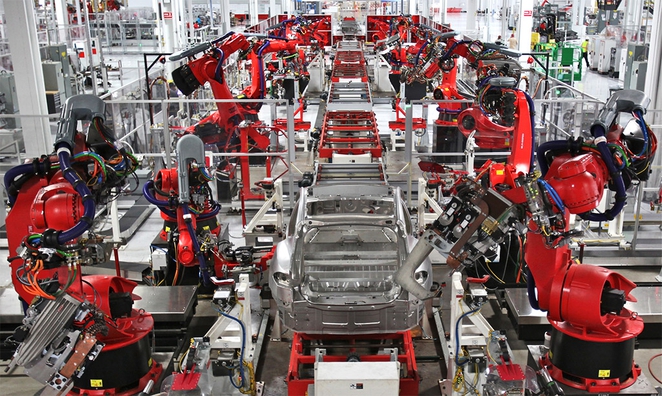
tesla-factoryI don’t know about you but ever since I was a kid I have loved watching short videos of manufacturing plants and staring in wonder at how the products we take for granted actually get made! It all seems so futuristic and alien.

Here’s a short (4 mins) yet amazing video showing the mind-boggling production of TESLA Model S cars over in Fremont, California.

What do you notice? Here’s what I see:

  • a large, high volume manufacturing plant;
  • an ultra clean and tidy environment;
  • ordered, smooth flow through specialised process steps;
  • consistency of operation and velocity;
  • substantial mechanisation & automation;
  • calm and assured humans working alongside the machines;
  • …with a high quality product coming out the end.

Sounds fantastic, I’ll have some of that!

…so why is it that service organisations don’t seem to get anywhere near the awesomeness that is modern day manufacturing?

Here’s the answer…..because they try to copy manufacturing!

“Hey, that doesn’t make sense…”

Surely (I hear you say) if manufacturing is sooo advanced from the times of Henry Ford and through Taiichi Ohno’s Toyota Production System, then service organisations should be studying what they have done and applying it to their world?

And, indeed, that is what many (most) service organisations have done. But, in doing so, they have spectacularly missed a crucial point: Service is different to manufacturing and therefore they have been ‘solving the wrong problem’.

Here’s a fundamental John Seddon quote with regards to service:

“Service differs from manufacturing. There is inherently more variety in customer demand….Whilst the Toyota method was developed to solve the problem of how to produce vehicles at the rate of customer demand, in service organisations the problem is how to design the system to absorb variety.”

Going back to the TESLA factory, notice how each car being made is essentially the same. Now I know that there is some variety – different colours, different engines, different trim levels – but it is basically the same (modular) product. I also know that Taiichi Ohno’s Toyota Production System brilliantly worked out methods to deliver this limited variety within the one production process (as opposed to requiring separate lines).

Much of manufacturing has adopted the mantra of ‘specialise, standardise, centralise and then automate’….but this is just about the opposite of what would be good for a customer requiring their very specific needs to be met for a service.

Let’s carry on with the car example but move on down the process to the service end – the selling, distribution and servicing of the car.

Let’s assume that TESLA’s competitor, TRAGIC, has applied the manufacturing mantra to their car service processes.

TRAGIC has created a centralised and highly automated ‘contact centre’ and separate ‘service centre’, both of which are broken up into highly specialised teams with standardised processes.

  • you will be directed to a website on which it is nigh on impossible to find out what you need to know, let alone a way of contacting a human being for a conversation;
  • …assuming you do find a contact number, you will then be punished by a multi-layered IVR that doesn’t have an option that meets your specific need;
  • you will have a standardised ‘scripted’ conversation with someone who doesn’t seem to be allowed to help you with your actual needs…but who can transfer you to [insert name of another department here];
  • you will then be passed around a number of specialised departments as they all ‘pass the parcel’;
  • you will be allocated to a ‘back office’ work queue and will have to repeat everything you have said so far to whomever is allocated your ‘ticket’…and they will likely disagree with whatever the person before them said to you along the lines of “oh no, I only do this” or “no, they don’t know what they are talking about, we can’t do that for you”;
  • you will talk with people who have a standard time slot allocated to you (or at least an ‘average handling time’ target), who will ask you standardised questions, categorise you according to limited drop-down boxes in their computer and then allocate you to defined ‘solutions’;
  • you will be confused as to who is actually dealing with you (or who even cares);
  • you will spend time and effort chasing up what is happening;
  • you will be provided with a standardised solution which either doesn’t meet (or only partially meets) your needs;
  • ….you will be forced through the whole sorry process again (and perhaps again) as you struggle to get your actual need resolved.

The Point:

In service, the customer comes in ‘customer shaped’. Our job is to design the system so that it can absorb their variety, not frustrate it.

Beware the manufacturing mantra of ‘specialise, standardise, centralise and then automate’.

Toyota and automation: I know that the TESLA factory looks like it’s been taken over by intelligent robots…but don’t get too carried away with automation in manufacturing. It’s worth noting that:

  • Studies have shown Toyota factories to be significantly more efficient than their competitors despite being less automated;
  • Toyota is wary of ‘over automation’ and has been reported to be reducing/ removing some automation in preference to human beings carrying out the work.

Their rationale? Putting to one side the enormous cost of developing, buying, installing and maintaining robotics, a robot simply does what it is programmed to do. Contrast this with a human that can think about the process they are performing and continually look for ways to improve it.

This can be the difference between static and dynamic processes…but of course this is only relevant if the human is in an environment that motivates them to continually improve what they do.

A Service Revolution!

RevolutionService is different to manufacturing…and this difference is gob-smackingly important for a service organisation to understand if it is to truly move towards its (stated) customer purpose.

I was recently passed a link to a Malcolm Gladwell TED talk by a colleague and whilst watching it I thought…

“Nice! This is a simple tie-in to the incredibly important concept of variety in customer demand.”

So here’s the link to the very watchable talk (18 mins): Choice, happiness and spaghetti

Here’s the key points from the talk:

  • that Howard Moskowitz (a psychophysicist) had his ‘aha moment’ that “they had been looking for the perfect pickle…but they should have been looking for the perfect pickles“;  
  • the false assumption that the way to find out about what people want is to ask them….leading to years of fruitless and misleading focus groups. The truth is that:
    • people commonly don’t actually know, or cannot (and even will not) express, what they want; and
    • they will be constrained by what they currently know. No customer asked for an automobile. We have horses: what could be better.” (Deming)  
  • the importance of horizontal rather than hierarchical thinking about customer demand: we thought that customer demand was hierarchical (from cheap up to expensive products or services). Instead, there are only different kinds of products and services that suit different kinds of people;
  • that, instead of looking for one way to treat all of us, we now understand the importance of variability;
  • when we pursue universal truths [one standardised product/ service/ way of doing things], we aren’t just making an error, we are actually doing our customers a massive disservice;
  • We need to embrace the diversity of human beings

Hang on a minute….

So, I started off this post by saying that service is different to manufacturing but Gladwell uses lots of examples of physical products in his TED talk to make his point about the importance of customer variety (cola, pickle, spaghetti sauce, coffee,)…“make your mind up Steve!”

Well, this is a nice segue to explain about two types of variation, and how incredibly important this understanding should be to a service organisation (or the service part of any value stream).

These two types of variety are:

  • Customer-introduced (i.e. within their demand); and
  • Internally created within the process (regarding flow)

To go back to Gladwell’s spaghetti sauce: Different consumers like different sauces (this is variety in demand) but, once they have determined which variety of sauce they like, they then expect each jar they buy to be the same week in, week out (i.e. minimal variation in the process that creates that sauce).

So, whilst we definitely want to reduce and remove variation in the quality of the process, we should not remove the ability of the process to provide a suitably varied experience and outcome. Rather, it is the opposite – we should be trying to cater for this variety.

In fact, variety in service is MUCH bigger than Gladwell’s product examples:

One of my earlier posts set out five categories of variety in customer demand, as identified by Professor Frances Frei (see The Spice of Life).

Now, whilst it might be useful to categorise service variation (purely to help you ‘see’), the bigger point is that the customer sets the nominal value – the specific value of a service to them.

“The customer comes in customer shaped

…there is virtually infinite variety in people….and that variety can change for a given person depending on, say, time of day/ external influences/ mood….

Standardisation is NOT the answer…in fact, it is often the problem:

There are legions of service organisations that have hired manufacturing improvement experts (or people who have read books about them) to ‘standardise, specialise, centralise and automate’ because they say “this is the solution”.

Examples at attempts to standardise the customer include:

  • using IVRs to standardise customers into categories (“press 1, then press 3…”);
  • using call scripts to standardise the content of customer conversations;
  • using average handling times to standardise the length of a conversation;
  • using ‘box ticking’ forms to standardise customer information collection;
  • using ‘black and white’ rules above common sense, when dealing with a customer’s needs;
  • forcing customers down one path (e.g. you can only pay by direct debit, you can only interact online, you can only use these suppliers, …….and on and on).
  • …..

Interestingly, if you read the list above with your ‘I am a customer’ hat on, you will likely recall many instances where you have tried interacting with a service organisation and one or many of the above attempts at standardising you and your demand has seriously frustrated you!

This leads to much failure demand, waste (and cost) but with little value delivered (as written about in an earlier post).

Clarification: this isn’t to say that technology cannot assist or that there is no place for any standards. It’s making the point that the starting point should be that:

“….in service organisations, the problem is how to design the system to absorb variety” [and not frustrate it]. (Seddon)

Our starting point always seems to be ‘efficiency’ and a focus on activity cost. Perverse as it may seem, a focus on activity cost often has the unintended consequence of increasing total cost (though this is not visible to a silo’d organisation and is nigh on impossible for them to measure).

If we standardise, say, a site visit (the activity) such that it can’t absorb the variety in the customer’s demand…then don’t be surprised that:

  • there is failure demand from the customer when they complain and/or disagree with the outcome of the visit;
  • there is much ‘expert’ time spent reviewing this complaint;
  • there are yet more site visits required to resolve the problems;
  • there is lots more paperwork/ computer inputting/ workflow management required;
  • there is much confusion created by all this extra work (who did what when, who authorised what change from the standard, who is explaining all this jumble to the customer?); and
  • trust has been lost with the customer who now questions everything we do

The most important point to note is that “cost is in flow, not in activity”

So why the title of this post?

Well, the above is quite different thinking to where ‘command and control’ service organisations have been going. A revolution if you will.

Put simply, if we understand the variety in our customer demand and try to design our system to absorb (rather than frustrate) it we will go a long way towards our customer purpose…with the likely side effect of doing so for less cost.

“Managing value [for the customer] drives out cost….Focussing on cost paradoxically adds cost and harms value.” (Seddon)

Have I got a deal for you!

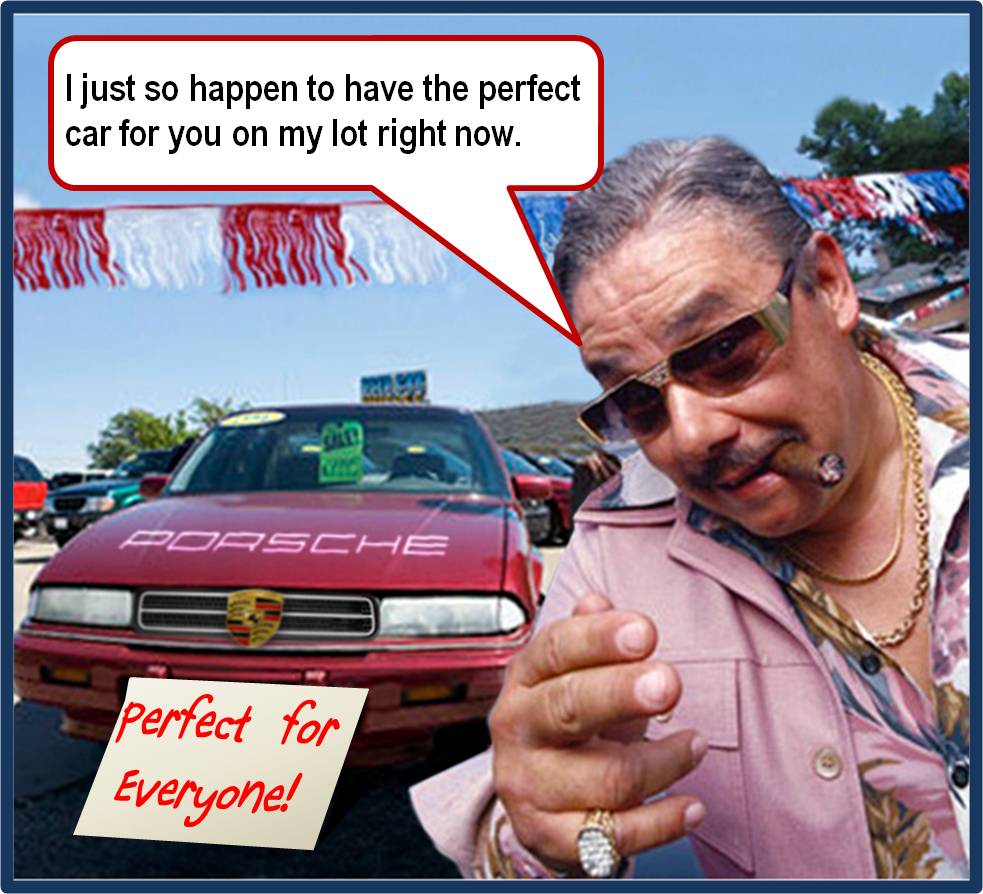
usedcarsalesmanWhich industry are we really suspicious about, and is the butt of jokes around the world? How about the car salesman?

So why do you think we are so suspicious?

Here’s what we might experience:

  • A rather smooth operator who appears to ask you about what you want but, surprise surprise, “has exactly what you are after”…which, funnily enough, happens to be what he’s got in stock!
  • A personal business card handed over, encouraging you to give him a call whenever you want…but use his direct number: “remember me, my name’s Jim”;
  • Some desperate moves from Jim as you attempt to leave his car yard, saying things like “I can only offer you this fabulous deal today”;
  • …but when you have left the yard, multiple calls from Jim asking how you are getting on and saying that things have changed for the better…so come on by so that we can discuss “…and remember to ask for Jim”;
  • …and if you ring back for Jim but he isn’t available, his ‘colleague’ Bob gladly (yet slyly) takes over the deal, perhaps saying “nah, no need to tell Jim, I can handle it from here!”;
  • Strong attempts to ‘sell you some extras’ like finance, warranty, a tow bar and so on…even when you’ve made clear that you really don’t want them;
  • Assurances that “yes, don’t worry about it – everything works…and if, in the unlikely event you have a problem, just bring it back in and we’ll sort it”;
  • …and if you end up making a purchase, some strange ‘paperwork’ going on to make the deal look a certain way:
    • perhaps trying to bring it forward or put it back (end of the week/ month/ year);
    • perhaps trying to play around with how the figures look

….you might be able to add a whole heap more experiences to the above!

Actually, car salesmen are nothing compared to big financial services business. Let’s move across to the UK Financial sector and have a look at the carnage of the last few decades:

  • the 1988 – 1994 Personal Pension miss-selling scandal in which salespeople on commission persuaded vast numbers of people to trade in generous and safe(r) company pensions for riskier and costlier alternatives. The resultant compensation scheme forced on the industry involved the review of 1.7 million consumers, over 1 million compensation payouts and a total cost to the financial companies involved of £12 billion; (Source of figures here)

  • the 1990s and 2000’s Payment Protection Insurance (PPI) miss-selling scandal in which banks and other financial institutions offered sales incentives to increase the take up of payment protection insurance…which led to a range of miss-selling practises including: putting pressure on customers to buy it in order to secure a loan; failing to make it clear that it was optional; selling to people who were actually ineligible; and even adding it to a loan without the customers consent or knowledge. The resultant compensation scheme forced on the industry (spot the pattern?!) saw the ombudsman receiving “5,000 complaints a week” and payouts being made of more than £15 billion. (Source of figures here)

  • …and on and on (the Endowment Mortgage miss-selling scandal, the Credit Card Protection insurance miss-selling scandal….)

They all shared the same ‘miss-selling’ credentials

  • aggressive, ignorant or incompetent sales tactics,
  • a failure to appropriately advise customers, and
  • deliberate strategies to sell financial services that customers do not need;

So, what’s the common ingredient?

Well, that would be the offering of sales incentives (contingent rewards).

The point is that, if you offer sales incentives, you can virtually guarantee that you will cause dysfunctional behaviour that goes against your (stated) ‘customer’ purpose.

Remember that a valid purpose statement should say something about “helping people…” It does not say “sell what you can to them”. We need to remind ourselves about a system and that ‘sales’ is but one component of it.

If you offer sales incentives, you can expect the system to ‘bite back’ in the form of undesirable discounts and terms given, failure demands from customers contacting you again, cancellations, complaints, debt collection costs, returns and after service costs… all of which will be un-measurable back to your brilliant sales incentive scheme.

You can of course try to put in place ‘compliance’ controls to monitor all these ‘side effects’ but a) you won’t catch the majority of them and b) this is just an additional (and expensive) layer of costs, and waste.

The sobering thing about the UK financial service miss-selling scandals is that the eventual costs dwarfed the original supposed sales benefits! What a huge waste.

If you offer sales incentives, you can expect:

  • people to try to sell what they have in front of them, rather than what the customer wants, or actually needs;
  • a strong desire to ‘get the sale’ and ‘move on’ to the next ‘lead’ meaning that less care is taken explaining the product and what it is and isn’t;
  • ‘dodgy sales’ made, which should never have occurred (i.e. were inappropriate and/or were not desired)

If these incentives are to individuals, you can expect reduced co-operation between ‘colleagues’, who are now in competition for those elusive sales…even leading to sabotage.

Such competition will actually harm, and prevent those many sales that would have occurred because of co-operation between colleagues.

If these incentives are for particular products, you can expect other products to be ignored, and even denigrated in favour of chasing the reward…even if the non-incentivised product was what the customer actually needed.

If you add targets to achieve these incentives, you can expect games to be played:

  • if I am near my target in a given period, I’ll do some creative things to creep over the threshold (perhaps offering discounts and giving things away for free that I shouldn’t be);
  • if I have achieved this period’s target, I might try to defer a sale to my next period, which, again, may not be what the customer wants and clearly distorts information about demand.

And, given that the customer isn’t daft, they ‘feel’ the sales process as opposed to experiencing someone that actually cares about them…providing an awful experience and a massive (yet missed) hit in reputation.

There’s nothing ‘rocket science’ about the above. We all know and recognise it (it happens to us as customers and we hate it!)…yet many of us still work in management systems that think that sales incentives are a good idea.

An important clarification:

If you think that the bad practices described above are only carried out by a handful of ‘bad people’ then you don’t understand human psychology. In fact, the majority of people are having to play a ‘game of survival’ within their incentivised ‘meet target’ management regime and feeling pretty bad about it too…it certainly doesn’t meet their much talked about personal purposes. You’d have to be a pretty strong person to go against the system…and you might not last long in such an organisation if you do!

It’s not a case of ‘bad people’…it’s a case of ‘good people’ having to work in a ‘bad system’….which brings to mind Deming’s quote:

“A bad system will beat a good person every time.”

To close: Going back to our car salesmen opening, most dealers assume that they won’t shift cars without sales incentives. John Seddon, in his latest book ‘The Whitehall Effect’, refers to a Canadian auto dealership client that:

  • studied their system;
  • revealed the tricks used by the salespeople to make sales and gain the incentives; and then
  • understood the resultant negative impacts on the customer.

They removed sales incentives, set out a customer brochure describing all the industry sales tricks and promised that none applied here. Salespeople now co-operate with each other, customer trust improved, sales went up and long term customer relationships were forged.

The Devil Incarnate

the devilThe scene: 

We’d been talking about it all week – that ‘big game’ banter. It’s an important year, it’s an important game, it’s a massive rivalry and a cauldron of passion and emotion….and we had die hard supporters of both sides – this was going to be massive! Even better, it was a Friday night game meaning it was a 9 a.m. kick off in New Zealand, live on Sky 1. Get in! Thank you (wo)man in the Sky!

What on earth am I writing about? I’m talking about Wales vs. England in a sell out Millennium Stadium to open up the Six Nations Rugby Tournament in 2015 England World Cup year.

We’d got it all worked out. Four families all going round to Stu’s (biggest screen – obvious choice!). Mostly England fans but pockets of Welsh resistance within.

We were going to do a full English* Breakfast fry up at the end, and the shopping list had been divided up and bought. It was going to be an epic post match feed. (* an omen perhaps?!)

We get to Stu’s at 08:30, and stack the breakfast goodies in the kitchen – tonnes of bacon, sausages, eggs, hash browns, tins of baked beans, mushrooms to fry, bread for toast, (exotic) corn fritters….and so on. Jonesy had even remembered the HP sauce – good man!

H had already got the tea pot on for a brew.

Stu’s got the TV on and is playing with the remote.

Stu: “eh? It’s not showing on the sky listing anymore!” said in an uncertain and shaky voice “it was there the other day. What the hell’s going on?!”

Me: “perhaps it’s moved over to the Rugby channel.”

Stu: “erm, no, not on Rugby channel or ESPN”….losing his composure a bit “…what the @#$% is going on.”

Me: “Have we got the right day?”to which I receive a stern look.

In walks Paul with 5 mins. to go before kickoff. He’s a bit more ‘techy’ than Stu and I (which isn’t hard): “use ‘Sky GO’ and stream it live.”

Now, picture the scene….we’ve got:

  • Stu doing the comedy typing thing on an (allegedly) SMART TV – trying to speed type website addresses, user names, passwords etc. with a TV remote control. If you’ve ever tried it you will know how frustrating it is;
  • Jonesy texting his mates up in Auckland to see if they are having the same troubles and trying to work out alternative methods of obtaining the holy grail of live rugby;
  • Paul trying to find a number to ring Sky…looks all over website, can’t find one (why do they make it so hard to have a 2-way interaction with them!)…finds a number….on hold, clearly very busy at the movement….wonder why!!
  • Me being as much use as a chocolate fire guard….but offering lots of helpful suggestions (I thought they were). H was keeping me supplied with tea to calm my nerves;
  • The ladies in the kitchen surveying the mountain of food and wondering how on earth we’ll eat it all. (We will);
  • Loads of kids in various states: some desperate to watch the rugby, some running riot around the house.

We tried all sorts of internet sites, including Sky Go: all the genuine ones said that we couldn’t view it from New Zealand; a number of dodgy sites requested credit card details – Stu did really well and resisted. Jonesy was willing to pay with the shirt off his back but we protected him from himself.

Finally, after over an hour of trying (i.e. the 2nd half had already started) we all reached that point when, looking around the room and seeing the pain in our comrades eyes, we admitted defeat. We weren’t going to get to watch the rugby live.

But NO, Jonesy wasn’t having this…he wasn’t going to let Sky get away with this – they were playing with people’s lives….he was going to ring that number and wait to talk to someone no matter what it took! His rationale was that they needed to know how we felt, they needed to know what they had done, they needed our feedback else how can they improve.

So he rings the 0800 number…and he waits…and he waits…and he waits.

The music comes on, he puts it on loud speaker so that we can all enjoy, thanks Jonesy – all heart.

And then, after 10 minutes of waiting, it happens – the computer talks to us:

“Thank you for your patience. Because your call is important to us we have increased your priority in the queue.”

Oh man, that really set me off. If they knew there was a Steve ‘button to press’, they had found it! (I even wrote down the exact words so I could write this post).

What does their message even mean! The first sentence is okay…the second part?????

How have they increased our priority in the queue?

How is this any different to a ‘first in, first served’ priority that we should all expect as normal decency?

How do they know that we should be of a higher priority – they don’t know who we are or what we want (yet).

These words are worse than throw away…they are infuriating, treating the human being (the customer) as some low intelligence life form who is expected to be pleased, puppy-like, with the words “you are important so we’ve bumped you up the queue.”

Important? No we’re not – if we were important you would have spare capacity in your contact centre so that you could answer your calls!

Bumped up the queue? No you haven’t – we are in the exact same place as before, only now we’ve been waiting longer whilst you’ve been attempting to answer all those calls above us!

Now, just to finish this up:

  • we heard that lovely message a further four times in the 20 minutes we waited. Fat good that increase in priority did!
  • Jonesy did get to have his rant at the call centre agent: I thought Jonesy was very restrained considering. He’s a nice polite English man;
  • we turned the TV off and consoled ourselves with cooking one humungous breakfast…’comfort food’ if you will…and it was good;
  • Stu wandered around the house, dazed, a broken man, looking a shadow of his former self;
  • we all spent the day with our fingers in our ears so that no one could tell us the score…and then reconvened in the evening to watch the replay;
  • ….consolation: England won!!! (commiserations to my Welsh friends)

So, what’s the point?

There’s a couple:

  1. Any company that plays at the customer service game (i.e. that doesn’t actually get it) thinks/acts as if the customer need starts with the customer attempting to make contact with them. In reality, the customer’s need can start hours, days, even weeks earlier. So much so that when that customer hears ‘that message’ it is soooo much more than a simple computer message…it is the devil!
  2. A computer message might be helpful…but it can also be incredibly harmful! Words that sound like marketing spin or, even worse, like you think your customer is a bit dim, are very likely to wind your customer right up, so much so that the poor customer service agent then has to spend some of that precious ‘handling time’ bringing them back down again!

We should be really careful about the use of those computer thingys when attempting to serve our customers.