‘Management by results’…how does that work?!

cause_effect__1_1_5312The CEO of the company I work for recently shared a tweet with us summing up an insight she gained at a recent engagement she attended, which read as follows:

“Nick Farr-Jones dinner guest at conference key message focus on process not the scoreboard and you will get result.”

I like this tweet – the words, whilst short, are incredibly important for anyone wanting to make improvements. I thought it useful to dig into this a bit.

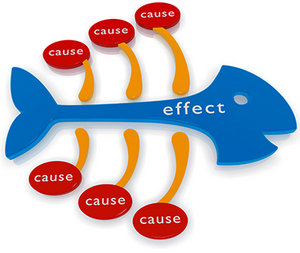
Dr W. Edwards Deming was very clear on this point! He set out the practise of ‘Management by results’ (e.g. focusing on a scoreboard of outcomes) as one of the diseases of a ‘modern organisation’ and, instead, proposed that we should spend our time and focus on understanding and improving the processes that produce the results i.e. the results are the outcome of something, and you can look at the outcome till you are blue in the face…but this won’t make it change!

“The outcome of management by results is more trouble, not less….Certainly we need good results, but management by results is not the way to get good results….It is important to work on the causes of the results – i.e. on the system. Costs are not causes: costs come from causes.” (Deming, The New Economics)

Professor John Seddon (think ‘Deming on steroids’ for Service organisations 🙂 ) takes this message on further. He notes that the measures used in most organisations are ‘lagging’ or ‘rear-view’ measures – they tell you what you did.

Seddon has a very clear view on measurement but at this time I want to simply put forward his thinking regarding the difference between operational and financial measures. He says that we should use:

  • Operational measures (such as demand for a service, and a processes capability to deliver against its purpose) to manage; and
  • Financial measures (revenues, costs) to keep the score.

We know that one affects the other but we can never know exactly how and it is waste to divert time and effort to try to do so.

Bringing this back to Nick Farr-Jones and Rugby: A rugby coach uses process measures to manage (e.g. passes complete, line-outs won, tackles made…) and the result quite literally as the score!

So Nick Farr-Jones, Deming and Seddon quite clearly agree with each other. If you work on the capability of a system/ value stream/ process to deliver against its purpose (as from the customer’s point of view) then the results will come.

Finally, you may be thinking ‘ah yes, this is where the balanced scorecard comes in’…there’s a post in there! Watch this space.

What you see depends upon your perspective.

uh___perspective__by_paper_flowersIf you go on a site visit to see another organisation, let’s say because you want to see if you can ‘borrow’ someone else’s brilliant ideas, be very mindful of the effect of your own constrained thinking on what you will see!

“…Everything we see is a perspective, not the truth.” (Marcus Aurelius)


Examples:

The Operations Manager: If you go to see a manufacturing plant, see that it is really clean and tidy, notice that they use a technique (and related tools) called ‘5S’…you could come back to your own plant and tell everyone to ‘do 5S’.

…but you would have missed the point as to how that manufacturing plant arrived at their current reality. They will likely have engaged everybody in the factory as part of a deeper ‘Lean/ Systems Thinking’ management system. They will have an environment in which ‘5S’ is relevant to them and can thrive.

It is likely that your top-down mandate to ‘do 5S’ won’t be embraced and you, the ‘command-and-controller’ will say “it didn’t work here”…and will go looking somewhere else for another ‘brilliant idea’ to impose.

The Healthcare Executive: If you go to see a hospital looking for ‘best practise’, see that some of the best surgeons use ‘checklists’…you could purchase a pack of ‘expert designed’ checklists from a consultant and mandate their use by all your surgeons.

….but you would have missed the point that the checklists (or any other effective yet dynamic ‘standardised work’) were designed and owned by the people who were using them because they believed that they were a meaningful counter-measure to meaningful problems.

It is likely that your surgeons won’t accept your imposed checklists…and you will attempt to implement controls to enforce their use, leading to extra costs and much worker- management resentment.


Note that the American car manufacturers AND Toyoda (now Toyota) went to see Henry Ford’s revolutionary ‘River Rouge’ production plant at about the same time as each other (the 1920s)…but they were looking at the same thing through very different eyes and came out with very different observations (e.g. economies of scale vs. flow)…and the rest is history!

The best way to make meaningful and sustainable improvements is to always start from the perspective of the customer, see the customer’s value stream as a system, understand its purpose and provide an environment in which all the process performers and managers are intrinsically motivated to continually improve this system towards its purpose. And, to be clear, this (in part) requires the removal of any and all management instruments that do the opposite.

Whilst it might be useful to see what others are doing, perhaps to spark ideas, this shouldn’t be your starting point and neither should it be the end point. You should know what you are trying to achieve before you look, and you should (meaningfully) experiment before you implement.

Two quotes that apply here:

On tools: “A fool with a tool is still a fool” (Grady Booch); and

On environment: “People’s behaviour is a product of their system. It is only by changing [the system] that we can expect a change in behaviour.” (John Seddon)

Welcome to this blog!

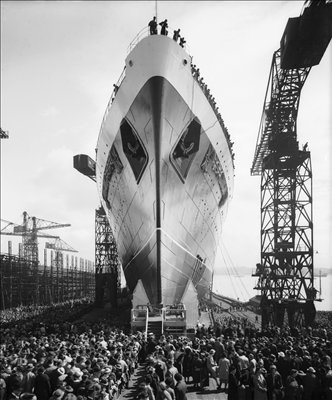
blog-4-ship-launch-v21This inaugural post is to simply ‘smash the bottle of champagne across the prow of the proverbial ship and say “I name this blog ‘Squire to the Giants’. May WordPress bless her and all who visit and tend her.” Please bear in mind that she is deliberately semi-built and will continuously improve as we use her and find out how to get the best.

I will have seeded the blog with a dozen or so ‘starter’ brain fart blogs before inviting anyone to join so that the cupboards aren’t bare when you first come on board.

Before digging into any of the posts, I ask that you read:

  • About this blog

My longer term intent is to write posts within the following categories:

  • About the Giants: in which I will write a post per Improvement Guru, introducing you to them and what they have achieved, written etc.
  • Article Reviews: for posts about relevant articles (e.g. as published in the likes of Harvard Business Review)
  • Book Reviews: for posts that introduce a key book and a summary of its content and messages
  • Brain Farts: the main set of posts, where I will share a thought with you…for you to consider and perhaps comment.

I hope you enjoy. Constructive feedback is welcome. I will try not to get ‘too far up myself’ whilst writing (only time, and the nature of your comments, will tell if I achieve this!)