“Why is your proposed change so profound?”

knot-systemMy recent serialised post titled “Your Money or your Life!” proposed that every ‘large corporate’* should make a meaningful change…that would be for the good of all.

Wow, that would be great!

* Where ‘large corporate’ is short form for ‘controlled by free-floating short-term thinking shareholders’.

I got thinking (as is often the case after pressing the ‘publish’ button) about readers thinking:

“Erm, okay – interesting perspective –  but why is the suggested change supposedly so profound?”

…and this caused me to question whether I had got the ‘this is a potential game changer!’ point across.

Note: What follows is relevant when considering ANY proposed change, not just the contents of my last post!

And so to a ‘systems thinking’ explanation:

First, a definition:

“A system is an interconnected set of elements that is coherently organised in a way that achieves something.

If you look at that definition closely for a minute, you can see that a system must consist of three kinds of things: elements, interconnections, and a function or purpose1.” (Donella Meadows)

Going back to an organisation (yours, mine,…wherever) as a system to ponder:

  • The Elements are pretty obvious – they include the people, the products and services offered, the physical buildings and resources, lots of intangible pieces (distinct departments, teams within) and so on…;

  • The Interconnections are the “the relationships that hold the elements together” e. g. the physical flows of work, the business policies and guidelines, external laws and regulations, the communications (including the gossip!), and flows of information (signals that go to decision or action points…which may or may not trigger reactions);

  • The Purpose of a system, whilst essential, is often hard to see (even if you think you know what it is!):

 “The best way to deduce the system’s purpose is to watch for a while to see how the system behaves…Purposes are deduced from behaviour, not from rhetoric or stated goals.”

 What you see may be very different to what you are told.

…and so, if you want to change an organisational system, presumably through a desire to improve (and even transform) it, then you have three “kinds of things” to play with.

Taking each ‘kind of thing’ in turn:

Elements

 “Changing elements usually has the least effect on the system.”

Using rugby and the All Blacks to illustrate the point: The coaches can change one or two players but, if they keep everything else the same, then not too much will change.

Now, sure, some elements may be very important (perhaps the introduction of a brilliant goal kicker) but, even then, the worth of such a change is hugely constrained by the rest of the system.

You might change ALL the elements (e.g. players) but if you keep the interconnections (such as the game plan, methods of communication, information sharing, the environment of trust and respect…) and purpose the same, then very little change may occur.
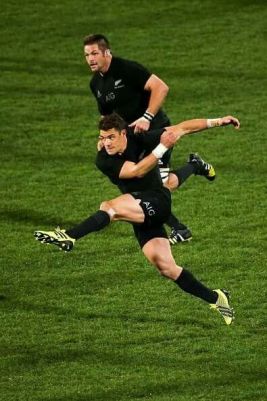
dan-and-richieA positive example of this phenomenon: The All Blacks won the rugby World Cup in 2011 and 2015, making them the first team ever to achieve ‘back-to-back’ rugby World Cups.  They did this with a core of extremely influential world-class players3who then promptly retired!

The world rugby media wondered how the All Blacks would rebuild, given the apparently gaping holes these players would leave. Many a pundit envisioned dark days ahead.

And yet a few weeks ago (on 22nd Oct 2016), despite introducing many new players, the All Blacks broke the world record for the number of consecutive international games won against ‘Tier one’ rugby nations (18 games). In short, rather than going backwards, they have ‘kicked on’ to even higher levels.

Their purpose and interconnections have clearly been shown to be stronger than the elements (e.g. players).

To the world of work: and organisational ‘restructures’. If you re-jig your hierarchical structure, changing the departments and faces within, but keep the methods of interconnection (the management system) and the underlying purpose the same (whether profit or political ideology), then not much has really changed.

“A system generally goes on being itself, changing only slowly if at all, even with complete substitution of its elements – as long as its interconnections and purposes remain intact.”

Further, you may have convinced yourself that your problems were ‘because of’ individuals…but consider that you may have ‘cut out’ the symptom and not the cause. If you don’t learn from this then you can expect another (costly) restructure in maybe 12 months time…and again…and again.

Interconnections

 “Changing interconnections in a system can change it dramatically.”
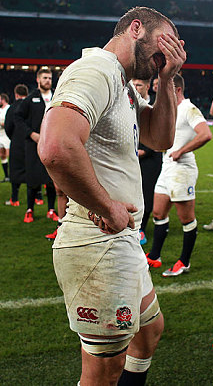
chris-robshawSo, staying with rugby, let’s move to the English national team.  In contrast to the All Blacks, they have had two terrible World Cups.

In 2011: they travelled to New Zealand and were awful (I know – I watched them!) They were heavily criticised for their attitude, and off field behaviour – they acted as if they were on an all expenses paid holiday…and, in the end, they were! The coach (Martin Johnson) resigned.

In 2015: they had home advantage – hopes were high. The whole of England was supporting them…but they exited the competition at the pool stages – the first time in their history. The coach (Stuart Lancaster) resigned.

So how has 2016 gone? Well, they’ve played 9, won 9…which includes:

  • achieving the Grand Slam (which they haven’t done for 13 years);
  • a 3-0 tour whitewash of Australia (a rare achievement); and
  • rising to be ranked 2nd in the World (from 8th)…just behind those mighty All Blacks.

So what’s changed? Well, England appointed a new manager (Eddie Jones)…but he has stuck with the core of previous players (those elements).

Instead of wholesale changing of the elements, he’s changed the interconnections – how they work together – resulting in players that had become labelled as ‘bad boys’, ‘past their best’ and ‘donkeys’4 being reborn, putting in controlled, consistent and herculean performances.

We don’t yet know whether the change will be long lasting…but it has most definitely been profound.

Back to the world of work: Perhaps the best known modern(ish) example of keeping the elements but changing the interconnections has to be NUMMI:

General Motor’s Fremont car plant was one of the worst performing plants in the whole industry, with high costs, low quality and terrible worker relations. GM closed the plant in 1982.

Toyota, wanting to start production in America, struck a joint-venture agreement with GM and the Fremont plant reopened as NUMMI in 1985. They rehired 85% of the original workforce (who still belonged to the Union – considered by GM as a serious problem). After taking 100s of the workers over to Japan to experience totally different thinking (involving a high degree of meaningful worker interacting), these learning’s were put into practise and the factory went on to produce the lowest cost, highest quality cars within its first year!

“Toyota took a bunch of [apparent] F Players, retrained them, put them into a great system, and magically they became superstars.” (Pfeffer and Sutton)

In short: Changing from a command-and-control management system to one that better understands systems and people will be dramatic.

Purpose

“A change in purpose changes a system profoundly, even if every element and interconnection remains the same.”

So, to switch from rugby to football: There’s an annual knockout competition in English Football, known as ‘The FA cup’. First played in 1871, it is the oldest football competition in the world. There is something rather magical about it because, given that it is open to any eligible club down to level 10 of the English football league system, it allows amateur minnows to mix it with the millionaire mega-stars…and, every now and then, create an upset – a minnow becomes a giant killer!

I searched for a game between a low-league minnow and a 1st division giant…and came up with Wrexham vs. Arsenal back in 19925. Both appeared to have had the same purpose – to win the game – but I suggest that their true purposes were rather different (and not so obviously stated).

Arsenal’s stars were probably trying to keep themselves injury free, to focus on other important matters – win their league (the 1st division) and perhaps get into their respective national sides (it was European Cup year)….and maybe avoid the embarrassment of defeat.

wrexham

In contrast, every man in the Wrexham team was aiming to become a legend!

Wrexham won 2 – 1. The crowd went nuts!

But here’s an interesting point: Wrexham, the giant killing minnow, went back to their low-league competition the following weekend and drew 0 – 0 at home with Maidstone United. Maidstone who? Exactly! The same players and staff, same coaching system, same methods of communications…different purpose!

This example, I hope, serves to illustrate the point that a (true) change in purpose will be profound, even whilst retaining the same elements and interconnections.

To the world of work: Even better than a transient change in purpose (like Wrexham’s), would be a permanent one!

…and so we finally come to that ‘profound point’ from my recent serialised post: long-term profit sharing. Bringing ‘Live Money’ into an organisation permanently changes its purpose, for the good of all…which would lead to experimentation with new interconnections…which would reinvigorate the elements (or at least naturally sort through those that fit vs. those that wish to pursue something else).

All in all – a profound change to the system. It would be…well…‘Transformed’.

To close: So, what if your ‘leader‘ changes?

Let’s say your organisation hires a new CEO – an element, but a central one. Everyone’s chattering about this ‘big change’…but will it change much?

The answer is “it depends”.

It will depend upon whether the leader understands systems and people (through education and experience, or perhaps instinctively)…because:

  • if the new leader goes on to change interconnections and, even better, the (actual) purpose then transformational change will likely occur; but
  • if that leaders attempts change merely through changing the elements (new people, new departments, a new IT system, some new products and brands….) then not much will actually change.

Changing the interconnections relates to the management system.

Changing the purpose relates to why the organisation exists, and for whom.

…and I hope I don’t need to say that a fancy new ‘purpose statement’ doesn’t, of itself, change a thing!

Footnote:

1. The word ‘Function’ is generally used for non-human systems and ‘Purpose’ for human systems.

2. Quote source: All quotes (unless otherwise stated) are taken from the excellent book ‘Thinking in Systems’ written by the late Donella Meadows (a giant to add at some point).

3. All Black players that retired after 2015 rugby World Cup:

  • Richie McCaw (148 caps): Regarded by many as the greatest ever rugby player, Most capped rugby player of all time, 3x World Rugby Player of the Year….and his accolades go on and on;
  • Dan Carter (112 caps): Regarded by many as the greatest ever no. 10 (fly half) player, Highest international test points scorer of all time (1,598), 3x World Rugby Player of the Year…and on and on;
  • Ma’a Nonu (103 caps) and Conrad Smith (94 caps). Most successful mid-field pairing;
  • …and other great players: Kevin Mealamu (132 caps), Tony Woodcock (118 caps)

4. England players: If you are a rugby fan then I’m referring to the likes of Dylan Hartley (‘bad boy’), Chris Robshaw (‘has been’) and James Haskell (‘donkey’). Sorry chaps…but this is what you had seemingly become!

5. FA Cup Giant Killing Context: Wrexham came last in League 4 the year before (i.e. came 92nd out of all the 92 league 1 – 4 clubs). At the complete opposite end of the spectrum, Arsenal won League 1 (i.e. came 1st out of these 92 clubs).

6. Explaining the main post Image: The system is made up of ropes (elements), knots (interconnections) and purpose (what it is intended to achieve)….which may be to look pretty or to hold a heavy load.

7. Clarification: This post is NOT saying that purpose is the only lever you should focus on. It is merely explaining the likely impact of working on each type of lever. We should be working on improving all three ‘kinds of things’ and, being a system, they are all related!
Chapter 2: “That’s what WE do!”

Okay, so to recap, in Chapter 1 I took you back 100 years to consider the visionary Henry Ford and his foundational philosophies. I know he wasn’t a saint, I know he didn’t ‘solve the worlds problems’ and I know that he was lucky to be the right side of a technological disruption…but there’s bucket loads to learn from him.

what-peple-say-and-doThe ending of Chapter 1 was about Money power and, in particular, the idea of Dead Money provided by professional financiers – people focused on profit.
Now, I can almost hear any and every ‘large corporate’ executive, after reading Ford’s words, shouting back that “yes, yes, YES” – they understand ALL of this…they don’t run the business solely for profit…and this is why they have a rather wonderful Purpose Statement!1

To those ‘large corporate’ executives that would protest that they are ‘at one’ with Henry, I would reply with Stafford Beer’s acronym POSIWID, which stands for ‘The Purpose Of the System Is What It Does’.

To better explain this point I will borrow from my earlier post on this point:

“There’s a BIG difference in what we might like the purpose of our (organisational) system to be and what it actually is!

You can say that the purpose of the system is [XYZ] until you are blue in the face but, if this isn’t what it actually delivers, then by point of fact it ISN’T its (current) purpose.”

Every time I hear the ‘purpose’ words and then see the conflicting profit actions, I have to go and have a lie down.

Ford’s words are profound2 and agreeably fit with what has subsequently been written/said by all those giants I referred to in my earlier post ‘Oxygen isn’t what life is about’.

Here’s the summary from this post:

  • “You can state a purpose….but you’ve got to actually live it to move towards it;
  • An organisation’s purpose should NOT be ‘profit’, even though this outcome is necessary for the system and those that finance it;
  • If you think it’s the other way around i.e. that you need to state a purpose so as to chase profit, then you are likely to fall a long way short of what you could achieve…and will put your long term survival at serious risk;
  • A focus on short term profits and results for the market will likely destroy unknown and unknowable value.

For those of you who think ‘what a load of hippy liberal rubbish, of course it’s all about the shareholder’, here’s a really nice quote to consider from Sam Walton (founder of Wal-Mart):

“There is only one boss. The customer. And he can fire everybody in the company from the chairman on down, simply by spending his money somewhere else.”

…how would those shareholders feel if their investment became worthless?”

i.e. Purpose is above profit…and you can’t just say this – it has to be so.

We seem to have a problem with understanding the ‘purpose isn’t profit’ thing.

So, what’s the difficulty here? Why can’t we fix this? What might be the cause?

And so to Corporations

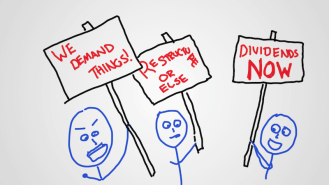
shareholder-demandsIf you’ve not read it then I heartily recommend a well written book by Ha-Joon Chang (Economics Professor at Cambridge) called ’23 Things they don’t tell you about Capitalism’3.
‘Thing 2’ is that “Companies should not be run in the interest of their owners”.

Now this will likely confuse most people, provoking responses like “…but isn’t this a building block of capitalism?”

And yes, in Ha-Joon Chang’s words, here’s what we are told:

  • “Shareholders own companies. Therefore, companies should be run in their interests. It is not simply a moral argument…;
  • Shareholders’ incomes vary according to the company’s performance, giving them the greatest incentive to ensure the company performs well…;
  • If the company goes bankrupt, the shareholders lose everything, whereas other ‘stakeholders’ get at least something. Thus, shareholders bear the risk that others involved do not.”

Okay, that looks pretty cut and dry in favour of the shareholders – so what is he on about?!

…but here’s what they don’t tell us:

  • “Shareholders,…as the most mobile of the ‘stakeholders’, often care the least about the long-term future of the company;
    • On mobility: whilst shareholders can sell their shares in the blink of an eye, the other stakeholders (customers, employees, suppliers and even the lending banks) have far higher barriers to untangling themselves
  • Consequently, shareholders, especially but not exclusively the smaller ones, prefer corporate strategies that:
    • maximise short-term profits, usually at the cost of long-term investments; and
    • maximise the dividends [and share buy backs] from those profits, which even further weakens the long-term prospects of the company by reducing the amount of retained profit that can be used for re-investment.

 Running the company for the shareholders often reduces its long-term growth potential.”

This could just as easily be Ford talking about ‘Dead money’!

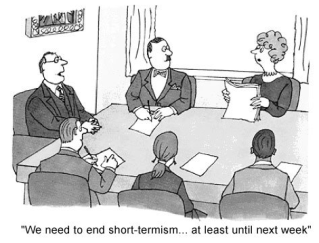
short-termismHa-Joon Chang goes on to tear apart the 1980s principle of ‘shareholder value maximisation’ (I won’t reproduce his critique here…but it is well worth reading4).
He concludes that “[shareholders] ease of exit is exactly what makes [them] unreliable guardians of a company’s long-term future.”

Jack Welch (then CEO of General Electric) was the darling of the ‘shareholder value maximisation’ ideology…and it seemed to work really well for the large corporations…until it all inevitably came crashing down5.

Welch, many years later, reflected in an interview with a financial journalist that:

Shareholder value is the dumbest idea in the world…

…Shareholder value is a result, not a strategy… your main constituencies are your employees, your customers and your products.”

…and, whilst it’s good that I can use this quote here, I find it convenient (to put it mildly) that Welch utters these words after he has extracted his $$$ millions from the corporation he pillaged and the ‘Guru Management’ books he sold…and now earns yet more $ from the reflective books telling us it was such a dumb idea!

“So are you trying to argue that we shouldn’t have limited liability companies?!”

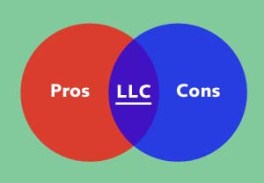
llc-pros-and-consNo, I’m not.

They have been rather useful to our societies in enabling large, risky and capital intensive ventures that, whilst important, wouldn’t have happened without risk sharing – e.g. large-scale industries such as the railways.

Prior to their existence, a business person had to risk everything (including the shirt on their back) in order to carry out business…and if they failed then it was off to debtors prison.

The idea of a limited liability company was invented back in sixteenth century Europe (known as a joint stock company back then)…but, due to constraints imposed upon them, they didn’t come into general usage until the mid nineteenth century.

So why might society have wanted those constraints? Well, they didn’t trust them! Even Adam Smith, often referred to as ‘the father of economics’, said the following:

“directors of [limited liability] companies…being the managers rather of other people’s money than of their own, it cannot well be expected that they would watch over it with the same anxious vigilance with which the partners in [their own business] frequently watch over their own.”

So, the idea of limited liability? – Yep, this is definitely of use to society.

But the idea of purely dead money in a business, or even of it being the master? – No, this is not healthy, for the business, for society or (for that matter) those free floating shareholders caught holding the dead money when the music for the ‘short-termism’ pass-the-parcel game stops.

The music stops when the business fundamentals bite…and they always do.

What about those businesses that buy businesses that buy businesses?!

fish-eating-fish-eating-fishDon’t they need barrow loads of private financier’s money?

…and so back to a lovely Henry Ford quote to close out this chapter:

“What seems to be a big business may be created overnight by buying up a large number of small businesses.

The result may be big business, or again, it may be just a museum of business, showing how many curious things may be bought with money.

 [True] Big business is not money power: it is service power.”

Many a big corporate has used dead money to pursue a strategy of mergers and acquisitions…and has often destroyed so much value in the process….and, after licking its wounds (and perhaps the convenient ‘retirement’ of those involved) has repeated the same mistakes, again and again.

A business becomes successful because of service power, not because it took actions that merely made it big.

The point is that ‘big is not beautiful’, service is beautiful…which will likely lead to a growing business. Cause and effect.


So…this chapter considered the likely protests from ‘large corporate’ executives that they are doing exactly as Henry implored…and why it’s really not as simple as that. In fact, if we look at the idea of ‘shareholder value maximisation’ then Henry’s definition of Dead Money appears to fit oh-so-well.

This is all very interesting…but what if this is just how it has to be! Chapter 3 will consider whether executives can do anything about this, for the good of the organisation.

Update: Link forwards to Chapter 3

Footnotes:

1. I reflect that Simon Sinek’s excellent TED talk covering ‘Starting with Why’ has done extremely well in making its way around the world.

2. If you are a manager lecturing people as follows:

“We are here to make money and to [meet our purpose], in that order!…because if we don’t make money, we can’t [meet our purpose]”

…then PLEASE re-read and really think about what Ford (and the others) are saying.

Your ‘money comes first’ lecture is a classic case of ‘the tail wagging the dog’.

3. Anti-capitalism? Just in case you think Ha-Joon Chang, and perhaps I, a Communist, here’s a few lines from his concluding chapter:

“My criticism is of free-market capitalism, and not all kinds of capitalism….There are different ways to organise capitalism. Free-market capitalism is only one of them – and not a very good one at that…..so, capitalism, yes, but we need to end our love affair with unrestrained free-market capitalism, which has served humanity so poorly, and install a better-regulated variety.”

He goes on to set out eight principles to have in mind in redesigning our economic system.

4. Shareholder value maximisation: If you don’t want to buy Ha-Joon Chang’s book (it’s bloody good!) but do want to delve a little deeper in respect of “the dumbest idea in the world” then here’s a Forbes article that does similar.

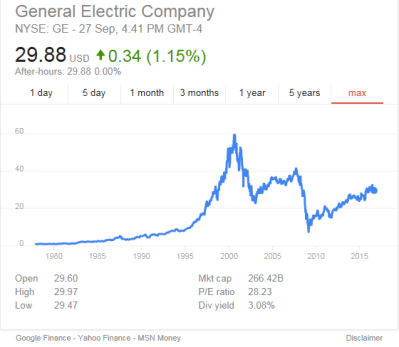
5. General Electric: They became infamous during Welch’s tenure as masters of ‘legal earnings manipulation’ so that they always hit their earnings projections…and this was over a period of decades!

However, their underlying business didn’t look so hot when the pressure came on in the two crashes of the 2000s. Their share price (see graph below) tanked from $41 in Oct 2007 to $7 in March 2009.

ge-share-price-chart


Where’s the meat in your sandwich?!

sandwichI came across a LinkedIn ‘research’ report that had been shared on a social media platform the other day. It had a grand title:
The 2016 Workforce Purpose Index: ‘Purpose at work – the largest global study on the Role of Purpose in the Workforce.’

Mmmm, sounds interesting. And, wow, ‘largest global study’ – must be important – I’d better have a read…and so I did…and then I found myself doing a bit of frothing at the mouth. I do that when stuff winds me up…I’m okay, honest 🙂

Now I am absolutely NOT getting at the person who shared the ‘report’, or any persons liking or positively commenting on it. Just to clear up any potential confusion at the start: I totally agree that the premise of ‘purpose at work’ is to be ‘liked’….and in fact passionately argued for. An earlier post uses an Ackoff essay to explain why this so.

But here’s some other stuff that I thought as I read through the ‘report’:

Helpfulness?

The introductory pages deliver the usual ‘listen up people – purpose matters’ message. This is, for me, like the ‘Buy low, sell high’ advice – blindingly obvious…but not particularly useful.

Profit?

And so to the page on “Purpose brings profit”: Yes, I agree with this…but, at the risk of repeating my ‘blindingly obvious’ mantra, this shouldn’t really be surprising i.e. if you passionately understand and serve your customers with what they actually need (this is fundamentally different to ‘selling to them’), then you have a high chance of success. Simples.

What the report fails to tackle, let alone drive home, is that many organisations get their logic ‘in a twist’ i.e. their (subconscious?) thinking is that ‘If we craft, and then regularly, state a cool-sounding purpose, then we can focus on our real purpose of profit.’ This is NOT what ‘purpose brings profit’ means!

A focus on growth and profitability doesn’t unlock purpose – indeed it will likely do the exact opposite. This isn’t to say that you can’t grow and be profitable. Of course you can. It is to correctly state the cause-effect relationship between a fanatical focus on a meaningful purpose (cause) delivering sustainable and healthy growth and profitability (effect).

Again, I’ve written about the ‘what and why’ of this previously in a post titled ‘Oxygen isn’t what life is about’.

People?

To quote from the report:

Key Finding: Given the right role and environment, [people] are ready to tap into their purpose and reach a higher potential at work”.

Now, I absolutely agree with this statement but I get sick of, what I consider to be, the spectacularly obvious being dressed up as a ‘finding’. This is ‘McGregor 101’: How you treat me will determine a massive amount of how I behave.

And so to the next quote:

“this correlation of satisfaction at work and purpose orientation was consistent in virtually every country and industry studied.”

This is where I write “No sh1t Sherlock!” That would be because we are all humans – which is a nice segue to Dilbert, and the Theory of Evolution.

Capt obviousIt’s a bit like all those scientific research projects spending scarce grant money to confirm that ‘water quenches our thirst’ or ‘alcohol gets us drunk’ or [insert one from today’s supposed news].

The trouble, for me, with stating the obvious but missing out the important contextual piece is that organisations then run away shouting “oooh, quick, quick…we’ve got to find our purpose! Let’s gather round and play with some words.”

And they spectacularly miss the point.

Purpose driven?

So let’s get to the nub of my critique: The report implies that there are three different types of people*, these being those who are primarily:

  • Purpose-driven; or
  • Status-driven; or
  • Money-driven.

They then follow this line of reasoning with….have you guessed it?…the recommendation to search for and select purpose-oriented ‘talent’.  It even suggests adding the ‘what is your primary drive?’ dimension to an organisation’s talent selection criteria 😦

The hilarity of this is that they may recruit lots of (currently) purpose-driven people…and then kill it. It’s the same old talent message – don’t endlessly seek talent, recognise and tirelessly work to unleash the talent from within.

So, back to the ‘research report’: sure you can ask someone to respond to survey questions as to which category they currently associate themselves most with (i.e. purpose, status, money)…but where is the consideration as to WHY someone might answer as they did.

* are they ‘types’ of people….or are they outcomes that people have arrived at or been driven to?

Some examples:

  • how many of you started a new job with passion and purpose, but within 6 months – 1 year, had been beaten back to surviving on merely the money and seeking some status to get noticed?
  • how many of you started your ‘careers’ focused on getting on the ladder and earning enough money to gain a roof over your heads and have a family….and how many of you have reached a certain level of wealth and/or experience where your priorities have changed?1

To conclude:

Yep, purpose is important.

Yep, I can’t really disagree with the blindingly obvious littered throughout the ‘report’.

…but if the report were a sandwich, it is bland, limp and empty – where’s the important and insightful stuff that needed to be said?

In short, where’s the meat in the sandwich?!

Does this matter? Well, yes, it does. The problem with such reports is that they allow the top management of traditional (‘command and control’) organisations to gleefully wave them about, shouting “nothing to see here – we know all of this and, even better, we’ve got it totally covered!”

Total codswallop.  As I wrote in an earlier ‘Blackadder’ post, a report is only valuable if it covers what needs to be said, not what they want to hear.

The report spectacularly misses the huge point that:

“People’s behaviour is a product of their system. It is only by changing [the system] that we can expect a change in behaviour.” (John Seddon)

What sort of system environmental things am I talking about? If you read Deming’s 14 points for management you will get a good idea. At a high level, let’s compare two environments and then you tell me which would enable you to focus on your purpose and which would see you struggling to survive through status and money:

Traditional A better way!
Hierarchical (authority…superiority) ‘Social’ (responsibility, equality)
Fear/ blame Trust/ ‘safe to fail’
Rules and consequences Guidance and support
Growth and Profitability Customer, customer, customer
Budgets, financial measures, cost cutting ‘Purpose’ operational measures, variation
Implement ‘best practise’ on the people (plans) Problem solving by the people (experiments)
Cascaded personal (or team) targets Value stream capability measures
Judgement, through rating and ranking Coaching, through non-judgemental feedback
Carrot and stick compliance Intrinsically motivated
Incentives Profit sharing
Competitions, and hero (people) awards Collaboration, and achievement focus

 Whether a person can (will) be purpose-oriented is hugely down to the environment in which they work. Simples.

Footnotes

1. This is rather obvious: take your pick from ‘Herzberg’s Motivators & Hygiene factors’ or ‘Maslow’s hierarchy of needs’.

2. I ‘get’ that LinkedIn are merely trying to drum up business by suggesting we all need to find ‘talent’ but….grrrrrr.

Oxygen isn’t what life is about

LungsI often hear people talking about the need for profit and that my thinking must address this fact. I respond that it does, but not as they might think. This post tries to explain.
There are two types of ‘for profit’ organisational thinking, both of which consider that profit is necessary…and there the similarity ends.

Type 1: Considers profit as the overall goal and purpose of the organisation ‘at any cost’;

Type 2: Perceives profit as necessary for the organisation’s survival, but not its reason for existence. Profit to such an organisation “will be seen as breathing is to a human organism, but not what life is about.” (H. Thomas Johnson)

The difference in management systems and outcomes for these two types of thinking will be profound.

Below are a number of convergent viewpoints from key thinkers backing a ‘Type 2’ view on profit:

________________________________________________________________

Aaron Dignan, in his talk on the operating model that is eating the world, explains the over-riding importance of purpose. He uses the examples of Facebook, Apple, Amazon, Tesla (and many other highly successful organisations operating beyond traditional 20th century western management thinking) to explain that:

  • It’s not about the money, it’s about the mission [purpose]. The idea of putting values above revenues is really important and defines how powerful that purpose can be!
    • Put another way, placing profit above your stated purpose means that it usurps this purpose.
  • The leaders of these organisations, such as Amazon’s Jeff Bezos, make this very clear to the market: “This is our mission, it’s long term, if you don’t like it, get out of our stock”.
    • This message is very useful for the company and potential investors – it provides transparency; allows the company to focus on what it is actually trying to do; and it allows prospective and existing investors to make clear investment decisions…it also provides them with a high degree of confidence in the organisation.
  •  Playing a long game is a really good sign that an organisation has its purpose screwed on tight. They’re not playing to the (financial reporting) quarter or to ‘the man in the street’, they are playing to the purpose…and that means that they might have to make long term bets and let things play out and then cash out over time.

Cause and effect: If you truly focus on purpose, the effect will be a highly successful organisation (and happy investors).

________________________________________________________________

Sir Richard Branson has a very clear philosophy on priorities : “put your staff first, customers second and your shareholders third”. This is the complete opposite of the traditional view, but there is a simple yet profound logic within which Branson says “should go without saying and it’s surprising that it still doesn’t in many organisations”.

Put simply, if the people working at your company are 100% proud of the job they are doing, are given the tools to do a good job, are treated well and (consequently) are proud of the brand then they are going to truly look after the customer.

Cause and effect: The shareholders do well because the customers do better because your staff are (truly) happy.

A caveat: Don’t think that you can hoodwink your staff (i.e. with words, ‘canned fun’ and/or bribes) into thinking that they are ‘first’ if this is not so…they will see right through such a facade.

A reality check: If your people aren’t proud of what they do/ where they work then you have a problem with your priorities.

________________________________________________________________

Mike Rother, in his book ‘Toyota Kata’, sets out an interesting historical perspective of how we arrived at the traditional 20th century (Western) management approach. In it he quotes Alfred P Sloan (President and then Chief Exec. and Chairman of General Motors between 1923 – 56) as saying:

“We are not in the business of making cars, we are in the business of making money.” *

You might come back at me and say, “well he’s right isn’t he? We might ‘say’ our purpose is ‘xyz’ but it’s actually about the money.”

To this, I would say that we need to recognise that customer, employee and investor make up necessary components of an organisation’s system and, going back to harmony or cacophony, we should understand that we can’t put one component (e.g. investors) above the others and expect it to be good for the system. In fact, to do so will cause unknown and unknowable harm to the system.

We need to understand the system and its purpose and then act in such a way as to derive a win/win/win scenario….which goes back to Dignan’s point about purpose and Branson’s point about priorities.

Cause and effect: Optimising the system will be good for all of its components over the long term.

A caveat: If you ‘say’ it’s all about purpose but underneath it all it isn’t then don’t be surprised at your inability to move towards it. This is a classic case of POSIWID.

* Note: General Motors made a 2007 financial loss of US$38.7 Billion and, after running out of cash soon after, entered ‘Chapter 11’ bankruptcy in 2009. After selling off or discontinuing many brands, it emerged as a new company with new management and financial bailouts from both the US and Europe, with a net cost to US taxpayers (to date) of US$12 Billion.

________________________________________________________________

Thomas (Tom) Johnson, Professor of Accounting and author of the book ‘Profit beyond measure’ wrote in an article on the excellent ‘Lean Edge’ site that “financial results such as revenues, costs and profits are by-products of well-run human-focused processes”.

He goes on to make the following comparison:

“…the Toyota people in Japan who founded and grew the company down to the 1990s saw the company as a disciplined organization of ’employee/suppliers’ whose purpose is to serve ‘customers’ in a way that earns sufficient profit to ensure the long-term survival of the organization. 

…those of us from the West, on the other hand, for the past 30 to 40 years have viewed the purpose of business as making profit, by any means considered legal.

…the contrasting view held by Toyota people who founded and built that company from the 1950s to 2000 considers that a business exists to provide opportunity for humans to exercise their inherent creativity in gainful employment serving needs of other humans. The people who held that view saw the purpose of the business to be continuous improvement of a system designed to enable humans to serve other humans gainfully and sustainably”

It’s interesting to note that there are plenty of organisations around the world (Dignan refers to some in his video above) that have understood the ’cause and effect’ of Toyota’s view i.e. that everyone (including investors) does well if an organisation sets out and truly pursues its purpose, with its long term success being the outcome.

________________________________________________________________

And finally, if we go back to Simon Sinek’s ‘start with why’, he makes some things very clear:

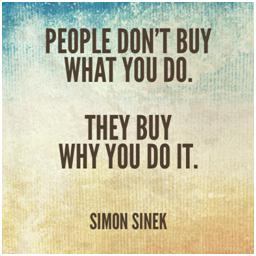
‘Why’ is not about profit…that’s just an outcome:

“By why, I don’t mean to make a profit, that’s a result. By why, I mean what’s your purpose, your cause, your belief? Why does your organisation exist? Why do you get out of bed in the morning and why should anyone care?”

You can’t just state your ‘why’ (your purpose). It actually has to be what you believe! If your actions are about profit over your stated purpose then this evidence will be seen, taken on board and acted upon accordingly:

“…what you do serves as the proof of what you believe.”

People ultimately follow leaders for themselves. If the actions of those leaders do not align with the beliefs of the workers then don’t expect them to follow:

“We follow those who lead, not because we have to but because we want to. We follow, not for them but for ourselves.”

Finally, there’s a really important point implied but not explicitly stated by Simon Sinek: The leaders of an organisation need to provide the environment, through an appropriate management system, that enables the purpose and does not frustrate it.

________________________________________________________________

In summary:

  • You can state a purpose….but you’ve got to actually live it to move towards it;
  • An organisation’s purpose should NOT be ‘profit’, even though this outcome is necessary for the system and those that finance it;
  • If you think it’s the other way around i.e. that you need to state a purpose so as to chase profit, then you are likely to fall a long way short of what you could achieve…and will put your long term survival at serious risk;
  • A focus on short term profits and results for the market will likely destroy unknown and unknowable value.

For those of you who think “what a load of hippy liberal rubbish, of course it’s all about the shareholder”, here’s a really nice quote to consider from Sam Walton (founder of Wal-Mart):

“There is only one boss. The customer. And he can fire everybody in the company from the chairman on down, simply by spending his money somewhere else.”

…how would those shareholders feel if their investment became worthless?

Note: The above raises a ‘big hairy question’ – There are many corporate forms…but which ones help and which ones hinder an organisation’s ability to truly live its stated purpose? This is something that the world’s politicians and financial markets are currently grappling with. Here’s an interesting ‘Economist.com’ article about this.

Starting with ‘Why’

Sinke quoteMany an organisation spends a great deal of time and money on the re-branding band wagon. Some outcomes are good, others not so good…and many fit into the ‘huge waste of money’ bucket.
One area that has come up for this  ‘re-fresh’ treatment over the last few years is an organisation’s purpose statement and I suspect that this has a lot to do with the success of the hugely watch-able’ ‘start with why’ TED talk (and related book) by a chap called Simon Sinek back in 2010.

Sinek is a passionate and persuasive orator. If you’ve not watched it before (or if it’s been a while) then I’d highly recommend you spend the 18 mins. to watch it.

Now, what strikes me most about this very insightful talk is Sinek’s comparison between the Wright Brothers and Samuel Pierpont Langley (their main competitor in the flying race).

Two questions I ask myself:

  • Do you think that the Wright Brothers started by crafting a crisp clear ‘Why’ statement, and they then needed to continually look at it to motivate themselves and those around them? I doubt it, they didn’t need to.
  • Do you think things would have been different if Samuel Pierpont Langley had sat down with his corporate advisors* (perhaps at the point that they were struggling to advance) and, after a bit of deep word smith-ing, they had come up with a great ‘purpose’ statement?…because, wow, that now changes everything…erm, NOT!

[* As a quick segue, here’s a wonderful short skit by Dan Heath about what happens when a committee get together to write a corporate statement.]

Don’t get me wrong. I believe that I ‘get’ what Sinek is saying and I agree that, for an organisation to be really successful, it needs to be very clear on its purpose …but there is a chasm between stating (and oft repeating) a catchy ‘purpose’ statement and living and breathing what it means (and removing the obstacles in its path).

There is also a ‘rub’ between an organisation stating a meaningful purpose and it being funded through investors with likely different motives*.

[*I’ve got a post ready to go on this – it will be ‘next cab off the rank’]

Finally, how does an organisation’s fresh and contemporary ‘Why’ statement impact/ fit with/ replace their old purpose statement? It is highly likely that the issue wasn’t with the old one. I think the issue (which remains) will likely be with how the organisation works.

To repeat the end of my recent ‘Principle of Mission’ post:

It doesn’t matter how clearly [any] leader articulates intent if their people don’t want to follow.

Setting out a clear and meaningful purpose is but one (key) part of the overall system. The rest comes down to management’s beliefs and behaviours, and the environment that this creates.

The bit that blew me away from Sinek’s talk is the following:

“Those who [truly] ‘lead’ inspire us, whether they are individuals or an organisation…we follow, not because we have to but because we want to…we follow not for them but for ourselves.”

If an organisation really wants a win/win/win (for employee, customer and investor) then it needs to start with the employees, to provide an environment where they are working towards the purpose*, not for the money but for themselves.

* Addendum: Beware POSIWID.

The Principle of Mission

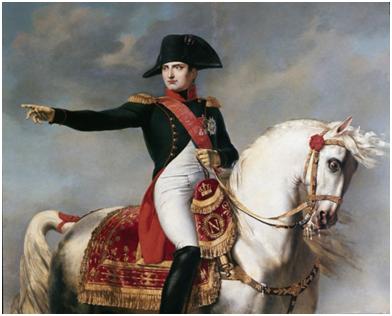
NapoleanSo I’ve written a few posts to date about ‘purpose’.
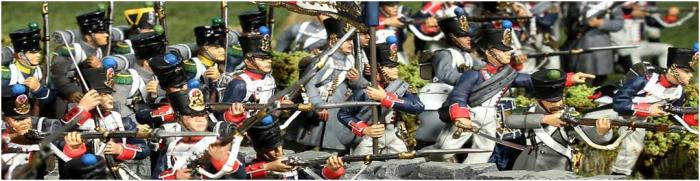
This post explains a related term, ‘Principle of Mission’, by taking us back through military history (sadly the source of much of our breakthrough learnings).

The phrase ‘Command and Control’ as applied to the common form of organisational management is associated with the military and how they traditionally functioned.

I expect most of you have seen some classic war films/documentaries of a bygone age and you can paint the picture of the following scene in your mind’s eye:

  • A large area of land, perhaps outside a castle/ fortified town or out on the plains;
  • Various units of men drawn up in formations on either side
    • perhaps divided into infantry, cavalry, archers and artillery (where the technology available would depend on the age – from catapults through to cannons);
  • …and a small huddle of officers up on a hill (and a safe distance from ‘the action’), surrounding their General seated on a white stallion.

The General has an objective and a detailed plan of how he is going to achieve it!

“Roll cameras, action”, and we see the General giving orders (Command), watching the melee (perhaps via the help of a telescope), receiving reports ‘from the front’ (Control) and adding to and/or revising these orders.

battle scene

And so to 14th October 1806 and the twin Battle of Jena-Auerstadt , at which Napoleon’s far smaller French force faced the might of the Prussian Army. However, Napoleon won a decisive victory and he did so because he did far less of the commanding-and-controlling thingy and, instead, used a different way of thinking.

In the aftermath, the Prussian military performed what we might call a retrospective to work out how they were so convincingly beaten and what they should learn from this.

Their post-mortem noted that Napoleon’s system provided his officers with the authority to make decisions as the situation on the ground changed and, crucially, without needing to wait for approval through a classical ‘chain of command’. Thus, they could adapt rapidly to changing circumstances.

If a French regiment got stuck in the proverbial mud, there was no wallowing around waiting to see what Napoleon thought they should do about it! Conversely, the Prussians in that same quagmire would be cannon fodder.

In the decades subsequent to the Battle, General Scharnhorst and then Helmut von Moltke built a new Prussian military culture, aimed at leading under conditions of uncertainty. Von Moltke wrote1.:

  • “in war, circumstances change very rapidly, and it is rare indeed for directions which cover a long period of time in a lot of detail to be fully carried out”;
  • “[I recommend] not commanding more than is strictly necessary, not planning beyond the circumstances you can foresee”;
  • “[instead] the higher the level of command, the shorter and more general the orders should be. The next level down should add whatever further specification it feels to be necessary…this ensures that everyone retains freedom of movement and decision within the bounds of their authority.”

And perhaps to the key point: Military orders must always clearly explain their intent i.e. the purpose of the order. This means that anyone carrying them out is focused on the intent and not blinded by any prescribed method.This new military way of thinking has been adopted widely though, perhaps surprisingly, the old command-and-control logic has lingered.

Hence why we get the best selling book ‘Turn the Ship Around!’(2012)2. in which Captain L. David Marquet eloquently writes about how he turned the fortunes of a U.S. Navy Nuclear submarine around by turning followers (his officers and staff) into leaders. A major theme in his story is about enabling his staff to think in terms of intent instead of merely waiting for, and following orders.

“What happens in a top-down culture when the leader is wrong? Everyone goes over the cliff.” [Marquet]

Bringing this together, The Principle of Mission is for leaders to describe the intent of the organisation’s mission, clearly communicate why it is being undertaken and then let the people get on with working out how to achieve it …and this is instead of, not as well as, making highly detailed plans and then controlling their execution.

And so to organisations:

We aren’t ‘in the army now’ but we all work with organisations that can learn from the above. We should be clear on each of our value-streams and their (customer-driven) purpose.

Such purposes set out clear intent to the system and its people tasked with delivering it.

…and a reminder that profit is not the purpose (or at least it shouldn’t be).

The role of the leader:

John Seddon wrote a fascinating book in respect of the UK public sector called ‘The Whitehall effect’3. In his chapter ‘Getting a focus on purpose’ he writes that:

Politicians* should get out of management. But they should have a lot to say about purpose….

[this] means a shift away from the central dictation of operating specifications such as targets, standards and activity. Instead, service leaders must be free to make responsible choices about the measures that will best enable them to achieve the purpose…Freed from the obligation to deploy the paraphernalia of [dictated methods], it will be up to the service leaders to choose how they improve their services against purpose, placing value on ‘better practise’ which is dynamic (anything can be improved) rather than ‘best practise’ [Ref. Benchmarking] which is static (as well as misleading). They will be guided by the rudder of efficacy, not the rudder of compliance – and they will be judged by the same token.”

* The Politicians in this quote are the leaders of what has been termed ‘UK Plc’. I am asking leaders of organisations to substitute themselves for the politicians in this quote.

Thus, the leader-service manager feedback question changes drastically:

  • From: “Have you done what I told you to do?”
  • To: “How do you know how well you are doing in achieving the (customer driven) purpose of the service?”

This is a radical shift and opens the way for true adult – adult coaching conversations.

An aside: Steering committees

I have seen a fair few high level steering committees over the years. Most fall into the command-and-control trap. Picture the scene:

  • A Project Manager reports back to the steering committee;
  • The committee discuss what is before them and, using their opinions, dictate how the Project should proceed;
  • The Project Manager is uncomfortable with this outcome but chooses to carefully manage his stakeholders (i.e. doff his cap to them)…so he takes the committees ‘decisions’ back to the team;
  • …and the team quickly and clearly explain why following such a path would be quite mad;
  • …and so the Project Manager has to commence an impossible juggling act.

In short: Committees should not dictate the ‘how’, but they should be absolutely clear on the ‘what’* and ‘why’ (the principle of mission).

* this is referring to a target condition, not a target date.

A HUGE clarification:

It doesn’t matter how clearly Napoleon, or any other leader, articulated intent if their people don’t want to follow.

Setting out a clear and meaningful purpose is but one (key) part of the overall system. The rest comes down to management’s beliefs and behaviours, and the environment that this creates.

…and finally, if you like the military discussion above, here’s a link to a short and highly related post called Why don’t you just written by ‘The Lean Thinker’.

Notes

  1. Source of quotes: von Moltke’s ‘Guidance for Large Unit Commanders’ as quoted by Stephen Bungay in his book ‘The Art of Action’.
  2. Marquet’s book is an excellent, easy read.
  3. For those of you who don’t know too much about the UK, Whitehall is a road in central London on which most of the government departments and ministries reside. When someone talks about ‘Whitehall’ they are usually referring to the centre of the British government and its civil servants.

The catalyst for writing this post was reading about the term ‘Principle of Mission’ within the book ‘Lean Enterprise’ by Humble, Molesky and O’Reilly.

School boy debating society

donald-trump…so I was in a room with a few Executives who had ‘spared me some of their time’ to allow a discussion about how I could help them move their organisation towards its stated purpose.

I said something and almost immediately one of the Executives leapt back with a seemingly clever (or was that merely ‘conventional’) and forceful counter. He then looked at me in such a way as to imply that:

  • what I had said was clearly very stupid; and
  • my lack of immediate and razor-sharp response to his challenge proved that he was right.

The implication was that I didn’t know ‘as much’ as him (as in “Silly boy, you are wasting my time…best go away until you can justify being before me”). There was no consideration that I (might) know different things to him.

I took a moment, I pondered what he had said, I thought about what I had said and I provided a reasoned response.

…and he leapt back with another counter, getting more animated and looking around the room at his fellow executives for emotional support. They (quite naturally) returned some smirks to him, translated as clear and obvious agreement with what he was saying.

I quickly realised that this had (unexpectedly) escalated, that my original comment had not fitted into his current world view and that there was no way that I would alter his thinking by attempting a short verbal rational explanation…so I politely said words to this effect and attempted to move on.

..and so he and the Executives sat back with smiles on their faces, looking smug that they had ‘won the argument’ – and that they were clever, and clearly more so than this upstart before them.

Hang on a minute! ‘Won the argument’? Who said there was an argument? It certainly wasn’t supposed to be (Cue Monty Python ‘argument’ sketch).

I suspect that such meetings with ‘command and control’ executives are all too common.

I compare them back to what I imagine to be the format of public school boy debating societies:

  • you have a position which must be pushed, and defended, at all costs;
  • you’ve got a fixed time to put your point across;
  • there will be a vote at the end to determine a result;
  • there is glory to be seen as the winner;
  • there is mirth to be shown to the loser, who will be considered ‘weak’; and
  • once the debate is over, it is ‘case closed’.

Note: None of the above was actually a surprise to me. I know about different worldviews, about rational vs. normative change and about the boomerang effect*.

(* the unintended consequences of an attempt to persuade resulting in the adoption of an opposing position instead).

The reasons for writing this post are merely to share:

  • the similarity between exchanges with ‘command and control’ executives and school boy debating; and
  • how easy it is for such a well meaning ‘rational’ conversation to descend into a head-to-head ‘win or lose’ argument.

…oh yes, and as some form of therapy for me 🙂


To all those executives out there:

If you are an executive and people put forward ideas that differ to your own, I’d humbly suggest you see this as a (free, yet valuable) opportunity to self-develop and improve (rather than protect) your world view.

As a point of fact: If the person in front of you believes differently to you then there must be reasons for this…and it could be very useful for you to consider and understand why…and thus mature and/or expand (rather than defend) your thinking.

Deja Vu

How often does your function experience people coming in to ‘map processes’? And when this happens, how often are they referred to a similar exercise, usually performed for a specific project, carried out a year or so ago?

When your function digs out (what they can find of) these earlier process mapping ‘artefacts’ (as they are, in my view, unhelpfully labelled) for the new mappers to look at, how often do they say “excellent, we’ll use these as a starting point” and then adopt a slightly different mapping approach/ method/ tool and do it all over again.

….and the people ‘mapping’ and those ‘being mapped’ experience a certain déjà vu.

deja-vu

Even worse, do the ‘mappers’ take process performers away from the process to do the mapping in workshops?! Do you think this enables them to map reality or a set of opinions? Do you think they end up with a highly crafted and nice looking ‘logical diagram’ or the complex and messy truth?

If processes have been mapped before and this is being done (yet) again, then some hard questions need to be asked.

  • why did they get mapped last time?
  • who (if anyone) agreed/ agrees with what they produced?
  • who used/ uses them to perform the work?
  • what happened to them? (are they likely to be complete, current and meaningful?)
  • …and therefore, why does it need doing all over again?

Projects vs. Processes:

If the purpose of mapping is ‘for a project’ then there is already a problem.

A process exists all the time, no matter what projects are being done on (or, more likely, to) it.

A process should have a purpose and a clear customer. It will have demands that are placed upon it (both value and failure) and a capability for handling that demand (which includes variation). It will have a desired flow (how it should be performed), a current flow (how it is performed) and a set of system conditions (constraints) that make this so.

Whilst a project might affect a process, you shouldn’t need a project to understand a process and you don’t always need a project to improve a process. If you do, then you aren’t properly managing your processes!

Conversely, if you’ve got a project that is going to have a major impact on your processes….you had better be managing your processes well for this project impact to go smoothly. Otherwise you can expect the proverbial car crash.

Purpose

Let’s get to the real point: Every process performer wants to do a good job and, to do this they desperately* want:

  • really good process knowledge that they can easily use to do their job to the current standard;
  • this process knowledge to be able to cope with (absorb) the variety that they experience in customer demands, not force them into an unhelpful straight jacket;
  • to be able to use their actual experiences (as opposed to what is supposed to happen) and make sure that these learnings are captured, understood and properly used so that the process knowledge is continuously improved for them and for the benefit of their colleagues;
  • to know when the standard has changed, why and to what such that they can easily and consistently adopt it…and this means there is NO confusion as to what the new standard is and from when it is to be adopted.

What you will notice from the above is that it is the process performers who most want and need excellent and current process knowledge and, standing back, this is actually rather obvious!

* I use the word ‘desperately’ because this is what I always hear when I talk to the process performers at the Gemba (the place where the work is done). They cry out for the above!

But is this what our usual process ‘mapping’ focus is? I would say not.

Reality:

So what actually happens?

Projects come along, pull process performers into workshops, ask them what they do, document what they say, (sometimes) ask the process performers to ‘sign off’ on these ‘artefacts’ (grrr) who, in turn, typically think “it doesn’t tell the whole picture but, yeah, that’s about right” or “it’s not how I would have explained it, but I can see what you’ve done there”…and then the project goes away allowing the process performers to get back to their reality….until, wham, the project change is sprung on them.

In parallel to this, process performers are getting on with their day jobs and, desperate to make it easy for themselves to know what to do, they create (or augment) the necessary process knowledge to perform the work. They do this in whatever medium they have available to them, in what little spare time they have and then store it wherever is convenient for them. All of which is totally understandable.

Over the top of all this, those who determine the policies to be adhered to when carrying out a process (let’s call them the process owners) issue ‘memos’ (in increasingly modern formats) informing all of what is changing and how it should be done from now on. Similarly, these process owners also issue ‘rebukes’ as to what people are doing wrong (along the lines of “didn’t you read my memo dated xyz!”) and warning them to “do it right from now on!“.

dogs dinnerThe above usually creates what I would refer to as a ‘dog’s dinner’

Here are some thoughts on what’s needed for our processes to continually deliver customer value:

  • Clarity as to what the organisation’s set of value streams (and processes within) are and who is responsible for what;
  • A horizontal focus on these value streams, rather than a vertical silo focus…so that:
    • a process is seen from the customer’s point of view
    • there is meaningful collaboration by process performers across the flow
  • The process performers and process owners jointly owning their own process knowledge….they need to:
    • determine what they need to know and how it is best provided/ presented for their ongoing consumption;
    • like using this process knowledge; and, even better
    • like improving it (meaning this has got to be easy and obvious to do)
  • A focus on the wider subject of process knowledge, not (just) process maps:
    • i.e. any/ all knowledge necessary to perform the work
    • this includes the business rules (policies) to be applied when performing a process, and any necessary supporting materials
  • A true understanding of Service organisations such that the process knowledge helps the performers to absorb the variety within customer demand, not frustrate it
    • we shouldn’t attempt to create a ‘process encyclopaedia’ that clinically answers everything since no such thing can truly be created. Instead, it needs to allow the absorption of variety
  • An experimentation mentality (trial and error) from which to continually improve how process knowledge is created, provided and improved
  • Expert help on what tools are available to enable the above BUT this help is not to ‘do it’ to them or for them….but to advise and support them

Some good tests for process knowledge are:

  1. how comfortable (or conversely, anxious) a new starter is when beginning their work; and
  2. if/ how well a seasoned operator picks up a change in process without reverting to the old way.

And finally….it’s not about tools!

It doesn’t matter how good the ‘process management’ tool is that you have found if you don’t understand and properly live the above. Your investment in such a tool (and the resources to populate it) is likely to become one huge costly, dare I say ‘dog turd’ of a, mistake. You can create amazing (looking) process knowledge in an awesome tool but if no one uses it to perform (and continually improve) their processes then, wow, what a waste!

“A fool with a tool is still a fool” (Grady Booch).

Conversely, we seem to have the idea that there is only one tool ‘out there’ that will work for us. Rubbish. Many tools will help you, though no doubt some will help more than others. The process performers can successfully start with using, say, MS Word if they want…and then continuously improve through their experimentation and learning…where this may take them in many directions as opposed to finding ‘the one tool to rule them all’.

There is no ‘right answer’ when it comes to tools, only a never ending journey to continually improve the efficiency and effectiveness of how process performers know how to carry out their work in the best way currently known for the good of the customer.

Are you currently involved in ‘process mapping’? Is this Déjà vu for you?

How to have a successful journey

photo-winding-roadMike Rother, in his excellent book ‘Toyota Kata’, explains that ‘command and control’ organisations see the ‘implementing’ word as a very positive one but that their obsession with it actually impedes their progress and the development of their people.

To explain what is meant by an implementation versus a problem solving mode:

Implementation mode (‘Go fast to go slow’)

This mode can be characterised as:

  • The need for a clear and (usually overly) simple ‘solution’ up front arrived at by some expert(s) a la “we have the answer!”;

(where this answer is normally derived from copying what others have already done);

  • A detailed plan (the more lines on the Gantt chart, the better!) that sets out exactly what needs doing, when, and by whom to implement the answer;
  • A target date (along with some incentives), established to motivate (!) people to put on their ‘implementation’ blinkers…nothing must get in the way;
  • A finish line mentality – “we got it in!…now let’s move on to something else.”

…in reality:

  • The above requires the organisation to assume everything is ‘steady state’ (which includes ignoring the effects of the rest of the system on the component(s) in focus);
  • However, there is continual change both inside and outside the environment (which may or may not be noticed…and which is unlikely to be understood);
  • It is impossible for us to predict what will actually eventuate;
  • We spend vast sums of money trying to shoe horn our answer into this changing reality, often years after it was conceived;
  • There has been very little meaningful learning and development going on!

“Humans have a tendency to want certainty, and even to artificially create it, based on beliefs, when there is none. This is a point where we often get into trouble. If we believe the way ahead is set and clear, then we tend to blindly carry out a preconceived implementation plan rather than being sensitive to, learning from, and dealing adequately with what arises along the way. As a result, we do not reach the desired destination at all, despite our best intentions.” [Rother]

Problem solving mode (‘Go slow to go fast’):

There are three things we need to know with certainty (none of which is to know the answer up front!). These are:

  • Where we are (current condition);
  • Where we want to be (target condition); and
  • A method by which to manoeuvre through the unclear territory in-between

Some key points to make:

‘Where we are’ means that we really understand our current condition, which includes why we are like this (i.e. the system conditions and management behaviours that make it so).

‘Where we want to be’ doesn’t mean “we want to have implemented x”. That’s just the implementation mode by another name. It means clearly stating a target condition (our challenge towards purpose): how should the process operate i.e. can we describe this in terms of relevance to the customer and the process performers. This description can’t know how it is to be achieved….this will unfold via…

…the ‘method’ (experimentation), which IS clear. The experiments themselves will not become clear until we progress step-by-step through the obstacles within the unclear territory.

“True certainty and confidence does not lie in pre-conceived implementation steps or solutions, which may or may not work as intended, but in understanding the logic and method for how to proceed through unclear territory.” [Rother]

So what’s the point?

Too many ‘projects’ are merely the implementation of a new technology or ideology (that someone has been convinced they need) with:

  • a reverse-engineered ‘business case’ that attempts to justify what should be achieved from ‘putting it in’; and
  • a grand plan with supposedly certain time, scope and cost.

Such projects regularly fail, sometimes spectacularly and even if they ‘complete’ (whatever definition they use for this word), there has been little value added or learning achieved….in fact they often (usually) destroy value and repeat the same errors and pitfalls as the last project and the one before that.

Instead, we should adopt a mindset of:

  • being really clear on what we are trying to achieve (in respect of customer purpose); and then (and only then)
  • work our way towards this ideal through a series of steps:
    • learning as we go; and
    • deciding the next step (the how) as we learn, adapt and ‘see’

Okay, so I’ve ‘scratched the surface’ of the idea that a brilliant implementation plan is not the answer. For those that would like an excellent analogy to think about this, here’s a useful (and short) post: The difference between launching a rocket and driving a car.

We should know ‘before we leave the house’ what our intended destination is, why and how we would know how we are going towards it…and we should steer our way there (unconstrained) as we meet the unknown obstacles on the way.

There would be little point in claiming ‘completion’ because we had spent our quota of time, distance or cost if we hadn’t actually arrived!

Have I got a deal for you!

usedcarsalesmanWhich industry are we really suspicious about, and is the butt of jokes around the world? How about the car salesman?

So why do you think we are so suspicious?

Here’s what we might experience:

  • A rather smooth operator who appears to ask you about what you want but, surprise surprise, “has exactly what you are after”…which, funnily enough, happens to be what he’s got in stock!
  • A personal business card handed over, encouraging you to give him a call whenever you want…but use his direct number: “remember me, my name’s Jim”;
  • Some desperate moves from Jim as you attempt to leave his car yard, saying things like “I can only offer you this fabulous deal today”;
  • …but when you have left the yard, multiple calls from Jim asking how you are getting on and saying that things have changed for the better…so come on by so that we can discuss “…and remember to ask for Jim”;
  • …and if you ring back for Jim but he isn’t available, his ‘colleague’ Bob gladly (yet slyly) takes over the deal, perhaps saying “nah, no need to tell Jim, I can handle it from here!”;
  • Strong attempts to ‘sell you some extras’ like finance, warranty, a tow bar and so on…even when you’ve made clear that you really don’t want them;
  • Assurances that “yes, don’t worry about it – everything works…and if, in the unlikely event you have a problem, just bring it back in and we’ll sort it”;
  • …and if you end up making a purchase, some strange ‘paperwork’ going on to make the deal look a certain way:
    • perhaps trying to bring it forward or put it back (end of the week/ month/ year);
    • perhaps trying to play around with how the figures look

….you might be able to add a whole heap more experiences to the above!

Actually, car salesmen are nothing compared to big financial services business. Let’s move across to the UK Financial sector and have a look at the carnage of the last few decades:

  • the 1988 – 1994 Personal Pension miss-selling scandal in which salespeople on commission persuaded vast numbers of people to trade in generous and safe(r) company pensions for riskier and costlier alternatives. The resultant compensation scheme forced on the industry involved the review of 1.7 million consumers, over 1 million compensation payouts and a total cost to the financial companies involved of £12 billion; (Source of figures here)

  • the 1990s and 2000’s Payment Protection Insurance (PPI) miss-selling scandal in which banks and other financial institutions offered sales incentives to increase the take up of payment protection insurance…which led to a range of miss-selling practises including: putting pressure on customers to buy it in order to secure a loan; failing to make it clear that it was optional; selling to people who were actually ineligible; and even adding it to a loan without the customers consent or knowledge. The resultant compensation scheme forced on the industry (spot the pattern?!) saw the ombudsman receiving “5,000 complaints a week” and payouts being made of more than £15 billion. (Source of figures here)

  • …and on and on (the Endowment Mortgage miss-selling scandal, the Credit Card Protection insurance miss-selling scandal….)

They all shared the same ‘miss-selling’ credentials

  • aggressive, ignorant or incompetent sales tactics,
  • a failure to appropriately advise customers, and
  • deliberate strategies to sell financial services that customers do not need;

So, what’s the common ingredient?

Well, that would be the offering of sales incentives (contingent rewards).

The point is that, if you offer sales incentives, you can virtually guarantee that you will cause dysfunctional behaviour that goes against your (stated) ‘customer’ purpose.

Remember that a valid purpose statement should say something about “helping people…” It does not say “sell what you can to them”. We need to remind ourselves about a system and that ‘sales’ is but one component of it.

If you offer sales incentives, you can expect the system to ‘bite back’ in the form of undesirable discounts and terms given, failure demands from customers contacting you again, cancellations, complaints, debt collection costs, returns and after service costs… all of which will be un-measurable back to your brilliant sales incentive scheme.

You can of course try to put in place ‘compliance’ controls to monitor all these ‘side effects’ but a) you won’t catch the majority of them and b) this is just an additional (and expensive) layer of costs, and waste.

The sobering thing about the UK financial service miss-selling scandals is that the eventual costs dwarfed the original supposed sales benefits! What a huge waste.

If you offer sales incentives, you can expect:

  • people to try to sell what they have in front of them, rather than what the customer wants, or actually needs;
  • a strong desire to ‘get the sale’ and ‘move on’ to the next ‘lead’ meaning that less care is taken explaining the product and what it is and isn’t;
  • ‘dodgy sales’ made, which should never have occurred (i.e. were inappropriate and/or were not desired)

If these incentives are to individuals, you can expect reduced co-operation between ‘colleagues’, who are now in competition for those elusive sales…even leading to sabotage.

Such competition will actually harm, and prevent those many sales that would have occurred because of co-operation between colleagues.

If these incentives are for particular products, you can expect other products to be ignored, and even denigrated in favour of chasing the reward…even if the non-incentivised product was what the customer actually needed.

If you add targets to achieve these incentives, you can expect games to be played:

  • if I am near my target in a given period, I’ll do some creative things to creep over the threshold (perhaps offering discounts and giving things away for free that I shouldn’t be);
  • if I have achieved this period’s target, I might try to defer a sale to my next period, which, again, may not be what the customer wants and clearly distorts information about demand.

And, given that the customer isn’t daft, they ‘feel’ the sales process as opposed to experiencing someone that actually cares about them…providing an awful experience and a massive (yet missed) hit in reputation.

There’s nothing ‘rocket science’ about the above. We all know and recognise it (it happens to us as customers and we hate it!)…yet many of us still work in management systems that think that sales incentives are a good idea.

An important clarification:

If you think that the bad practices described above are only carried out by a handful of ‘bad people’ then you don’t understand human psychology. In fact, the majority of people are having to play a ‘game of survival’ within their incentivised ‘meet target’ management regime and feeling pretty bad about it too…it certainly doesn’t meet their much talked about personal purposes. You’d have to be a pretty strong person to go against the system…and you might not last long in such an organisation if you do!

It’s not a case of ‘bad people’…it’s a case of ‘good people’ having to work in a ‘bad system’….which brings to mind Deming’s quote:

“A bad system will beat a good person every time.”

To close: Going back to our car salesmen opening, most dealers assume that they won’t shift cars without sales incentives. John Seddon, in his latest book ‘The Whitehall Effect’, refers to a Canadian auto dealership client that:

  • studied their system;
  • revealed the tricks used by the salespeople to make sales and gain the incentives; and then
  • understood the resultant negative impacts on the customer.

They removed sales incentives, set out a customer brochure describing all the industry sales tricks and promised that none applied here. Salespeople now co-operate with each other, customer trust improved, sales went up and long term customer relationships were forged.